book reviews
Book reviews for scholastic growth; read material from the world's top educators with our collection of novels, memoirs, biographies, philosophical texts and textbooks.
Affordable Branding Made Easy with PLR LogosLab
Did you know that 75% of people recognize a brand by its logo? That’s a big deal! Your logo is often the first thing customers notice about your business. In today’s busy world, having a strong brand is key to standing out. But what if you’re a small business owner or a freelancer with little cash to spare? Can you still create a great brand?
By Sumaya Suma2 years ago in Education
The Shadow of the Moonstone
A Mysterious Letter Rehan had no idea that a single letter would alter his life. He knew he had to act, however, when an old parchment with his missing father's signature and wax seal arrived at his door. If you're reading this, Rehan, I'm trapped in the Temple of the Moonstone. I had no idea how powerful the artifact was. Find me before it’s too late."
By Md Tofayel Ahmed2 years ago in Education
Things to Know for 2025 March Madness: Prepare for the Chaos
March Madness. The very name evokes a whirlwind of excitement, upsets, and nail-biting finishes. As we look ahead to 2025, college basketball fans are already buzzing with anticipation. The annual tournament, a staple of American sports, promises to deliver another unforgettable spectacle. But to truly immerse yourself in the frenzy and maximize your enjoyment, you need to be prepared. This isn't just about picking your favorite team; it's about understanding the landscape, recognizing emerging trends, and strategizing your way to a potentially perfect march madness bracket. Let's dive into the key things you need to know to make the most of March Madness 2025.
By Chepkirui Rop jackline2 years ago in Education
The Secret of the Hidden Island
A Dangerous Map In the bustling port town of Seaview, young Aryan spent his days dreaming of adventure. One afternoon, while helping his grandfather clean the attic, he stumbled upon an old, tattered map hidden inside a wooden chest. The map showed a small island with a golden star far beyond the known waters. "Grandpa, what is this?" Aryan asked excitedly.
By Md Tofayel Ahmed2 years ago in Education
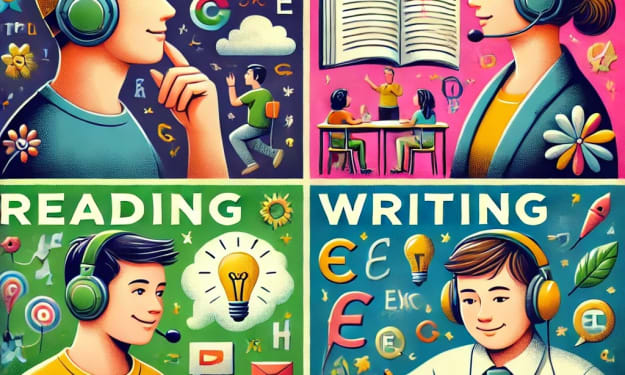
Assessment Strategies for Enhancing the Four Key Skills in Educational Settings: Best Practices and Innovations
1. What are 3 of the mechanics of Teaching Listening Skills? 1) Listening must be integrated with the other three skills. 2) Early classroom work must be based on the sounds of the language.
By Domingo Añasco-Gaces Samontina, Jr.2 years ago in Education
From Struggle to Success: An Unstoppable Journey
Introduction Success is rarely an overnight achievement. It is the result of relentless perseverance, unwavering dedication, and the ability to rise after every fall. Many of the world’s most successful individuals have faced countless struggles before reaching their goals. This journey from struggle to success is what defines a person’s true character.
By Niranjon Chandra Roy2 years ago in Education
What Role Does An Education Nonprofit Organization Play In Policy?
An Education Nonprofit Organization serves as a powerful force in shaping education policies that impact students, teachers, and communities. These organizations work at various levels to ensure that schools receive adequate funding, effective teaching methods are implemented, and policies address the needs of all learners. By conducting research, engaging in legislative discussions, and mobilizing public support, they contribute to the development of policies that strengthen the education system. Their efforts help bridge gaps in resources, improve educational standards, and create long-term solutions for challenges faced by students and educators.
By Jabez Projects Inc2 years ago in Education
Trump's crypto plan is here.
Donald Trump has made a bold move in the cryptocurrency space, signing an executive order that establishes a strategic Bitcoin reserve and a national digital asset stockpile for cryptocurrencies other than Bitcoin. This development has sent shockwaves through the financial and crypto communities, raising questions about the potential involvement of the U.S. government in crypto investments and how this could impact the market. The executive order outlines a plan for the U.S. government to begin accumulating Bitcoin as part of a national reserve strategy, with the aim of securing digital assets that could play a significant role in the future global economy. This move is seen as a response to growing concerns about inflation, the declining purchasing power of the U.S. dollar, and the increasing adoption of cryptocurrencies worldwide. Bitcoin, often referred to as "digital gold," has long been considered a hedge against inflation due to its limited supply of 21 million coins. The idea of a national Bitcoin reserve aligns with the belief that cryptocurrency could serve as a store of value in times of economic uncertainty. By accumulating Bitcoin, the U.S. government may be positioning itself to strengthen the country's financial stability in a world where digital assets are becoming more mainstream. Beyond Bitcoin, the executive order also emphasizes the importance of diversifying into other cryptocurrencies. While details on which cryptocurrencies will be included in the national stockpile remain unclear, speculation is already swirling around major altcoins such as Ethereum, Solana, and XRP. These digital assets have been at the forefront of blockchain innovation, with applications in decentralized finance (DeFi), smart contracts, and cross-border transactions. The decision to create a national crypto reserve comes at a time when global governments are exploring the role of digital currencies in their economies. Countries such as El Salvador have already embraced Bitcoin as legal tender, while China has been actively developing its digital yuan. The U.S. government's move suggests that it is not willing to be left behind in the race for digital financial dominance. Critics of the executive order argue that government involvement in crypto could lead to increased regulations and control over decentralized assets, which contradicts the fundamental principles of blockchain technology. Bitcoin and other cryptocurrencies were created to operate outside the control of traditional financial institutions and governments, providing individuals with financial sovereignty. Some fear that the government's accumulation of Bitcoin and other digital assets could pave the way for stricter regulations and possible restrictions on private ownership. On the other hand, proponents of the move believe that government participation could lead to mainstream adoption and legitimacy for the cryptocurrency market. If the U.S. government officially recognizes Bitcoin as a strategic asset, it could encourage institutional investors and businesses to increase their involvement in the space.
By Nora Ariana2 years ago in Education
There’s a Good Chance Your Kid Uses AI to Cheat
Silicon Valley has long been obsessed with reinventing education, with tech entrepreneurs promising revolutionary changes. Over the past two decades, numerous attempts have been made to integrate technology into learning, from online courses to adaptive learning platforms. Now, the latest hope lies in generative artificial intelligence, which industry leaders claim will transform how students learn. OpenAI CEO Sam Altman is among those who believe that AI can act as a powerful educational tool, capable of identifying gaps in a student’s knowledge and designing personalized learning plans that cater to their strengths. In theory, AI tutors could offer individualized support at a level never before possible, helping students grasp difficult concepts and reinforcing their understanding in ways traditional teaching methods cannot. Despite these promises, large-scale implementation of AI in education has not yet materialized. Instead of fundamentally changing how teachers educate students, AI tools are primarily altering how students complete their assignments. Rather than serving as a guide to deeper understanding, AI has increasingly become a tool for convenience. Many students now turn to AI-powered platforms to generate essays, solve math problems, or summarize readings with minimal effort. This shift raises concerns among educators, many of whom worry about the potential for academic dishonesty and the long-term effects on student learning. If students rely too heavily on AI-generated answers, they may miss out on critical thinking and problem-solving skills that are essential for their development. One of the biggest concerns is that AI could exacerbate the already pressing issue of academic cheating. While plagiarism has long been a problem in education, AI tools now offer an entirely new level of temptation. A simple prompt can generate an entire essay in seconds, making it harder for teachers to distinguish between original work and AI-generated content. Some students have begun using AI to rephrase existing essays to avoid plagiarism detection, while others rely on AI chatbots to produce assignments with minimal personal input. This raises the question of whether traditional grading methods can still accurately assess a student’s knowledge and effort. The rise of AI-assisted cheating has also led to a growing industry of companies that openly advertise their services. A search on social media reveals dozens of companies offering AI-driven homework help, essay writing, and even exam assistance. Some of these services market themselves as educational tools, but in reality, they provide ready-made answers that students can submit as their own. This has created a difficult situation for educators, who must now navigate an environment where cheating is easier and harder to detect than ever before. Some schools have attempted to combat this issue by using AI detection software, but these tools are far from perfect. AI detection algorithms can sometimes falsely flag legitimate student work as AI-generated, leading to disputes between students and teachers. At the same time, students who are determined to cheat can find ways to bypass detection methods by tweaking AI-generated content. Another major concern is the impact of AI on student engagement and comprehension. Learning is not just about getting the right answer it’s about understanding the process and developing critical thinking skills. When students use AI to complete assignments without actively engaging with the material, they risk missing out on the learning process entirely. Teachers have reported instances where students turn in AI-generated essays without even reading them, raising concerns about whether these students are actually absorbing any knowledge. The issue becomes even more complicated when considering standardized tests and college admissions, where original thought and personal expression are valued. If AI-generated content becomes the norm, schools may struggle to assess genuine student ability. While AI’s impact on education is still unfolding, some schools and educators are attempting to integrate it in a responsible way. Some teachers use AI as a supplementary tool rather than a replacement for traditional learning. For example, AI can help students practice foreign languages by generating conversation prompts, or assist in explaining complex math concepts in different ways. Some schools are experimenting with AI-driven learning platforms that adapt to a student’s progress, offering personalized exercises and recommendations. These approaches suggest that AI has the potential to enhance education if used correctly, but it requires careful oversight to ensure students are truly learning rather than simply outsourcing their work. Despite the potential benefits, the challenges remain significant. There is still limited research on how AI influences academic performance and student behavior. While some studies suggest that AI-powered tutoring can improve learning outcomes, others warn of the risks associated with overreliance on automated systems. Without clear guidelines on how to integrate AI into classrooms, many schools are left trying to figure out how to balance its advantages with its risks. Some educators believe that schools should establish firm policies on AI use, setting clear boundaries on when and how students can use these tools. Others argue that the focus should be on teaching students how to use AI responsibly, just as they are taught to cite sources properly when writing essays. The broader concern is what AI’s growing role in education means for the future of learning. If students increasingly rely on AI for answers, will they still develop the skills needed to succeed in the workforce? Critical thinking, creativity, and problem-solving are key competencies that cannot be easily replaced by technology. While AI can assist in learning, it cannot replace the experience of struggling through a problem and reaching a solution independently. Some experts warn that an overreliance on AI could lead to a generation of students who are proficient at using technology but lack deeper intellectual engagement.
By Nora Ariana2 years ago in Education
Life is Beautiful
The warm golden sun peeked over the horizon as Maya stood on her balcony, sipping a cup of tea. She closed her eyes, letting the soft breeze kiss her cheeks. A deep breath in—fresh morning air filled her lungs. A deep breath out—peace settled in her heart.
By Cotheeka Srijon2 years ago in Education