
Strong AI vs. Weak AI: Understanding the Key Differences and Future Implications
Exploring the Evolution of Artificial Intelligence: The Distinctions Between Strong AI and Weak AI and Their Impact on the Future
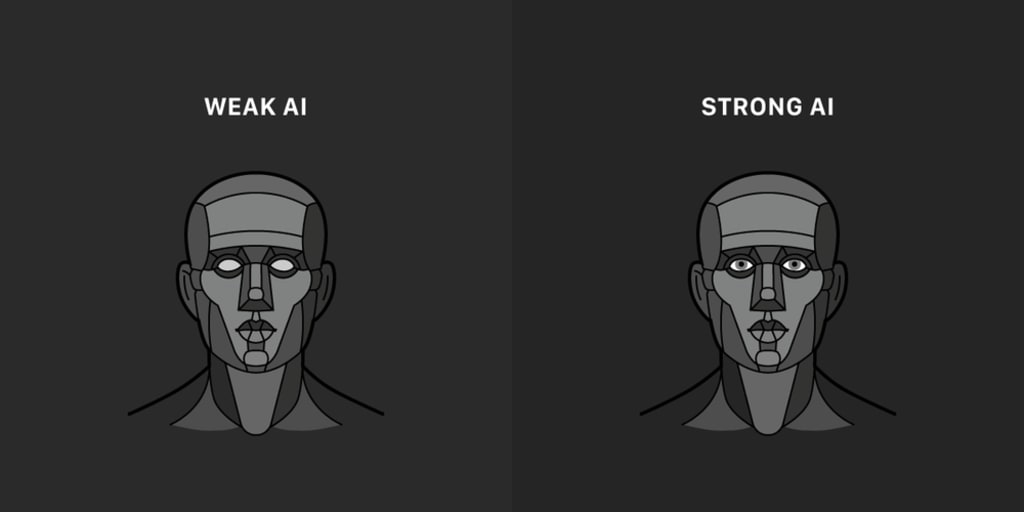
In October 2023, the state of AI's training has been tended.
The significance of AI has been a credit to how fast it is influencing, revolutionizing, and changing industries such as healthcare, finance, or any other domain. However, just like every other field, not all AI is created equal. And AI can be classified under two broader heads: Strong AI and Weak AI. It is essential to know the difference between these two kinds of AIs to foresee where that AI application will head in terms of applications affecting various sectors. Data science, cybersecurity, digital marketing, or any other field affected by both forms of AI.
With the upsurge in AI adoption, countries like India are also emerging as global hubs for AI development and research. Pune, with its booming IT sector and educational institutions, has inarguably been another zone for AI innovations. Notably, with increased demand for AI professionals, Data Science training in Pune is, in fact, rapidly being carried out to impart aspiring professionals with important AI skills.
In this post, we will discuss Strong AI versus Weak AI in detail by covering their basic differences, capabilities, real-life applications, and, probably, consequences.
What is Weak AI?
Weak AI, also known as Narrow AI, is the epitome of tasks built for AI systems penetrating very rigorous, well-defined space and do therefore not even model any real cognitive abilities. Weak AI will not display self-awareness, general intelligence, or any digital intelligent behavior outside of its explicit task definition.
Characteristics of Weak AI include
Task-Specific: Weak AI is built to work on a specific task, for instance, performing image recognition, translation between languages, or recommendation algorithms.
No Consciousness or Self-Awareness: These AIs are basically agents that do not think or feel anything independently; they follow what they have been taught and to some extent, implement logic programing.
Reliance on Data and Training: Weak AI highly relies on a large set of data for solution functioning along with machine learning functioning.
Applications Prevalent in Daily Life: Most AI applications that we use today, namely chatbots, intelligent virtual assistants, and search engines, are all strata of Weak AI application.
Examples of Weak AI in Real Life:
Voice Assistants (Siri, Alexa, Google Assistant): These AI assistants work based on voice command to deliver information, recommendations, and help performing tasks but do not "think" or "understand" like a human.
Chatbots and Customer Service AI: Automated chat systems providing scripted replies to users based on pre-programmed data.
Recommendation Algorithms (Netflix, Amazon, YouTube): AI making content or product suggestions based on user preferences by leveraging historical trends and machine-learning models.
Autonomous Vehicles: An AI system employed in self-driving vehicles that helps these vehicles navigate a road and dodge hindrances by using pattern recognition and instantaneous data.
What is Strong AI?
Strong AI, also called Artificial General Intelligence (AGI), describes a system whereby the functionalities include all higher human brain functions. These systems could comprehend, learn from, and apply intelligence to any problem or task. Strong AI has not yet been achieved and remains a long-cherished goal of AI research.
The features that qualify Strong AI are as follows:
General Intelligence: Whereas weak AI is the ability of a system to perform a task within a very thin domain, strong AI is the ability of systems to do everything an intelligent human being could do.
Itself and Consciousness: Strong AI, because of the exhaustive process of thought, reasoning, and making independent decisions, would consider anything being thought-by-the-thing.
Learning from Experience: Unlike the existing AI models that have always been trained once on the specific dataset, Strong AI would be a capability of self-learning and hence naturally improving over time without programming.
Problem-Solving Across Multiple Domains: Strong AIs would solve problems that are not limited to a few operations but extend to all kinds of problems in various areas.
Possible Future Examples of Strong AI:
AI Scientists: Machines that independently design and perform experiments, analyze results, and generate hypotheses.
Fully Autonomous Robots: Robots with integrated innate abilities to communicate, judge ethically, and perform various complex tasks in a variety of fields.
Advanced AI for Healthcare: AI that is able to reason in diagnosing diseases and suggest new approaches for treatment that does not come under the bounds of preprogrammed algorithms.
In Their Distinction Between Strong and Weak AI
Both types of AI are poles apart in their utility; however, they differ in their conception, intelligence, and application. Weak AI concentrates on applications that are narrow in scope; it performs well-defined tasks with some dexterity based on algorithms and training data. Strong AI, on the other hand, tries to simulate human intelligence with self-awareness, personal judgment, and decision-making.
Applications of Strong vs. Weak AI in the Future
AI is evolving and presents opportunities and challenges. Society is now tasked with determining the ethical, economic, and technical consequences that accompany such advanced capabilities.
With Existence of Weak AI:
Job Automation: Jobs have already been taken by Weak AI in manufacturing, retail, and customer service domains, where tasks are repetitive and rule-based.
Improved Efficiency: Weak AI is being applied by various industries to enhance productivity and operations.
Healthcare: AI has played a significant role in diagnosis, drug discoveries for patient care, and medical advancement.
Challenges Presented by Strong AI:
Redefining Employment: If Strong AI were on the cards, it would potentially affect conditions of work because it would be superior to human intelligence in very many cognitive tasks.
The ethical and safety issues: Whenever the notion of Strong AI comes up, discussions regarding control and ethics arise for the very reason that Strong AI is considered an independent actor engaged in purposes that could be hurtful.
A Strong AI Would Assist in Governance And Decision-Making: Strong AI may assist in the governance optimization, predict social patterns, and make decisions on a large scale.
India and the Pune Role in AI Development
India is now funneling its investments into AI development through the establishment of the National AI Strategy and AI-centric research institutes. Pune, being a vital IT and educational hub, is at the forefront of AI advancement. Institutions and companies in Pune are imparting Data Science training in Pune that equips people with the skills to survive the evolving AI environment. Keeping in view the increased demand for AI skills and training programs in Pune, a direction is given to students and professionals for career establishment into the industries driven by AI.
Conclusion
Strong AI is an aspiration for mankind with very deep future impacts, whereas Weak AI is constantly being innovated in various domains. The advancement in AI research will determine how long it will take before the specialized AI progresses to general intelligence- true reasoning and decision-making camps.
The days of India and Pune have made significant strides in creating opportunities that offer a training and research opportunity for people planning to take a course in AI and its applications. Such programs will keep individuals in vernaculars like Data Science training in Pune that work to fit the skill set in preparing to step into the fast-paced movement in their field. Weak AI could rule the roost in the next few decades or Strong AI could be a reality; there is an assurance that AI would take the world into surreal contexts.
About the Creator
Enjoyed the story? Support the Creator.
Subscribe for free to receive all their stories in your feed.
Comments
There are no comments for this story
Be the first to respond and start the conversation.