
Strategies that can be employed to strengthen the agricultural value chain as a means of improving agricultural production towards food security
Josphat Mhlanga
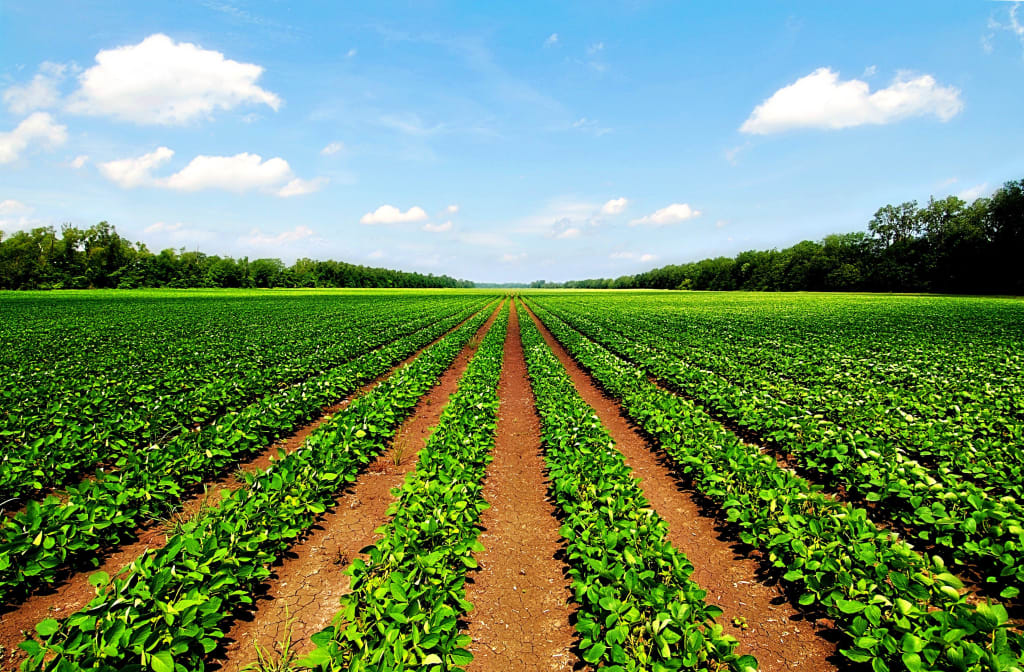
Agricultural production is sacrosanct for most developing countries that exhibit agro-based economies. It has a bearing on nutritional value and the productive capacity of communities. In this discourse I seek to unravel some of the strategies that can be employed to strengthen the agricultural value chain as a means of improving agricultural production towards food security. By enhancing each segment from production to consumption, these strategies aim to improve agricultural productivity, economic viability, and sustainability, ultimately contributing to enhanced food security. These strategies include digitalizing access to inputs and information, harnessing energy supply, practicing climate smart, stabilizing the domestic exchange rates, employing innovative financial mechanisms, capacity building on sophisticated farming equipment and promoting vertical farming. The key terms to be conceptualized are agricultural production and agricultural value chain.
Agricultural production refers to the process of cultivating crops, raising livestock, and producing other agricultural products for human consumption, use, or trade. It measures the total agricultural output in comparison with a combination of labour, capital, land along with material resources such as chemicals, fertilizer and seeds used to generate that output. Furthermore, it involves technical efficiency aim at establishing high level yields through the utility of advance tools and technology. Thus, agricultural production is the process of cultivating crops and raising livestock to ensure sustainable trade and consumption that can be measured using the total factor production and technical efficiency. This resonates with the green revolution theory which suggest that the introduction of high-yielding crop varieties, modern irrigation techniques, and chemical fertilizers can significantly increase agricultural productivity and alleviate poverty in developing countries. In hindsight, agricultural production has a bearing on food security which is concentrated on availability of physical and economic access to sufficient, safe, and nutritious food that meets the dietary needs and food preferences for an active and healthy life.
It is also critical to note that the agricultural value chain is a complex network of interdependent activities with each stage adding value to the product. These stages include input supply, production, processing, marketing and distribution and consumption. Thus, agricultural vain chain is not a linear process but rather a complex network of interdependent activities which stage adding value from the input supply up to the final consumption of the product. An example is that of a coffee value chain where input suppliers provide coffee seeds, fertilizers, and machinery to coffee farmers who cultivate and harvest coffee cherries. The harvested cherries are then processed into green coffee beans, which are marketed and traded to roasters. The roasters roast the beans, package the roasted coffee, and distribute it to retailers or directly to consumers for consumption.
Digitalizing access to inputs and information act as a catalyst against political party interest especially in developing countries. Government institutions should digitalize access to agricultural input and technical farming advice through the use of technologies such as blockchain for supply chain traceability, remote sensing drones to monitor agricultural activities and mobile applications for advisory services. For example, in India, the Kisan Suvidha mobile app provides farmers with vital information including weather forecasts, market prices, and plant protection measures.
Subsequent to the above, digitalizing the agricultural system helps in minimizing waste and enhancing crop yields. A practical example of this is seen in the use of variable rate technology (VRT) that applies fertilizers and pesticides at varying rates across a field, which matches the specific requirements of different areas within the field. Research has demonstrated that VRT can lead to a reduction in input costs by up to 40% while increasing crop yields by 9%. Thus, digitalizing the agricultural system remains a critical strategy ensuring effectiveness and efficiency of the vain chains in agricultural production.
Furthermore, energy supply is a vital facet for realizing technical efficiency in the agricultural value chain process. This includes hydropower, solar power, geothermal power, wind, biomass energy and technologies, biogases and coal bed methane. However, energy supply remains under utilized in developing countries. For instance, Zimbabwe is believed to have the largest reserve of coal bed methane with over 800 million cubic meters of coal per square kilometer at the Hwange and Lupane basin, against a combined 400million cubic meters in other southern African countries. From a critical viewpoint, one can note that this energy supply has to be harnessed to enhance the technical efficiency in the agricultural value chain process in relation to agricultural production and food security. In other Sub Saharan countries such as Nigeria, Ghana, Democratic Republic of Congo (DRC), Angola and Tanzania, wind energy remains underutilized. This has a significant impact on rural agricultural which largely depend on land sustainable livelihoods. In context, I argue that, there is need unveil more funds to harness the available energy supply and promote the use of computer-bases smart energy management system especially for farming activities that are predominantly in rural setting.
In this modern epoche, it is also important to observe that climate change has ruined the produce of agricultural activities. There is, thus, need to integrate climate smart agriculture especially in regions experiencing erratic rainfall patterns. Climate smart agriculture is a sustainable, transformative and technologically innovative approach to farming that has been developed to mitigate the effects of climate change. In hindsight, is concerned with sustainable increment and bolstering resilience of agricultural productivity. It involves livestock and crop diversification where communities in semi-arid and arid zones resort to small livestock production such as the production sheeps and goats and cultivating of drought resistant crops such as sorghum, millet and rapoko. In this vein, I argue that there is need to demystifying long standing patriarchal attitudes that associate cows as the only source of wealth and feminize the production of sheeps and goats. Other strategies that bolster resilience are cloud seeding, intercropping, mixed cropping, mulching use of bio-fertilizers, the practice of agroforestry in order to encourage sequestration and the construction of climate-controlled warehouses. In India, these adaptive warehouses reduced spoilage of perishable goods significantly lowering post-harvest losses which had traditionally reached as high as 30%. Against this background, livestock and crop diversification is a climate smart agriculture mechanism that can improve the production of agricultural produce thus, strengthening the related value chain which has a bearing on food security.
Subsequent to the above, there is need to integrate Indigenous Knowledge System (IKS) in climate adaptation and mitigation strategies. In this discourse, I argue that, in most developing countries not much has been done at national level to harness the positive impact of IKS to sustain agricultural value chains. IKS is about reopening crucial files that were closed in the process of modernization and development in which the cultural, socio-economic life of indigenous people was maimed or killed. It involves local knowledge passed from generation to generation relating to food and agriculture science, engineering and technology, traditional medicine, natural resource management, sustainable development, traditional ecological knowledge and natural disaster management. It is knowledge attained in-situ through mechanism such as tree and plant phenology, animal and wind phenology. In area such as Binga, it has been observed that weather information rarely reaches the area. This has resulted in most farmers no longer have confidence in seasonal scientific climate forecast due to natural disasters that have left them food insecure. In light of this overview, developing countries should, therefore, develop policies that scale up successful IK practices to help achieve SDGs, establish an innovative fund that promote successful IKS practices and a results framework for monitoring IKS and measuring its impact on agricultural value chains.
Significantly, domestic exchanges rates play a pivotal role in the processing, marketing, distribution and consumption of the product within the agricultural value chain. Fluctuations in the domestic currency’s value can impact the prices of factors of production such as labor, fuel, storage and raw materials. Lack of stability of the domestic exchange rates can create uncertainty in pricing for processed agricultural products. For example, when the domestic currency depreciates, it can lead to higher costs for imported inputs or raw materials, which may be passed on to consumers through higher prices. In a similar fashion, if the domestic currency appreciates, it can make domestically produced goods more expensive compared to imported alternatives, potentially impacting the competitiveness of processed agricultural products. It is this context that, I argue for the stabilization of the foreign exchange rate.
Innovative financial mechanisms contribute immensely towards strengthening the value chain within the context of agricultural production. In context, innovative financial mechanisms are new unorthodox methods of mobilizing resources such as gaming industry, securitization of future flows and sovereign wealth funds. From a critical perspective, innovation financial mechanisms resolve budgetary constraints for agro-based economies by sourcing out funds for development. For example, the gaming industry has become a plaform for raising monies for development as young people spend time on these platforms especially in Ghana, Nigeria and South Africa. In Paris the gaming shops are never closed during the night. This provides a viable source of income as 65% of the people in developing countries are between 18-35years. In a similar fashion, sovereign wealth funds involve keeping resources for future generations such as investing diamonds in the stock exchange. This can serve against future economic shocks induced by lack of financial resources.
In observation, innovative financial mechanisms have facilitated the value addition of agricultural products in Brazil and India by unveiling resource through Brazilian Agricultural and Livestock Credit Program (Programa de Crédito Rural) and Kisan Credit Card (KCC) scheme respectively. In Bangladesh, innovative financial mechanisms have improved access to microfinance for small-scale farmers through organizations such as Grameen Bank. Therefore, innovative financial mechanisms formulate an important strategy that can be employed to strengthen the agricultural value chain as a means of improving agricultural production towards food security.
In addition to the above, agricultural insurance schemes are crucial for mitigating risks associated with farming, such as adverse weather conditions and pest outbreaks. In Kenya, the introduction of index-based livestock insurance has provided pastoralists with a mechanism to secure financial compensation in the event of drought, which historically led to massive livestock losses. This insurance model uses satellite imagery to assess vegetation availability, triggering automatic payouts when vegetation levels fall below a critical threshold, thereby not requiring the traditional, often logistically challenging, claims processes. Thus, insurance schemes are critical enhancers of value chains in agricultural production.
Farming equipment has a significant bearing on value chain within agricultural production. It is designed to streamline various agricultural processes, leading to improved efficiency throughout the value chain. For example, machinery like irrigation systems and precision sprayers ensure more accurate and targeted application of water and agrochemicals, reducing waste and optimizing resource use. However, though most countries have managed to access these machineries we argue that some farmers do not have the capacity to operate and repair sophisticated farming equipment. Such farming equipment could have been imported and are not repairable locally. Thus, unveiling funds for agritex officers to enhance the capacity of agricultural farmers is of paramount importance. Agritex officers have a wide range of knowledge on farming methods and equipment but lack financial resource to reach local farmers. In this context, I argue that the funds can be sourced from innovative financial mechanisms as alluded earlier. Against this backdrop, capacity building on sophisticated farming equipment remains a panacea for improving the value chain in agricultural production, thus, ensuring food security.
Vertical farming positively impacts the sustainability of value chain in agricultural food production. Vertical farming is an innovative approach to agriculture that involves growing crops in vertically stacked layers or structures as in the case of tower farms, greenhouse vertical farms, indoor vertical farms and green walls. This approach has been popular in Tokyo, New York, Chicago, San Francisco, Singapore, Netherlands, South Korea, Dubai and Abu Dhabi. From a critical perspective, this approach acts a resilience mechanism for rapid population growth that has a ripple effect on agricultural value chains. As population growth affects agricultural value chains by increasing the demand for food, expanding market opportunities, and straining limited resources required for agricultural production, in this discourse, I argue using the Ester Boserup theory which states that, population growth stimulates technological innovations and changes in agricultural practices, leading to increased food production and sustainability. I argue that vertical farming is one of the changes in agricultural practices. According to Boserup, when population density increases and food becomes scarce, communities are compelled to find ways to produce more food to meet the growing demand. She argues that in such situations, human ingenuity and the necessity to sustain growing populations lead to the adoption of more intensive cultivation techniques. Thus, in light of this overview one can decipher that vertical farming is one of the measures that can be employed to strengthen the agricultural value chain as a means of improving agricultural production towards food security.
Conversely, there is need for reinforcing on an intersectional approach that maintains and develop existing mechanisms in the agricultural value chain process as a means of improving agricultural production towards food security. For example, the use of farming cooperatives were farmers pool resources and share risks leading to economies of scale and increased bargaining power in the market. In Ethiopia, established agricultural cooperatives has been crucial in enabling smallholder farmers to access not only markets but also credit and agricultural inputs at lower costs. In addition, while most countries do offer agricultural subsidies, digitalizing access to those subsidies can help offset double allocation and distribution on the basis of political party interest.
Significantly, we also challenge cross-cut theories such as the Malthusian theory which states that population growth leads to food scarcity and famine using the Boserup’s theory. According to Boserup, when population density increases and food becomes scarce, communities are compelled to find ways to produce more food to meet the growing demand. From a critical perspective, increase in population promotes labour for agriculture and been the vehicle behind inventions such as floating bridges which reduce travel and cost of transporting
In light of the above analysis, this discourse has defined agricultural production and agricultural value chain. It proffered some recommendations for strengthen the agricultural value chain as a means of improving agricultural production towards food security. Theories such as the Malthusian, Ester Boserup and green revolution were used to exploring how agricultural value chains can be strengthened to improve agricultural production. The authors also acknowledged that these recommendations could help buttress the already existing strategies thereby enhancing food security across the globe.
About the Creator
Mutsa Josphat Mhlanga
Content creator
Enjoyed the story? Support the Creator.
Subscribe for free to receive all their stories in your feed.
Comments
There are no comments for this story
Be the first to respond and start the conversation.