
Stomacher Blender Buying Guide
Stomacher Blender Buying Guide: Practical Insights Before You Choose

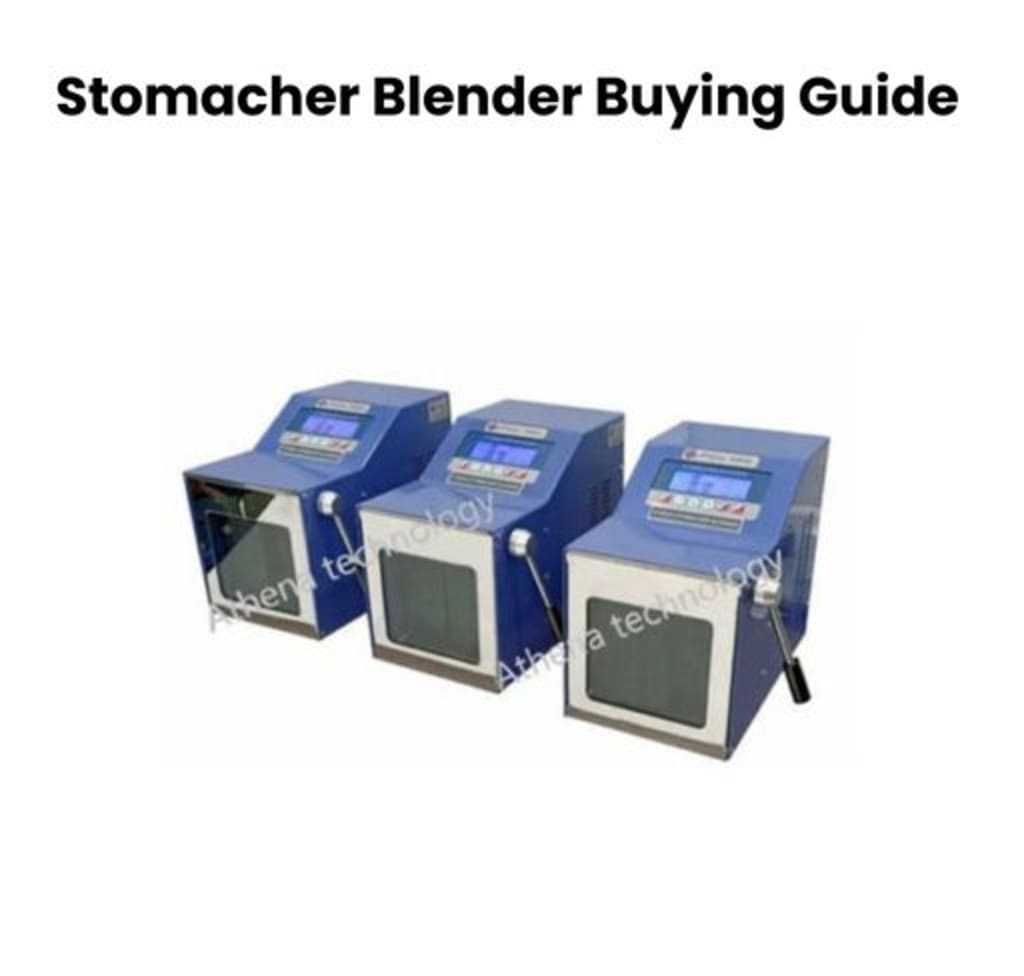
Choosing laboratory equipment is not always about the latest tech or flashy features. When precision, hygiene, and consistency are critical, the focus shifts toward reliability and functionality. The Stomacher Blender fits into this category. Known for its efficiency in sample preparation, this lab tool has become essential in several industries, particularly those dealing with microbiology, food safety, and pharmaceutical testing.
This guide provides a clear and complete breakdown of what a Stomacher Blender is, how it works, who needs it, and what features matter when selecting one.
What is a Stomacher Blender and What Makes It Unique
A Stomacher Blender is a lab instrument designed to homogenize or mix solid and semi-solid samples with liquids. Unlike regular food blenders that use blades, a stomacher uses paddles to massage samples within sterile plastic bags. This avoids any direct contact between the equipment and the sample, preventing cross-contamination.
Its operation is simple. The sample is placed in a sterile bag, sealed, and then inserted into the machine. Two paddles inside the unit press and release the bag rhythmically, breaking down and mixing the contents thoroughly.
This method is especially valued in environments where sterility is crucial. Whether it is food testing, pathogen analysis, or pharmaceutical sampling, keeping the sample uncontaminated while ensuring it is properly homogenized is essential.
How Do Stomacher Blenders Work
A Stomacher Blender works using a paddle blending system. This process does not involve any sharp cutting blades. Instead, it relies on physical pressure and rhythmic movement to blend the sample.
Here is a step-by-step view of how they function:
- A sample, along with the necessary solvent or diluent, is placed inside a sterile bag.
- The sealed bag is inserted into the blender.
- Two paddles within the machine begin a programmed sequence of compressions.
- These paddles press the sample bag alternately from each side at a consistent rhythm.
- The motion allows even the toughest solids to be broken down into a uniform suspension.
This mechanism not only saves time but also protects the sample from external exposure. It is widely used in microbiology, food and dairy labs, environmental testing, and pharmaceutical research.
Who Needs a Stomacher Blender
The need for a Stomacher Blender is driven by the requirement for clean, contactless, and efficient sample processing. Several industries and professionals find this tool useful.
1. Food Safety and Quality Control Labs
Microbial testing in food requires accurate sample homogenization. A Stomacher Blender enables this without compromising sample integrity.
2. Microbiology Laboratories
Pathogen testing relies on sterility and consistency. The paddle blending technique ensures a sterile environment, which helps maintain sample reliability.
3. Pharmaceutical R&D
Testing drug ingredients or formulations in a sterile format is important. Stomachers allow uniform mixing without contamination risks.
4. Environmental Testing Agencies
Soil, sludge, and waste samples often need thorough mixing before microbial analysis. Stomacher blenders help reduce error in such sensitive tests.
5. Veterinary and Medical Research
When processing tissue samples or fluids, maintaining sample hygiene is essential. A Stomacher Blender supports this requirement effectively.
Key Factors to Check Before Choosing a Stomacher Blender
Investing in a Stomacher Blender means understanding the needs of your laboratory and selecting a model that fits your daily operations. These factors will help make an informed decision.
Bag Capacity and Sample Size
Blenders come in various capacities. Smaller labs may work with 80 to 100 ml, while high-throughput environments might need up to 400 ml or more. Choosing the right capacity avoids overloading or underusing the machine.
Programmable Settings
Some models allow you to set blending time, paddle speed, and pressure. This helps standardize processes and improve lab productivity.
Noise Level
Noise can be a concern in shared lab spaces. Look for models designed to operate quietly if your environment requires it.
Cleaning and Maintenance
The simpler the cleaning process, the better. Some machines are designed to reduce mess and can be cleaned with minimal effort, which saves time.
Sample Compatibility
Make sure the model supports the kind of samples you typically process. Some are better for tissue, others for powdery or fibrous substances.
Bag Type and Sealing
Check if the machine requires specialized bags or works with standard stomacher bags. The sealing method should also be simple and effective to reduce manual effort.
Types of Stomacher Blenders Based on Use-Case
The market offers a range of Stomacher Blenders tailored to different lab needs. Understanding the types helps narrow down the right fit.
Standard Models
These are ideal for routine sample preparation where moderate volumes are processed daily. They usually come with basic speed control and preset cycles.
High-Capacity Blenders
These are suitable for large-scale labs and research units. They handle bigger sample volumes and often include features like programmable memory and real-time cycle tracking.
Compact or Benchtop Models
Space-saving versions that still offer standard performance. Ideal for labs with limited space or mobile testing units.
Touchscreen-Controlled Units
Designed for labs that need high control and precision. They provide digital interfaces for fine-tuning paddle speed, cycle time, and mixing intensity.
Why Choose a Trusted Name Like Athena Technology
Choosing a supplier is not only about cost but also about long-term reliability and support. Athena Technology is one of the leading Stomacher Blender Manufacturers in India, known for delivering consistent quality and support.
Their machines are designed to meet the strict hygiene standards of pharmaceutical and microbiology labs. More importantly, they provide post-sale support, offer customizations, and maintain a steady inventory of consumables and parts.
Buying from a reputed Stomacher Blender Supplier in India means ensuring that your lab operations do not suffer from frequent breakdowns or delays due to lack of support.
Things Users Often Miss While Selecting a Stomacher Blender
Even experienced lab managers can overlook certain important factors. Here are some of the common oversights:
- Assuming all bags are compatible across different models
- Ignoring the importance of paddle pressure control for different sample types
- Choosing oversized models without assessing actual sample load
- Overlooking the noise factor, which can disrupt smaller labs
- Failing to consider spare part availability and service support in their location
Frequently Asked Questions
Q1. What is a Stomacher Blender used for in food safety labs?
Answer: It helps prepare food samples by blending them in sterile conditions, which is important for microbial testing and ensuring hygiene compliance.
Q2. Who needs a Stomacher Blender in pharmaceutical environments?
Answer: Pharmaceutical R&D and quality control labs require contactless blending of drug samples or ingredients to avoid contamination during analysis.
Q3. How do Stomacher Blenders work without blades?
Answer: They use paddles to compress and release samples inside a sealed bag. This non-invasive method prevents contamination and keeps the process sterile.
Q4. Is a Stomacher Blender suitable for both solid and liquid samples?
Answer: Yes, it can blend tissue, soil, food, and other semi-solid or solid materials in a suspension liquid, depending on the model and bag used.
Q5. What is the difference between a stomacher and a traditional blender?
Answer: Traditional blenders use sharp blades and make direct contact with the sample. Stomacher blenders operate without direct contact, using sealed bags and paddles instead.
Q6. Are Stomacher Blender Manufacturers in India reliable for service and spares?
Answer: Reputed names like Athena Technology ensure strong after-sale service and maintain supply chains for parts and consumables.
Q7. Can I run certified lab tests using a stomacher purchased from a local supplier?
Answer: Yes, provided the equipment meets your testing standards and the supplier is recognized, such as a licensed Stomacher Blender Supplier in India.
Conclusion
A Stomacher Blender is a practical tool that simplifies sample preparation in labs that prioritize hygiene, consistency, and accuracy. Whether you work in food safety, microbiology, or pharmaceuticals, having a reliable stomacher ensures that you maintain the quality and precision your work demands.
Focus on functional features over frills. Match the model to your daily workload. Ask about service support and ensure consumables are easy to access. Trusted suppliers like Athena Technology, among the leading Stomacher Blender Manufacturers in India, offer machines that match real-world lab conditions.
Making the right choice now can save time, reduce operational errors, and ensure your lab runs with fewer interruptions.
About the Creator
Athena Technology
Athena Technology: Leading hydrogen generator manufacturers, delivering innovative and reliable solutions for your energy needs.
Enjoyed the story? Support the Creator.
Subscribe for free to receive all their stories in your feed.
Comments
There are no comments for this story
Be the first to respond and start the conversation.