
Steam Injection: Thermal Fluid Dynamics in Oil Recovery
Enhanced Oil Recovery from Reservoirs

The oil and gas industry is always looking for new ways to get more out of old fields. Steam injection is a big help here. It uses steam to make it easier to get oil from fields that are running low.
Steam injection works by making heavy oil flow better. This is because steam makes the oil less thick. It helps oil flow through the rock and into wells, making more oil available.

For steam injection to work well, we need to understand how steam and oil interact. We also need to know how heat moves in the rock and how steam quality affects things. Knowing these details helps improve how much oil we can get and solve problems with old fields.
Key Takeaways
- Steam injection is a proven thermal enhanced oil recovery (EOR) technique that leverages the power of steam to unlock the potential of mature oil fields.
- Understanding the thermal fluid dynamics and the interplay between steam and oil is crucial for optimizing recovery rates and addressing challenges in oil extraction.
- Factors such as heat transfer mechanisms, steam quality, and reservoir characteristics play a critical role in the success of steam injection projects.
- Effective monitoring and control systems, as well as considerations for environmental sustainability, are essential for the long-term viability of steam injection operations.
- Detailed economic analysis, including capital and operating costs, recovery factors, and return on investment, is crucial for the successful implementation of steam injection projects.
Understanding the Basics of Steam Injection in Oil Recovery
Steam injection is a key method in the oil and gas world. It helps get oil from hard-to-reach places. The process involves steam, oil, and rock, working together in a complex way.
Physical Principles of Steam-Oil Interaction
Steam and oil interact based on their properties. When steam goes into a reservoir, it heats the oil. This makes the oil less thick and easier to move.
This steam-oil interaction is key for getting more oil out. It helps the oil flow better and be easier to get.
Heat Transfer Mechanisms in Reservoir Rock
The reservoir rock is important when steam meets it. The rock's type affects how heat moves from steam to oil. Knowing this helps predict how well the steam works.
Steam Quality and Its Impact
The steam quality is how much dry steam is in the mix. Better steam quality means more heat and better oil movement. But, keeping the quality right is a big task.
Understanding steam, oil, and rock interactions helps oil companies. They can then use steam injection better. This leads to more oil and better efficiency.
Historical Development of Steam Injection Technology
The steam injection history started in the early 20th century. Pioneers in the oil industry began trying thermal recovery methods to boost oil production. As EOR development grew, steam injection became a key method, changing the thermal recovery evolution scene.
In the 1950s, steam injection was first used in the Kern River field in California. This was a big step forward, opening the door for more improvements in steam injection tech.
Later, big leaps were made thanks to industry leaders and researchers. Improvements in steam generation, well design, and managing the reservoir helped make steam injection a trusted EOR development method.
Thermodynamic and Fluid Behavior in Steam Injection in Enhanced Oil Recovery
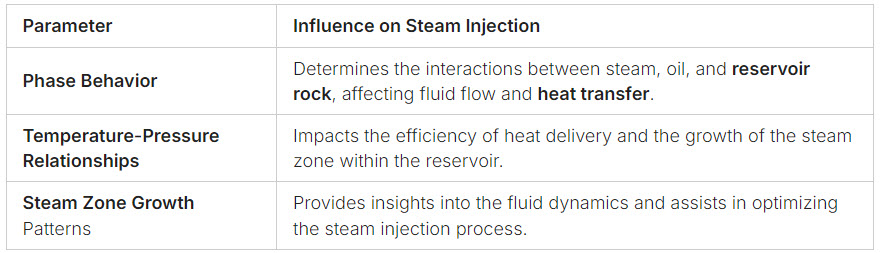
Enhanced oil recovery (EOR) through steam injection needs a deep understanding of thermodynamics and fluid behavior. This section explores how phase behavior, temperature-pressure relationships, and steam zone growth affect this crucial technique.
Phase Behavior During Steam Injection
When steam is injected into the oil reservoir, the fluids' phase behavior becomes complex. The steam, oil, and rock interact, causing phase changes like evaporation and condensation. Understanding these dynamics is key to improving steam injection and oil recovery.
Temperature-Pressure Relationships
The balance between temperature and pressure is vital for steam injection's success. Knowing the temperature-pressure relationships in the reservoir helps predict fluid flow and heat transfer. Managing these factors is crucial for the steam injection process's performance.
Steam Zone Growth Patterns
The growth of the steam zone is essential for steam injection's success. Studying the expansion of the steam zone offers insights into fluid dynamics. By understanding these patterns, operators can improve oil recovery and reduce challenges.
Types of Steam Injection Methods
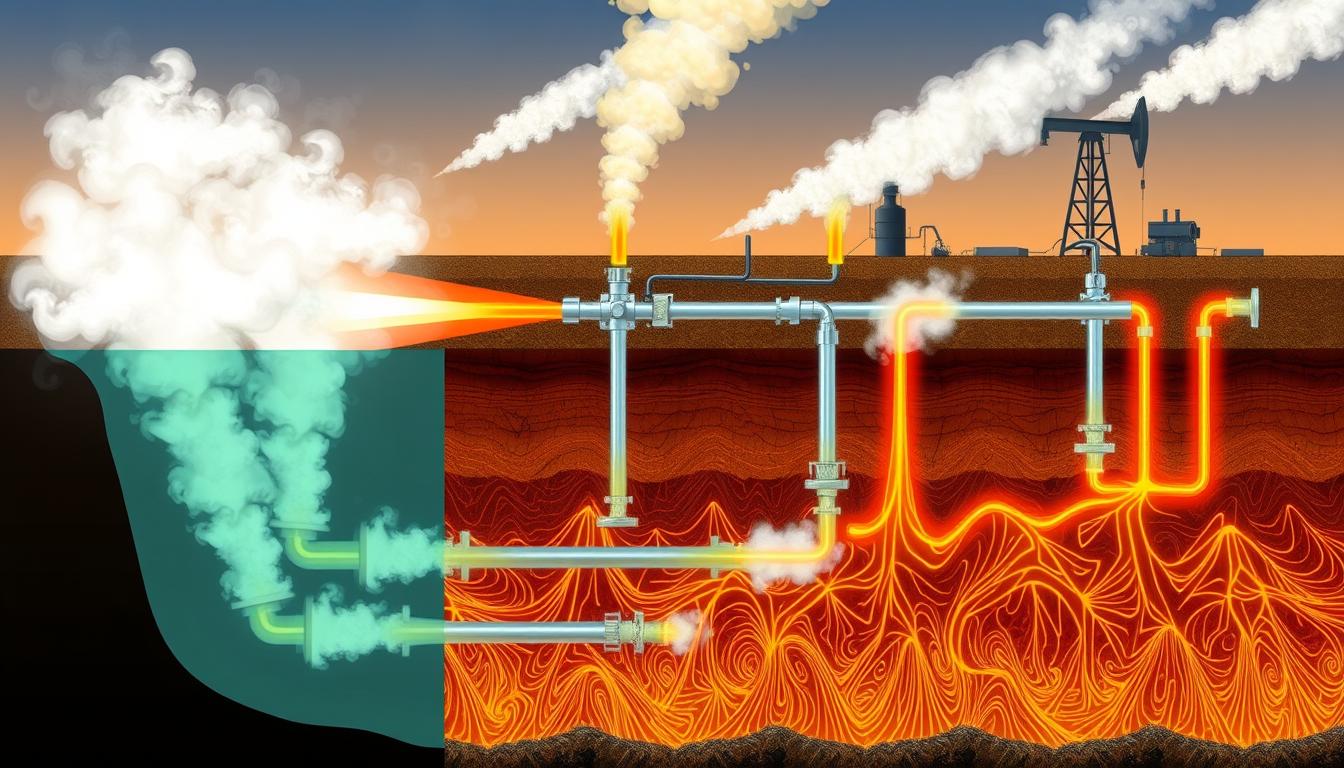
Steam injection is key in enhanced oil recovery (EOR). It helps get more oil out of reservoirs. There are three main methods: cyclic steam stimulation, steam flooding, and steam-assisted gravity drainage. Each has its own benefits and works best for certain types of reservoirs.
Cyclic Steam Stimulation
Cyclic steam stimulation, or "huff and puff," uses high-pressure steam in a well. Then, it soaks and produces oil. This cycle makes heavy oil flow better. It's great for reservoirs with hard-to-move oil.
Steam Flooding
Steam flooding keeps steam flowing into wells. It creates a steam front that moves oil to production wells. This boosts oil recovery. It works well in big, uniform reservoirs.
Steam-Assisted Gravity Drainage
Steam-assisted gravity drainage (SAGD) uses two wells. One injects steam, and the other produces oil. The steam chamber grows, letting oil flow down by gravity. It's best for heavy oil and bitumen.
Each method has its own strengths and weaknesses. Choosing the right one is key to getting the most out of EOR. It helps unlock the full potential of oil resources.
Reservoir Characteristics and Steam Injection Efficiency
To improve oil recovery with steam injection, knowing the reservoir well is key. The success of steam injection depends on porosity, permeability, rock type, and how much oil is there.
Porosity and Permeability Effects
Porosity and permeability are very important. They affect how well steam can get into the rock and move around. Knowing these helps plan a good steam injection plan.
Rock Properties and Heat Distribution
The rock's ability to conduct and hold heat is crucial. Rocks that conduct heat well spread heat evenly. This is important for efficient steam injection.
Oil Saturation Impact
How much oil is in the reservoir matters a lot. More oil means more can be recovered with steam. Knowing where the oil is helps target steam injection for better results.
By focusing on these factors, oil and gas companies can make their steam injection better. This leads to more oil being recovered and makes projects more profitable.
Steam Generation and Surface Facilities
Creating efficient steam is key for successful oil recovery. Steam generators, boilers, and water treatment systems are vital. They make sure the steam is top-notch for the underground reservoir.
Steam generators turn water into steam using heat from natural gas. Boilers also play a big role. They make the steam and keep it at the right temperature and pressure for injection.
Water treatment is also crucial. Bad water can damage the equipment, making it less efficient. Systems like filtration and demineralization keep the water clean for steam making.
Other important equipment like pumps and tanks help move the steam to the wells. Designing these facilities well is important. It helps the steam injection work better and boosts oil recovery.
Conclusion
Steam injection in enhanced oil recovery is key in the energy world. It's set to get even better with new tech. This will make it more efficient and green.
New trends like digital tech and better steam making are coming. They will make steam injection more precise and effective. The industry is also working to reduce its environmental footprint, which is good for the planet.
The future looks bright for steam injection. As energy needs change, this method will keep helping to get more oil. With a focus on innovation and care for the environment, the industry is ready for what's next.
References
- Gates, I. D. (2011). "Steam Injection Strategy Selection." Journal of Petroleum Technology, 63(2), 92–95.
- Butler, R. M. (1991). Thermal Recovery of Oil and Bitumen. Prentice Hall.
- Prats, M. (1986). Thermal Recovery. SPE Monograph Series, Society of Petroleum Engineers.
- Farouq Ali, S. M. (1976). "Steam Injection Theories and Practice." Society of Petroleum Engineers Journal, 16(5), 335–344.
- Lake, L. W. (1989). Enhanced Oil Recovery. Prentice Hall.
About the Creator
Dhivakar Poosapadi
Dhivakar Poosapadi has over 16 years of experience in the design, development, testing, installation, and commissioning of drilling equipment, subsea completion systems, well access systems,
Enjoyed the story? Support the Creator.
Subscribe for free to receive all their stories in your feed.
Comments