
Slash Your Fuel Costs in 2025: A Practical Guide to Smarter Driving
Learn expert strategies and real-world calculations to save hundreds on fuel, whether commuting in Poland or road-tripping across Europe.
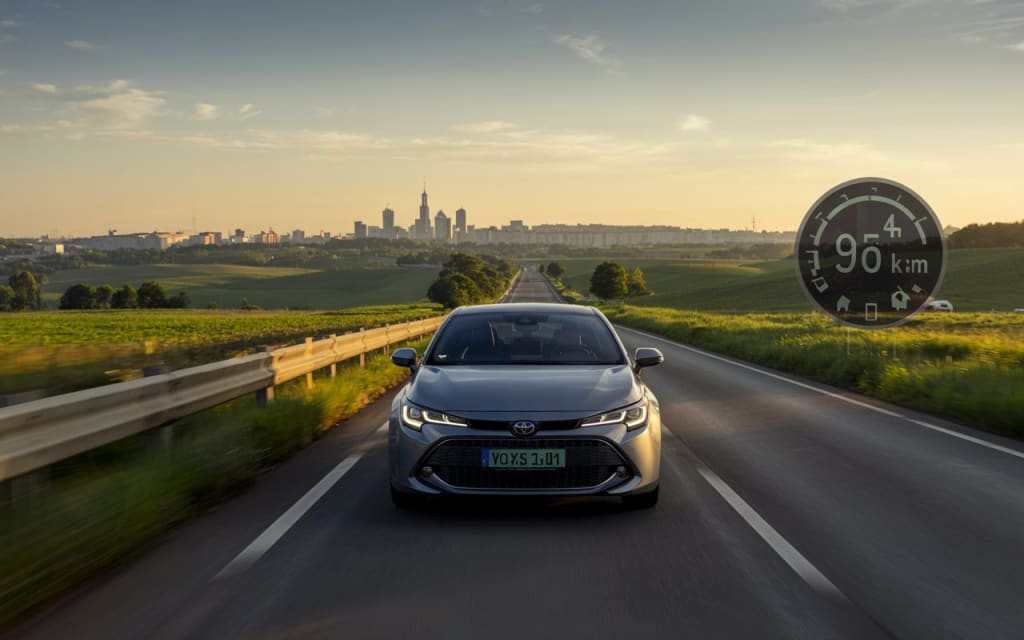
Fuel prices in 2025 remain a hot topic for drivers, with Poland’s petrol and diesel averaging 6.50–7.00 PLN per liter, according to recent market data. For the average driver covering 15,000 km annually, that translates to 4,500–6,000 PLN spent at the pump. With global energy markets still volatile, finding ways to cut fuel costs is more critical than ever.
This article offers a deep dive into practical, data-backed ways to save fuel, from optimizing driving habits to planning efficient routes. Packed with real-world examples and calculations, it’s your roadmap to keeping more money in your wallet. Whether you’re navigating Warsaw’s busy streets or cruising to the Baltic coast, these tips will help you drive smarter.
1. Know Your Car’s Fuel Consumption
Understanding how much fuel your vehicle uses is step one to saving money. Efficiency varies by model, engine, and conditions:
Small car (e.g., Fiat 500 1.2L petrol): ~5.0 liters per 100 km.
Family sedan (e.g., Skoda Octavia 1.5L diesel): ~6.0 liters per 100 km.
Large SUV (e.g., Volvo XC60 2.0L hybrid): ~7.5 liters per 100 km.
Example: Imagine driving a Skoda Octavia from Poznan to Wroclaw (180 km). At 6.0 liters per 100 km and 6.80 PLN per liter:
Fuel used: (180 ÷ 100) × 6.0 = 10.8 liters
Cost: 10.8 × 6.80 = 73.44 PLN
Knowing your car’s baseline helps you spot inefficiencies, like when heavy traffic or underinflated tires bump up consumption by 10–15%.
Tip: Check your vehicle’s fuel economy rating in the owner’s manual or on sites like AutoData. Track real-world usage over a few tanks to confirm.
2. Drive Smarter, Save More
Your driving style directly affects fuel use. Aggressive habits—think rapid acceleration or last-second braking—can increase consumption by 25–30%, per studies from the European Environment Agency.
Fuel-Saving Habits:
Smooth acceleration: Ease into the gas pedal to keep RPMs below 2,500.
Steady speeds: On highways, stick to 90–100 km/h instead of 120 km/h to save 10–12% on fuel.
Minimize idling: Idling burns 0.5–1 liter per hour. Shut off at long traffic lights.
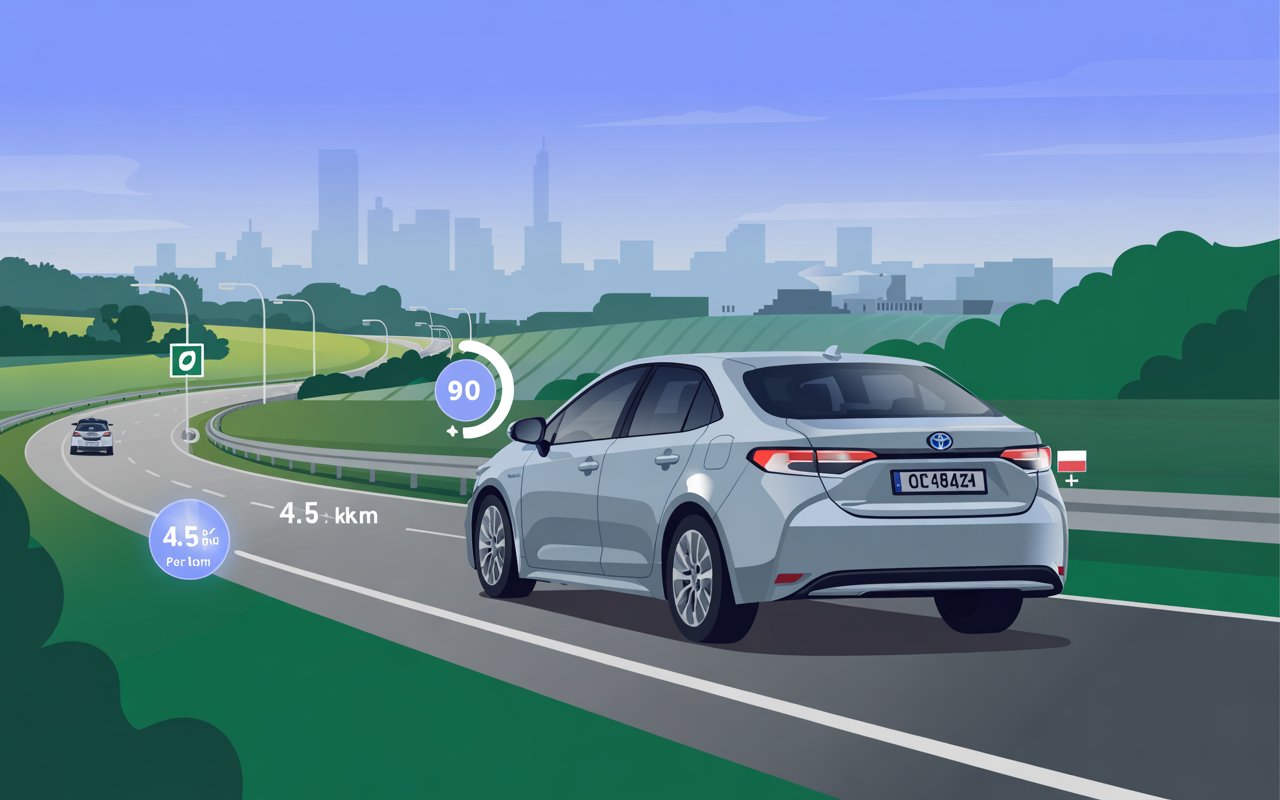
Case Study: Jakub, a Krakow courier, drove a Renault Kangoo van averaging 8.0 liters per 100 km due to frequent stops in city traffic. By accelerating gently and turning off the engine during 3-minute delivery waits, he cut usage to 6.8 liters per 100 km. For his 25,000 km yearly route:
Old cost: 25,000 ÷ 100 × 8.0 × 6.80 = 13,600 PLN
New cost: 25,000 ÷ 100 × 6.8 × 6.80 = 11,560 PLN
Savings: 13,600 – 11,560 = 2,040 PLN
Actionable Tip: Practice “eco-driving” for a week—avoid sudden moves and monitor your dashboard’s fuel economy gauge to see instant improvements.
3. Plan Routes to Burn Less Fuel
Choosing the right route can shave liters off every trip. City driving with constant stops eats 20–35% more fuel than highways, while rural roads with curves or potholes can add 8–10%.
Route Optimization Tips:
Use highways when possible: Consistent speeds trump stop-and-go.
Leverage tech: Apps like Waze or Google Maps now suggest “fuel-efficient routes,” cutting usage by up to 6%, per Google’s 2024 data.
Avoid peak hours: Traffic jams increase fuel burn by 15–20%.
Example: Magda, a Lodz-based sales rep, drives 200 km to Lublin monthly. Her old route through smaller towns used 14 liters (7.0 liters per 100 km) due to traffic lights. Switching to a highway route dropped usage to 11.6 liters (5.8 liters per 100 km):
Old cost: 14 × 6.80 = 95.20 PLN
New cost: 11.6 × 6.80 = 78.88 PLN
Per trip savings: 95.20 – 78.88 = 16.32 PLN
Annual savings (12 trips): 16.32 × 12 = 195.84 PLN
Pro Tip: Before long drives, check alternative routes on navigation apps and estimate fuel costs to pick the cheapest path.
4. Keep Your Car in Top Shape
A poorly maintained vehicle guzzles fuel. The International Energy Agency notes that neglecting upkeep can raise consumption by 10–20%.
Maintenance Musts:
Tires: Underinflated tires increase drag, costing 3–4% more fuel. Inflate to the recommended 2.5–3.2 bar monthly.
Engine oil: Use the right grade (e.g., 5W-30) and change every 10,000–15,000 km to reduce friction.
Air filters: Replace clogged filters every 20,000 km to maintain airflow, saving up to 8%.
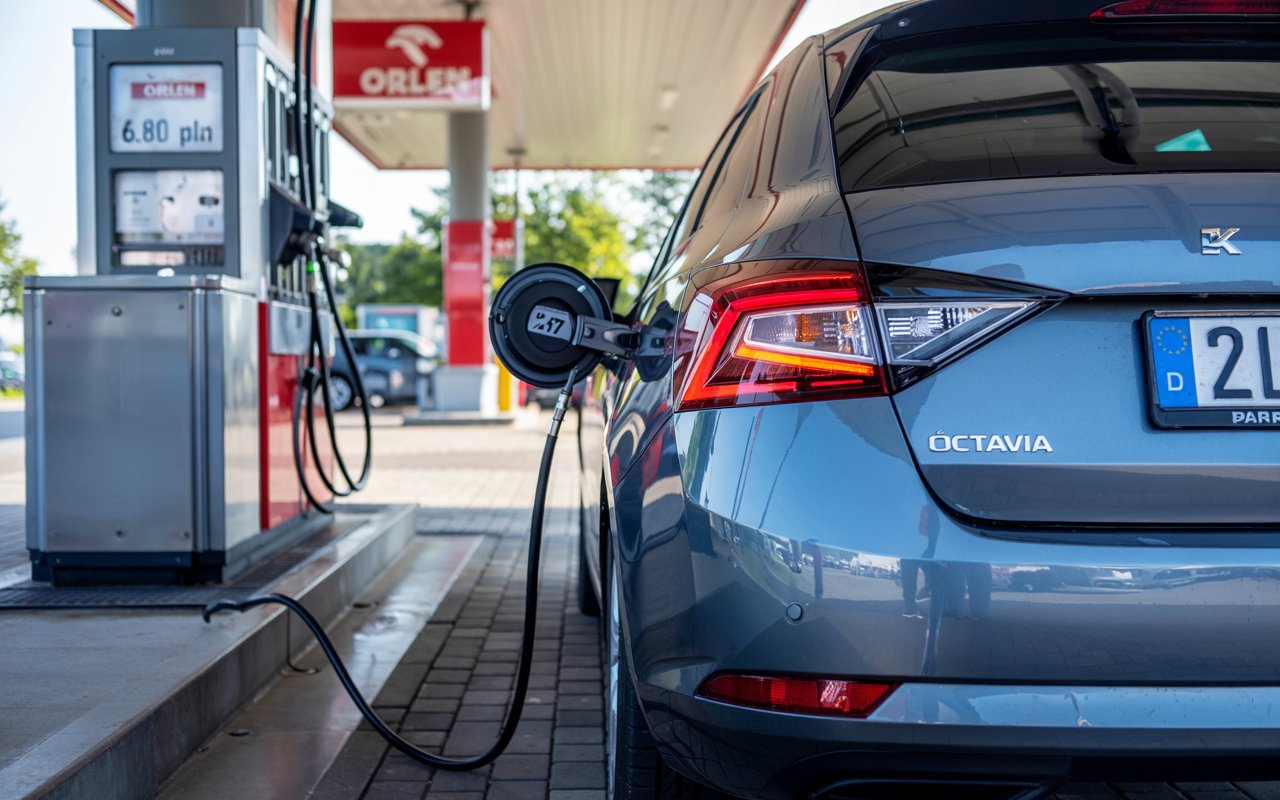
Real-World Impact: Tomek, a Gdansk taxi driver, found his Opel Astra using 7.5 liters per 100 km instead of its rated 6.2 liters. After spending 120 PLN to inflate tires and swap the air filter, usage fell to 6.3 liters. For 18,000 km annually:
Old cost: 18,000 ÷ 100 × 7.5 × 6.80 = 9,180 PLN
New cost: 18,000 ÷ 100 × 6.3 × 6.80 = 7,711.20 PLN
Savings: 9,180 – 7,711.20 = 1,468.80 PLN
Tip: Set calendar reminders for tire checks and oil changes. A 200 PLN service could save you 500–1,000 PLN yearly.
5. Use Tools to Plan and Save
Fuel calculators take the guesswork out of budgeting, helping you estimate costs based on distance, vehicle efficiency, and local prices. One handy option is Kalkulator Paliwa, a Polish tool that simplifies trip planning with accurate, user-friendly calculations.
Scenario: You’re choosing between two cars for a 400 km trip from Katowice to Szczecin:
Car A (Petrol, 7.0 liters per 100 km): 400 ÷ 100 × 7.0 = 28 liters × 6.80 = 190.40 PLN
Car B (Diesel, 5.8 liters per 100 km): 400 ÷ 100 × 5.8 = 23.2 liters × 6.90 = 160.08 PLN
Savings with Car B: 190.40 – 160.08 = 30.32 PLN
Tools like these let you compare options instantly, ensuring you pick the most economical choice.
Bonus: Test “what-if” scenarios, like driving slower or improving tire pressure, to see how small tweaks add up over time.
6. Embrace 2025’s Fuel-Saving Trends
New technologies and habits are making it easier to cut fuel use. Poland’s drivers are increasingly adopting these trends, per a 2024 ORLEN market report:
Hybrids: Models like the Hyundai Tucson Hybrid save 15–30% on fuel for city trips.
Smart apps: Fuelio and Spritmonitor track consumption, offering personalized tips.
Carpooling: Sharing rides via BlaBlaCar cuts individual costs by 50% or more.
Example: Zofia, a Warsaw student, switched to a Kia Niro Hybrid from a petrol Ford Fiesta. Her old car used 7.8 liters per 100 km; the hybrid uses 4.8 liters. For 10,000 km annually:
Old cost: 10,000 ÷ 100 × 7.8 × 6.80 = 5,304 PLN
New cost: 10,000 ÷ 100 × 4.8 × 6.80 = 3,264 PLN
Savings: 5,304 – 3,264 = 2,040 PLN
Trend to Watch: Poland’s government offers subsidies for hybrids (up to 18,750 PLN in 2025), making them a smart long-term investment.
Conclusion: Drive Less, Save More
Cutting fuel costs in 2025 is about strategy, not sacrifice. By knowing your car, driving smarter, planning routes, maintaining your vehicle, using planning tools, and staying open to new tech, you can save hundreds—or thousands—of PLN annually. Start small: check your tire pressure today or try a fuel-efficient route on your next trip.
Got a favorite fuel-saving hack? Share it in the comments! Let’s help each other beat rising prices and drive smarter in 2025.
About the Creator
Enjoyed the story? Support the Creator.
Subscribe for free to receive all their stories in your feed.
Comments