
Sel-test female reproductive system
Self-Test: Understanding the Female Reproductive System

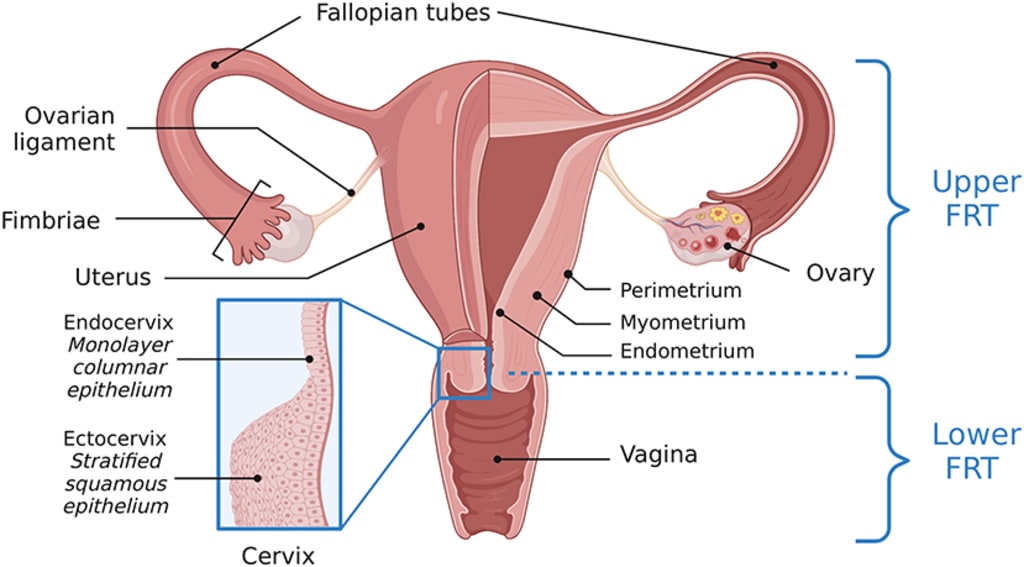
I. Definitions
1. follicles of ovary
2. primordial follicle
3. ovulation
4. corpus luteum
5. menstrual cycle
II. Fill in the blank
1. Primordial follicle is composed of one centrally located
and one layer of flattened which is peripherally located.
2. The development of follicles can be divided into four stages: , , , .
3. Both and are termed growing follicles.
4. Cumulus oospores is the important structure of follicle, which include , , , .
5. In secondary follicle, the theca follicular is differentiated into two layers: and . The former is rich in and ; the latter has plenty of .
6. before the expected onset of the next menstruation ovulation occured. During the process of ovulation, enzymes of the
follicular fluid lead to a rupture of the follicular wall, , and together with the liquor folliculi are released into pelvic cavity.
7. The corpus luteum constitutes of two kinds of cells: and .
8. The corpus luteum can be classified into corpus luteum of (the oocyte is not fertilized) and corpus luteum of (in the case of fertilization).
9. The endometrium of uterus can be divided into two main layers, a superficial and a deeper .
10. During menstrual cycle, three phases can be distinguished , and .
ⅢQuestions
1. Describe the structure of a secondary follicle.
2. Describe the formation, structure and function of corpus luteum.
3. Describe the cyclic histological changes of endometrium during menxtral cycle.
Ⅳ Choose the correct answers for each question.
1. Which of the following descriptions is true about the primordial follicles?
A. The primordial follicle consists of a primordial oocyte and a layer of flat follicle cells.
B. The primordial follicle consists of a primary oocyte and a layer of flat follicle cells.
C. The primordial follicle consists of a primary oocyte and a layer of cuboidal follicle cells.
D. The primordial follicle seperate from the surrounding connective tissue by zona pellucida
E. The primordial follicle seperate from the surrounding connective tissue by theca folliculi
2. Which of the following follicles does not have zona pellucida? A.primordial follicle
B.primary follicle C.secondary follicle
D.growing follicle
E.mature follicle
3. Which of the following structure is not included in the secondary follicle?
A. zona pellucida
B. corona radiata
C. cumulus oophorus
D. theca folluli E.secondary oocyte
4. Which of the following structure is not included in the mature follicle?
A. zona pellucida
B. corona radiata
C. cumulus oophorus
D. mature oocyte
E. theca folliculi
5. When does ovulation occur?
A.14 days after menstrual phase
B.7days after the onset of next menstruation
C.21 days after menstrual phase
D.14 days before the onset of the next menstruation
E. 7 days before the onset of the next menstruation
6. Which of the following descriptions is not true about the corpus luteum?
A. The corpus luteum continues to produce estrogen and progesterone during the whole process of pregnancy.
B. The corpus luteum is formed after ovulation
C. The corpus luteum regressive to form fibrous corpus albicans about 10 days after ovulation, if the oocyte is not fertilized
D. The corpus luteum is vascularised
E. The corpus luteum consists of two types of cell: granulose lutein cell and theca lutein cell.
7. The average length of menstrual cycle is
A. 1days B.25days C.28days D.35days E.38days
8. Which of the following descriptions is not true about secretory phase of menstrual cycle
A. The uterine glands become more coiled
B. The basal layer of endometrium become thicker
C. The helical artery become more coiled
D. The secretory phase last for exactly 14 days
E. The uterine glands start to secrete
Ⅴ Choose the true or false by “T” &“F”
1. The medulla of ovary consists of follicles and corpus luteum in various stages.
2. The primordial follicle is composed of a primary oocyte and a layer of flat follicle cells.
3. The primary follicle is composed of a primary oocyte and several layers of flat follicle cells
4. In the secondary follicle, the secondary oocyte is located at the cumulus oophorus.
5. In the secondary follicle, the granulosa cells surrounding the oocyte are
arranged radially to form the corona radiate.
6. The theca interna of growing follicles derived from fillicle cells.
7. Because of its endocrine function, the corpus luteum is richly vascularised.
8. Follicles can degenerate and perish only at the stage of secondary follicle.
9. Fourteen days before the expected onset of the next mentruation, ovulation occurs.
10. During menstrual phase, the basal layer of endometrium is sloughed.
About the Creator
Enjoyed the story? Support the Creator.
Subscribe for free to receive all their stories in your feed.
Comments
There are no comments for this story
Be the first to respond and start the conversation.