
Scientists Discovered the Bermuda Triangle of Space
Bermuda Triangle of Space
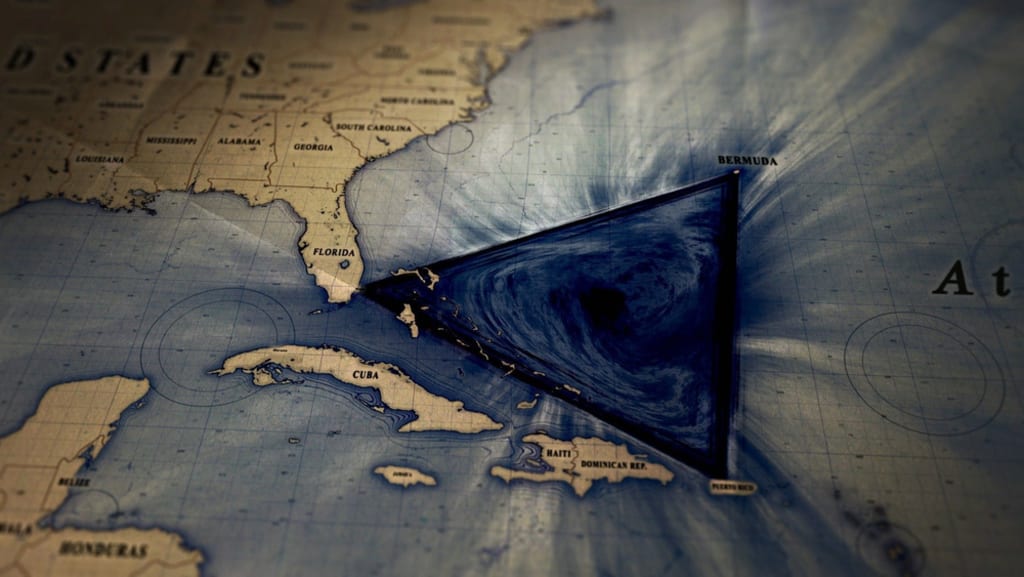
Did you know that there exists a mysterious region in space where astronauts face communication difficulties with their home base, experience heightened radiation levels, and encounter malfunctions in their spaceships? This area has been referred to as the Bermuda Triangle of space and has intrigued scientists for many years. However, astronomers may have finally unraveled this celestial enigma. So, what exactly is this Bermuda Triangle of space? Its official designation is the South Atlantic Anomaly (SAA), situated above the South Atlantic, spanning from Chile to Zimbabwe. Within this region, the magnetic field is notably weaker compared to the rest of the Van Allen radiation belt, which consists of two cosmic rings encircling the Earth. These belts serve as protective shields against harmful radiation emitted by the sun. Unfortunately, the South Atlantic anomaly does not possess the same shielding capacity, leading to a higher influx of solar radiation.
Now, let's delve into what occurs when one ventures into this daunting part of our solar system. The exploration of this space Bermuda Triangle has ignited a yearning for mystery within the "what if" team. We recently immersed ourselves in the game "Hunter Killers: Dead Below Deck" during a games day. This captivating game, brimming with suspicious characters and intriguing evidence, made us feel like the world's greatest detectives. With no rules or time constraints, it was just us, our friends, a plethora of clues, and a mystery awaiting unraveling. The immersive nature of the game was particularly enjoyable, with certain versions incorporating AI chats and real actors to enhance interactivity. It offers standalone cases, multipart sagas, as well as six or twelve-month subscriptions. Should you encounter any hurdles, a spoiler-free online community is readily available for assistance. It is perfect for game nights, dates, or family fun. Obtain your copy of "Hunter Killers: Dead Below Deck" from Amazon, Target, or Walmart today. We extend our gratitude to Hunter Killer for sponsoring this episode. Now, let's endeavor to solve the mystery of the space Bermuda Triangle.
The South Atlantic Anomaly, or SAA, is notorious for causing electronic malfunctions in spacecraft and exposing astronauts to extreme levels of radiation. In 2016, the Japanese satellite Hitomi met a tragic fate, crashing to Earth due to mixed signals received by operators while it passed through the SAA. The inaccurate data misled operators on Earth, preventing them from addressing the issue promptly. However, the Hubble telescope has been fortunate enough to avoid any complications during its frequent encounters with the SAA, despite spending a significant 15 percent of its time within this space anomaly. To safeguard the telescope, satellite operators power it down, as failure to do so could corrupt valuable data or potentially lead to a crash.
How do astronauts cope with the intense radiation levels? Their radiation levels are constantly monitored, and in the event of encountering the anomaly, they retreat to designated rooms shielded by massive water-filled bags, aptly called "water walls." These walls provide protection against radiation due to water's high hydrogen content. Without this shielding, astronauts would be at risk of severe radiation poisoning and potential cancer development. It is evident that radiation levels are substantially higher and more perilous in this specific region of space. But why does this phenomenon occur?
Contrary to popular belief, Earth is not perfectly spherical; it bulges around its center. As a result, the Earth's physical center and its magnetic center are slightly misaligned by approximately 500 kilometers. This disparity enables cosmic rays to approach closer to the Earth's surface in the bulging region. Thankfully, the Earth's magnetic field still prevents these hazardous rays from reaching us. However, individuals situated in space above the South Atlantic do not benefit from this shielding. Consequently, the radiation levels in this area are more potent. Adding to the concern, the South Atlantic anomaly has been expanding due to the constant fluctuations of Earth's magnetic poles. Moreover, it has weakened by 15%, intensifying the radiation within the region. Since 2019, NASA has diligently monitored the SAA. They have observed its westward movement and an intriguing development: the anomaly is now splitting into two. If this trend continues, it could complicate future space travel and data collection. Fortunately, significant changes would require millions, if not billions, of years. Hence, this space Bermuda Triangle is not as enigmatic as it appears, and astronomers are progressively improving their ability to navigate and comprehend it with each new mission and data acquisition. However, if the Earth's magnetic poles were to suddenly flip, this could potentially escalate into a significantly larger predicament.
About the Creator
Enjoyed the story? Support the Creator.
Subscribe for free to receive all their stories in your feed.
Comments