
Science Behind Hindu Rituals : A Journey Into Daily Spiritual Practices
From Tilak to Temple Bells: The Hidden Science Behind Hinduism’s Sacred Practices

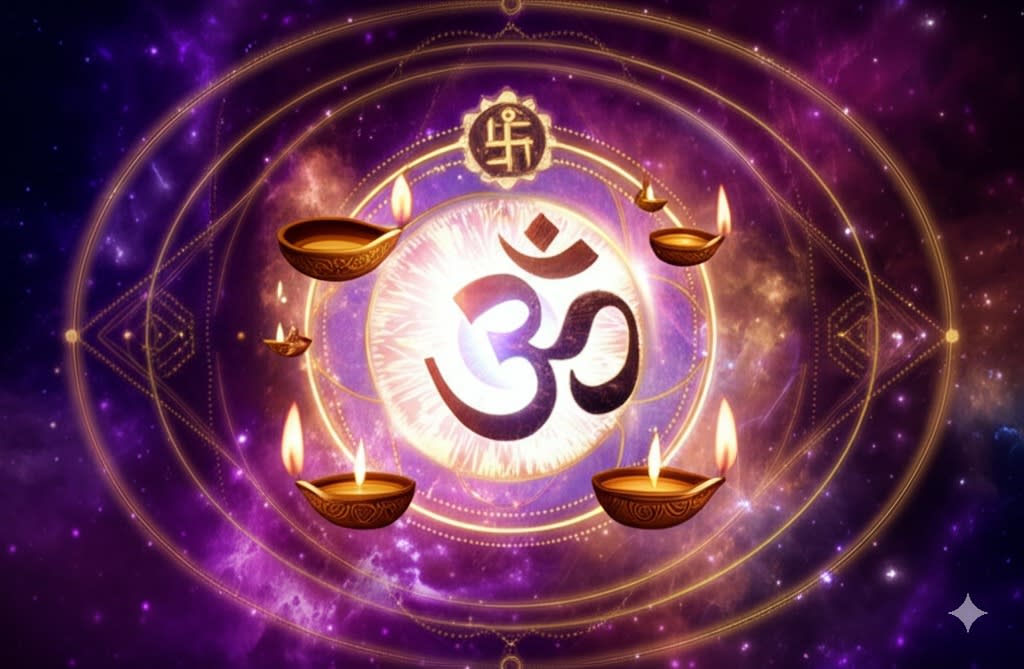
Hinduism, one of the world’s oldest living religions, is a tapestry of rituals, philosophies, and cultural practices that have evolved over millennia.
These rituals are far more than cultural formalities—they are profound bridges between the material and spiritual worlds, designed to cultivate mindfulness, discipline, and a deeper connection to the divine.
In this exploration, we delve into the science, symbolism, and spiritual wisdom behind Hinduism’s most enduring daily practices, uncovering how ancient traditions remain relevant in modern life.
1. The Power of Mantras: Vibrations That Heal and Transform
At the heart of Hindu rituals lies the chanting of mantras, sacred syllables or phrases believed to hold transformative energy.
The Gayatri Mantra, for instance, is recited at sunrise to honor Surya (the sun deity), symbolizing the awakening of consciousness and gratitude for light and life.
Modern neuroscience reveals that rhythmic chanting can synchronize brainwaves, reduce cortisol levels, and enhance mental clarity.
The vibrations produced during mantra recitation, such as the primordial sound "Om," resonate at frequencies that stimulate the vagus nerve, promoting relaxation and emotional balance.
Historically, mantras were preserved through oral tradition, passed down meticulously to retain their vibrational integrity.
Today, practices like japa (repetitive chanting with a mala) are used not only for worship but also as tools for meditation and stress relief.
This fusion of spirituality and science underscores Hinduism’s timeless understanding of the mind-body connection.
2. Lighting the Diya: Illuminating the Path to Clarity
The lighting of a diya (oil lamp) is a ubiquitous Hindu ritual, performed during prayers, festivals, and even daily routines.
Fire, in Hindu philosophy, represents purity, knowledge, and the destruction of ignorance (tamas). The flickering flame symbolizes the eternal soul (atman) and its quest for liberation (moksha).
Scientifically, the materials used in diyas—such as ghee (clarified butter) or sesame oil—release negative ions when burned, which purify the air by neutralizing pollutants and airborne pathogens.
The soft glow of the diya also reduces reliance on harsh artificial light, creating a calming ambiance conducive to meditation.
In temples, rows of diyas are lit to signify the collective awakening of devotees, transforming spaces into sanctuaries of peace and introspection.
3. Offering Naivedyam: Nourishing Body and Soul
The practice of offering food to deities (naivedyam) before consuming it is rooted in the belief that divinity pervades all creation.
By presenting the first portion of a meal to God, Hindus express gratitude and acknowledge food as a sacred gift, not merely sustenance.
This ritual is deeply tied to the concept of prasad—blessed food that carries divine energy.
From a psychological perspective, this act fosters mindfulness, encouraging individuals to eat with intention and avoid wastefulness.
Seasonal offerings, such as sweets during Diwali or fruits during Navratri, also align with Ayurvedic principles, emphasizing harmony with nature’s cycles.
For instance, cooling foods like coconut water are offered in summer, while warming ingredients like jaggery are used in winter, reflecting an innate understanding of holistic health.
4. Applying Tilak: The Third Eye and Spiritual Identity
One of Hinduism’s most visually distinctive practices is the application of tilak—a mark made with sacred substances like sandalwood, turmeric, or vermilion on the forehead.
While often perceived as a cultural emblem, the tilak holds layers of spiritual and scientific significance.
The spot where the tilak is applied, between the eyebrows, corresponds to the ajna chakra (the “third eye”) in yogic philosophy. This energy center is associated with intuition, insight, and spiritual awakening.
Applying tilak with gentle pressure stimulates nerve endings in this region, promoting focus and calming the mind.
Historically, the tilak also served as a social and sectarian marker: Vaishnavas use white clay in a U-shape, while Shaivites adorn three horizontal lines of ash.
Curious about the regional variations and deeper symbolism of this practice?
Explore our detailed guide: Why Do Hindus Apply Tilak on the Forehead?.
5. Circumambulation (Pradakshina): Aligning with Cosmic Order
Walking clockwise around a temple, deity, or sacred fire (pradakshina) is a ritual of humility and alignment.
The circular motion mirrors the Earth’s orbit around the sun and the cycles of time (kala), symbolizing the devotee’s surrender to cosmic harmony.
Physically, this practice encourages mindful movement, while spiritually, it reinforces the idea that God is the center of existence.
In temple architecture, the number of circumambulations often corresponds to Vedic numerology.
For example, seven rounds around a peepal tree honor the Saptarishis (seven sages), linking the ritual to ancestral reverence.
6. Fasting (Vrat): Discipline and Detoxification
Fasting is a cornerstone of Hindu spiritual practice, observed during festivals like Ekadashi, Navratri, or Karva Chauth.
Beyond its religious significance, fasting is a form of tapas (austerity) that cultivates self-control and mental resilience.
Biologically, intermittent fasting—a concept now popularized globally—supports detoxification, improves metabolic health, and enhances cognitive function.
Certain fasts, like those avoiding grains during Navratri, align with seasonal harvest cycles, promoting the consumption of easily digestible foods like fruits and nuts.
Psychologically, fasting fosters empathy, reminding individuals of those who face food scarcity.
7. The Role of Bells in Worship: A Sonic Gateway to the Divine
The ringing of bells (ghanta) during Hindu rituals is believed to ward off negative energies and invite divine presence.
The sound’s vibrations create a frequency that disrupts stagnant energy, enhancing focus during prayer.
Acoustically, bells produce a unique blend of harmonics that can alter brainwave patterns, inducing states of alert relaxation.
In temples, the bell’s echo symbolizes the primordial sound of creation, echoing the idea that the universe began with a cosmic vibration (Nada Brahma).
8. Yoga and Pranayama: Rituals of Inner Alchemy
Though globally recognized as physical exercise, yoga and pranayama (breath control) are deeply ritualistic in Hinduism.
The Surya Namaskar (sun salutation) is both a physical workout and a devotional act, honoring the sun’s life-sustaining energy.
Modern studies validate pranayama’s benefits: techniques like Nadi Shodhana (alternate nostril breathing) balance the autonomic nervous system, reducing anxiety and improving cardiovascular health.
These practices exemplify Hinduism’s holistic approach to well-being, uniting body, mind, and spirit.
Why Rituals Matter in the Modern World
In an era dominated by digital distractions and existential stress, Hindu rituals offer grounding and purpose.
They are not relics of the past but living traditions that adapt to contemporary needs.
For instance, urban Hindus might light a digital diya on a smartphone app or recite mantras via meditation podcasts, blending ancient practices with modern convenience.
Rituals also foster community. Festivals like Diwali or Holi transcend religious boundaries, uniting people in shared joy and reflection.
On a personal level, daily practices like applying tilak or chanting mantras become anchors of stability, reminding individuals of their spiritual identity amidst life’s chaos.
Conclusion: Rituals as Living Wisdom
Hindu rituals are invitations to experience the sacred in the ordinary. Whether through the resonant chant of a mantra, the glow of a diya, or the mindful application of a tilak, these acts transform routine into reverence.
They are not about blind adherence but conscious engagement—a way to reconnect with our inner divinity and the interconnected web of life.
By understanding the science and symbolism behind these practices, we unlock their timeless relevance.
As the world grapples with disconnection and burnout, perhaps the answer lies in these ancient rhythms of mindfulness, gratitude, and awe.
About the Creator
Rahul Prabhakar
I specialize in writing articles on education and technology, creating content that caters to anyone eager to learn and deepen their understanding.
Enjoyed the story? Support the Creator.
Subscribe for free to receive all their stories in your feed.
Comments
There are no comments for this story
Be the first to respond and start the conversation.