
Ruth E. Carter’s Masterclass Relaunch Shows How Digital Learning Can Open Doors for the Next Generation of Black Creatives
Through ePLC, the two-time Academy Award winner’s creative knowledge can reach beyond a physical classroom, offering a glimpse at how technology, industry and education can work together to expand access to creative careers
What if where you live no longer determined who you could learn from?
For generations, access to some of the most valuable professional knowledge has depended heavily on proximity. You needed to attend the right school, live in the right city, land the right internship or somehow find your way into the right room. For emerging Black creatives, those barriers have often been even more difficult to navigate.
Technology has given us an opportunity to rethink that model.
When digital learning is combined with real industry experience, it can do more than make education convenient. It can expand who gets access to people, knowledge and professional perspectives that might otherwise remain out of reach.
That is what makes the Aug. 17 relaunch of the Ruth E. Carter Masterclass by adidas | ePLC through Pensole Lewis College of Business & Design (PLC Detroit) particularly interesting.
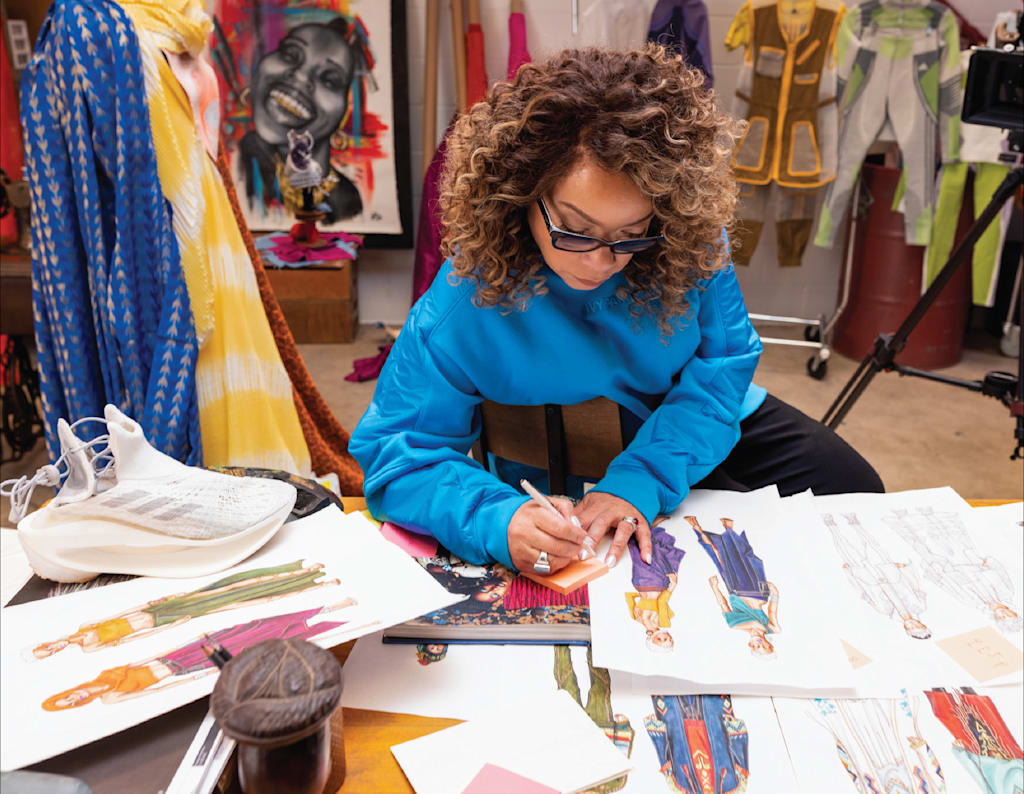
Following the strong response to the inaugural program, the masterclass is returning to give another group of emerging creatives access to Carter’s approach to character development, research, visual storytelling, strategic problem-solving and Afrofuturism.
Carter has spent more than three decades building one of the most extraordinary careers in costume design. The two-time Academy Award winner and five-time nominee has helped shape the visual identity of films including Malcolm X, Amistad, Black Panther, Black Panther: Wakanda Forever and Sinners. Her work has demonstrated repeatedly that costume design can do much more than dress a character. It can communicate history, identity, culture and emotion before an actor speaks a word.
The opportunity to study the thinking behind that work has value.
The fact that technology can help extend access to it has even greater implications.
Digital Learning Can Change Who Gets Into the Room
We often talk about technology in education in terms of convenience. Students can participate remotely, access materials online and learn outside a traditional classroom.
Those benefits matter, but I believe there is a much bigger conversation to be had.
Technology can change who gets into the room, even when the room is virtual.
ePLC is PLC Detroit’s digital learning platform, offering self-paced, virtual and hybrid educational experiences. The platform is part of a broader educational model that connects emerging creatives with industry-informed learning and professional development. PLC Detroit’s certificate programs, for example, pair students with instructors and design mentors from globally recognized brands and emphasize hands-on learning, industry insight and professional skills.
That distinction is important.
Putting a class online does not automatically make it transformative. The value comes from what becomes accessible once it is there.
In this case, emerging creatives can gain exposure to methodologies developed over decades by one of the most accomplished costume designers working today without requiring every participant to relocate to Los Angeles, New York or Detroit simply to begin learning from that perspective.
Geography becomes less of a gatekeeper.
For creative industries that have historically depended heavily on relationships, networks and proximity, that matters.
Ruth E. Carter Is Sharing More Than a Creative Process
There is another reason Carter’s involvement is significant.
Emerging creatives can find tutorials almost anywhere. They can watch videos, follow designers on social media and learn how to use new software within hours of its release.
What is much harder to find is perspective developed through experience.
How does a designer begin researching a character?
How do you translate history and culture into something visual without reducing either to decoration?
How do you develop an idea, receive feedback, rethink it and continue refining it?
How do you build a creative voice strong enough to be recognizable while remaining flexible enough to serve the story?
Those are not simply technical questions. They are professional questions, and the answers are usually developed through years of doing the work.
Carter’s career provides an extraordinary case study.
Her groundbreaking approach to Afrofuturism in Black Panther helped audiences imagine an African society whose technological advancement existed alongside, rather than in opposition to, its cultural traditions. The costumes became an integral part of the storytelling because research, culture and imagination were working together.
For someone trying to build a creative career, understanding why those choices were made can be just as important as seeing the finished designs.
A Physical Space and a Digital Pathway
The masterclass is also part of a larger relationship among Carter, PLC Detroit and adidas.
Last year, they unveiled the Ruth E. Carter Apparel Creation STU/DEO by adidas at PLC Detroit, a dedicated classroom and creative workspace designed by PLC Detroit alumni Angel Buckens and Rodney Banks.
The significance of the STU/DEO and ePLC together should not be overlooked.
One creates a physical environment where emerging designers can develop their craft. The other provides a digital pathway capable of extending learning beyond the boundaries of the campus.
That combination points toward a larger question for education: Why should access have to be either physical or digital when it can be both?
A student who benefits from an immersive studio environment has one kind of experience. Someone hundreds or thousands of miles away who gains access to industry knowledge through digital learning has another. Both can be valuable when they are intentionally designed around professional preparation.
PLC Detroit’s broader programming already reflects that approach. Its ePLC platform offers online programs designed around different learning needs, while the college has developed virtual and hybrid programs with major brands that combine hands-on projects, professional mentorship, industry-relevant skills and networking opportunities.
The Real Conversation Is Workforce Development
This is where the conversation moves beyond education. Creative talent exists everywhere. Professional opportunity does not. The challenge is building stronger bridges between the two.
PLC Detroit describes its academic approach as hands-on and learn-by-doing, with an emphasis on technical skills, industry insight and creative problem-solving that can prepare students for professional careers. Its pathways also incorporate concept development, prototyping, marketing, networking and portfolio development rather than separating creative education from the realities of working in the industry.
That is workforce development.
It is not simply teaching someone how to design. It is helping them understand how professional industries operate, what employers expect, how ideas are communicated, how collaboration works and how creative talent becomes something that can translate into a sustainable career.
Technology can help expand the reach of that preparation. It cannot guarantee someone a job, nor should any educational program suggest that it can. What it can do is make industry knowledge and professional exposure available to people who might otherwise have difficulty accessing either.
That can help close the distance between talent and opportunity.
Access Matters as Much as Inspiration
Representation remains important. Seeing Carter become the first Black person to win the Academy Award for costume design mattered. Watching her make history again as the first Black woman to win two Oscars mattered. Seeing her continue to push the craft forward matters.
A young Black designer can look at Carter’s career and see possibility. But inspiration and access are not the same thing.
It is one thing to see someone standing at the top of an industry. It is another to gain some understanding of how they think, research, solve problems and approach their craft.
We should be working toward both.
One participant in the inaugural Carter masterclass described the experience this way:
“It was a great intro to the beginning stages of costume design. Getting feedback was also amazing and something I will take with me as I continue to develop this character and the other characters in this story.”
What stands out to me is the idea of taking the learning forward.
That is ultimately what education should do. The goal should not be to just complete a class or earn another line on a resume. The experience should influence what someone does next.
Technology Should Expand Opportunity, Not Just Access to Content
Today, when almost every industry is trying to determine what technology means for its future, in education, I believe we should ask a more specific question.
Who can technology bring closer to opportunity?
There is already more content online than anyone could consume in a lifetime. Making more content available cannot be the only goal.
The greater opportunity is using technology to connect people with knowledge, mentorship, professional expectations and experiences that can help them move forward.
That is why the Ruth E. Carter Masterclass relaunch represents something larger than the return of a digital course. It offers a real-world example of what can happen when technology, education and industry expertise intersect with intention.
Carter has already made history through the work audiences have seen on screen. Through ePLC, some of the thinking and methodology behind her work can travel much farther.
The next generation of extraordinary creative talent may be sitting in Detroit, Atlanta, Los Angeles or a small town hundreds of miles from any major creative hub.
Talent has never belonged to one ZIP code. Nor should opportunity.
Technology cannot replace mentorship, experience or human connection, but it can change who gets access to them. When digital learning connects emerging talent with people who have already reached the highest levels of an industry, geography becomes less of a gatekeeper to opportunity.
That is where digital education becomes more than technology. It becomes a pathway.
Learn more about the masterclass here.
About the Creator
Phyllis Caddell
Phyllis Caddell is the founder and lead strategist of PCPR Communications in Los Angeles. She is a bestselling author, ghostwriter, publicist, and communications strategist, guiding clients in enhancing their brand narratives.
Enjoyed the story? Support the Creator.
Subscribe for free to receive all their stories in your feed.
Comments
There are no comments for this story
Be the first to respond and start the conversation.