
Ruth E. Carter’s Free Masterclass Returns With Lessons for Aspiring Creatives
PLC Detroit’s online course by adidas and ePLC offers another opportunity to explore Afrofuturism, research and storytelling through costume design
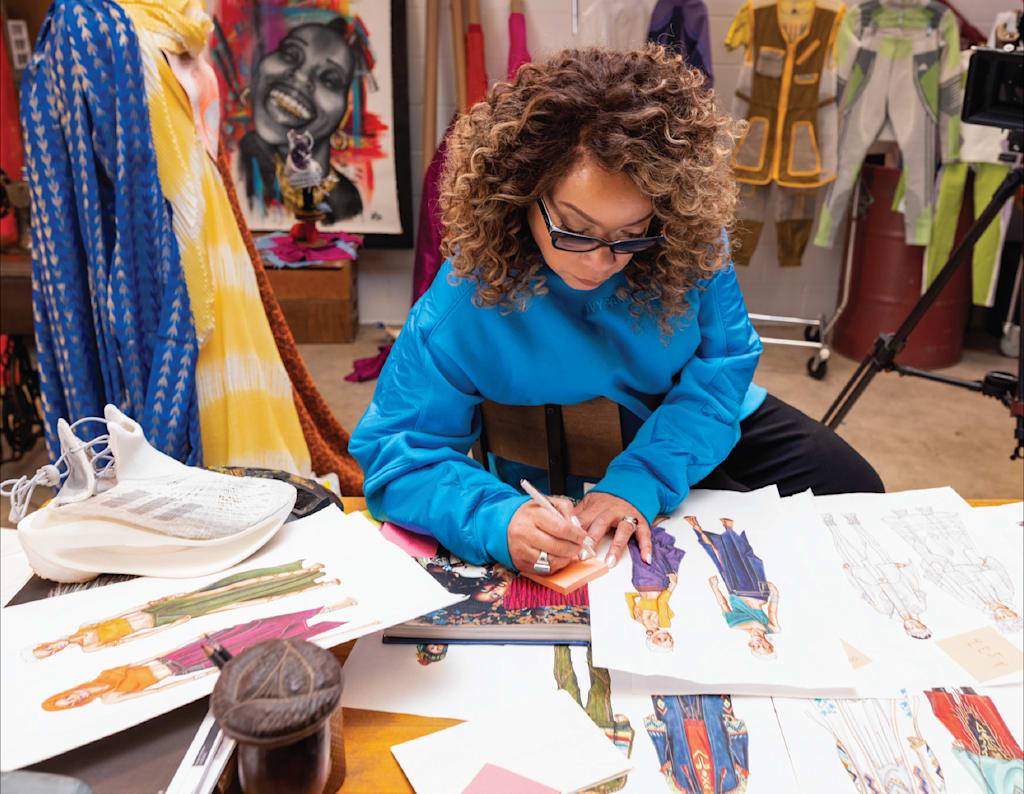
Ruth E. Carter’s free costume design masterclass is back, giving aspiring creatives another opportunity to explore how the two-time Oscar winner turns culture, research and imagination into costumes that tell a story.
Pensole Lewis College of Business & Design (PLC Detroit) has reopened enrollment for the Ruth E. Carter Masterclass by adidas and ePLC. The self-paced online course welcomes beginners and experienced creatives, with submission requirements based on each participant’s skill level.
For anyone who missed the first round, the return offers a chance to learn from Carter’s process and apply those lessons through their own sketches and renderings. The appeal goes beyond learning from a celebrated designer. It is an opportunity to understand why a costume works, how research informs its development and what makes clothing meaningful to a character.
Carter’s extensive body of work spans more than three decades, with costume design credits that include “Black Panther,” “Black Panther: Wakanda Forever,” “Malcolm X” and “Sinners,” among many others. Her work demonstrates how costumes can help audiences understand a character’s identity and the world they inhabit.
The masterclass gives participants a way to explore the thinking behind those choices.
From an idea to a character
A visual idea is a starting point. Developing it into a costume requires decisions about the character, the setting and the story. Through four video modules, Carter shares her approach to character development, research, world-building and creative problem-solving.
“Costume design is storytelling. It requires research, cultural respect, and the courage to continually evolve your craft,” Carter said.
For an aspiring designer, that emphasis offers a useful way to approach the work. Research can help establish the context for a character, while sketches and renderings provide a way to translate that understanding into a design.
Participants have an opportunity to practice that connection. The course requires them to create and submit work, giving them a reason to move beyond watching the lessons and begin making their own creative decisions.
Someone interested in fashion might use the experience to explore how clothing communicates identity. A storyteller might consider how a character’s appearance supports the narrative. For someone already developing design skills, the assignments offer a focused opportunity to examine the relationship between an idea and its visual execution.
Those possibilities make the course relevant to creatives with different interests, even if they are still deciding whether costume design is a direction they want to pursue.
Exploring culture through Afrofuturism
Afrofuturism is central to the course, which examines how culture, imagination and storytelling come together to build worlds through costume design.
“Afrofuturism has always been about expanding our imagination—about seeing ourselves in worlds that honor our past while designing the future,” Carter said.
That perspective invites participants to think about how cultural knowledge can inform imagined worlds. It also places research within the creative process, showing how an understanding of history and identity can contribute to a design’s meaning.
For learners, the benefit is an opportunity to explore those relationships through Carter’s approach and then consider how they might inform their own work. The course connects creative exploration with assignments that ask participants to develop and communicate their ideas.
Free access with room for different experience levels
Cost can affect whether someone explores a creative interest. Because this course is free, participants can investigate costume design without paying tuition for the experience.
Its self-paced online format also provides flexibility in how learners move through the material. They do not have to travel to PLC Detroit’s campus to access the lessons.
Participants identify their skill level as beginner, intermediate or advanced, with sketches and final renderings submitted according to the criteria for that level. This allows someone new to the subject to begin at an appropriate level while giving more experienced creatives requirements that reflect their preparation.
The masterclass continues Carter’s collaboration with PLC Detroit and adidas. Carter, a Hampton University graduate, is also the college’s first artist-in-residence.
PLC Detroit is Michigan’s only historically Black college and the nation’s only design-focused HBCU. Through ePLC, its online learning platform, the college extends this course to aspiring creatives beyond Detroit.
“Today, we invite aspiring creatives worldwide to learn from her through our online platform, ePLC,” said Dr. D’Wayne Edwards, president of PLC Detroit. “Her groundbreaking career inspires us to open doors for the next generation to shape the future of design.”
Putting the lessons into practice
Completing the course requires finishing all four modules, uploading the required sketches and renderings, and earning a 100% score on the final assessment. Participants can take the assessment multiple times.
The next review of completed work takes place in November 2026. Three top course completers will be selected to receive a live feedback session with Carter, a virtual certificate of completion and access to the exclusive Creator Club community.
For the selected participants, hearing Carter respond to their work could help identify ideas to develop further or choices to reconsider. That feedback opportunity adds to a course already structured around learning and applying a creative process.
Participants should complete the course by November 2026 for the upcoming review.
If you missed the first round, the course’s return offers another place to begin. Whether you are exploring a new interest or building on existing experience, the opportunity is to study how costume design tells a story and put that thinking into your own work.
Details and free enrollment are available through the Ruth E. Carter Masterclass by adidas and ePLC course page.
About the Creator
Phyllis Caddell
Phyllis Caddell is the founder and lead strategist of PCPR Communications in Los Angeles. She is a bestselling author, ghostwriter, publicist, and communications strategist, guiding clients in enhancing their brand narratives.
Enjoyed the story? Support the Creator.
Subscribe for free to receive all their stories in your feed.
Comments
There are no comments for this story
Be the first to respond and start the conversation.