
Quantum Computing
Quantum Computing: Principles and Quantum Mechanics


In recent years, quantum computing has emerged as a revolutionary field with the potential to transform various industries and solve complex problems that are beyond the reach of classical computers. At the heart of quantum computing lies the principles of quantum mechanics, a branch of physics that describes the behavior of matter and energy at the smallest scales. Understanding these principles is crucial for grasping the fundamentals of quantum computing.
Quantum mechanics departs from classical mechanics by introducing the concept of superposition. In classical mechanics, objects exist in a well-defined state, such as a particle having a specific position and momentum. However, in the quantum world, particles can exist in multiple states simultaneously. This means that a quantum bit, or qubit, which is the basic unit of information in quantum computing, can represent not just 0 or 1, but also a combination of both states at the same time.
Another important principle of quantum mechanics is entanglement. When two or more qubits become entangled, their states become correlated in such a way that the state of one qubit cannot be described independently of the others. This phenomenon enables quantum computers to perform parallel computations by manipulating entangled qubits, leading to potentially exponential speedup for certain computational tasks.
One of the most well-known algorithms in quantum computing is Shor's algorithm, which demonstrates the power of quantum computers in factoring large numbers. Factoring large numbers is a computationally intensive problem that forms the basis of modern encryption algorithms. Classical computers struggle with factoring large numbers, making them susceptible to attacks, but quantum computers have the potential to break these encryption schemes efficiently using Shor's algorithm.
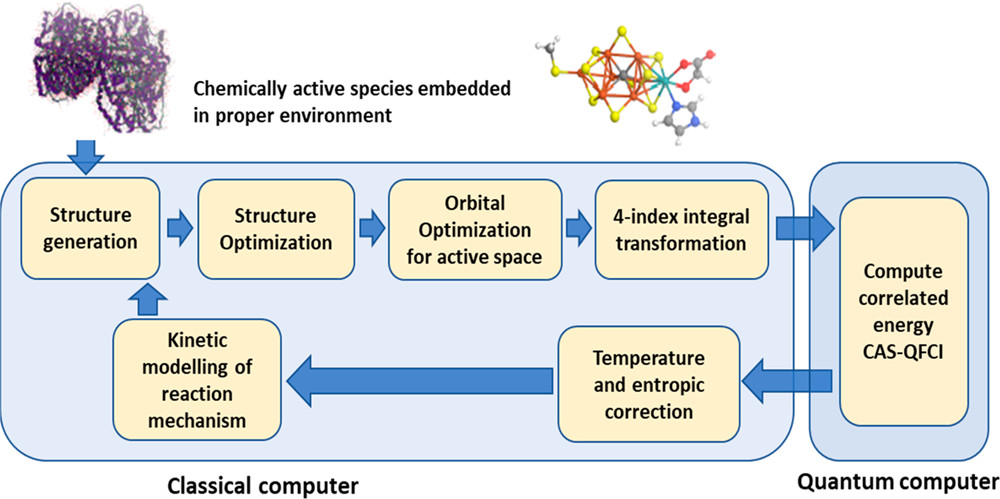
However, harnessing the power of quantum computing is not without challenges. One major obstacle is decoherence, which refers to the loss of quantum coherence in qubits due to interaction with the environment. Quantum systems are extremely sensitive, and even tiny disturbances from factors such as temperature or electromagnetic radiation can disrupt the delicate superposition and entanglement states. Researchers are actively working on developing error correction techniques and building robust quantum hardware to mitigate the effects of decoherence.
Another challenge lies in the practical implementation of quantum gates, the basic building blocks of quantum circuits. Quantum gates manipulate qubits to perform computations. However, designing and executing quantum gates accurately and reliably is a complex task, requiring precise control over physical systems at the quantum level. Advancements in technologies such as superconducting qubits, trapped ions, and topological qubits are being pursued to overcome these challenges.
Despite these challenges, progress in quantum computing has been remarkable. Several companies and research institutions are actively pursuing quantum computing research, and quantum computers with a few dozen qubits are already available. These systems are being used to explore various applications, including optimization problems, simulation of quantum systems, and machine learning algorithms.
Quantum computing has the potential to revolutionize fields such as drug discovery, material science, optimization, and cryptography. Its ability to solve complex problems efficiently has the potential to drive scientific breakthroughs and transform industries. As researchers continue to improve quantum hardware, develop new algorithms, and overcome the challenges of quantum mechanics, the possibilities for quantum computing are expanding rapidly.
In conclusion, quantum computing is founded on the principles of quantum mechanics, which allows qubits to exist in superposition and become entangled. These principles enable quantum computers to perform computations that are intractable for classical computers. While challenges such as decoherence and quantum gate implementation remain, the progress in quantum computing is promising. With further advancements, quantum computing has the potential to reshape our technological landscape and solve problems that were once thought to be impossible.
About the Creator
SUSILKUMAR S
I am dedication and commitment to their craft have earned them a loyal following, and they continue to captivate their audience with fresh, well-crafted content on a regular basis. Their blog serves as a reliable destination for individual
Enjoyed the story? Support the Creator.
Subscribe for free to receive all their stories in your feed.
Comments
There are no comments for this story
Be the first to respond and start the conversation.