
QTLS The Teacher Status Debate: Why More Educators Are Comparing QTLS vs QTS in 2026
If you’re planning a teaching career in the UK, you’ve probably encountered two terms that often create confusion: QTLS vs QTS

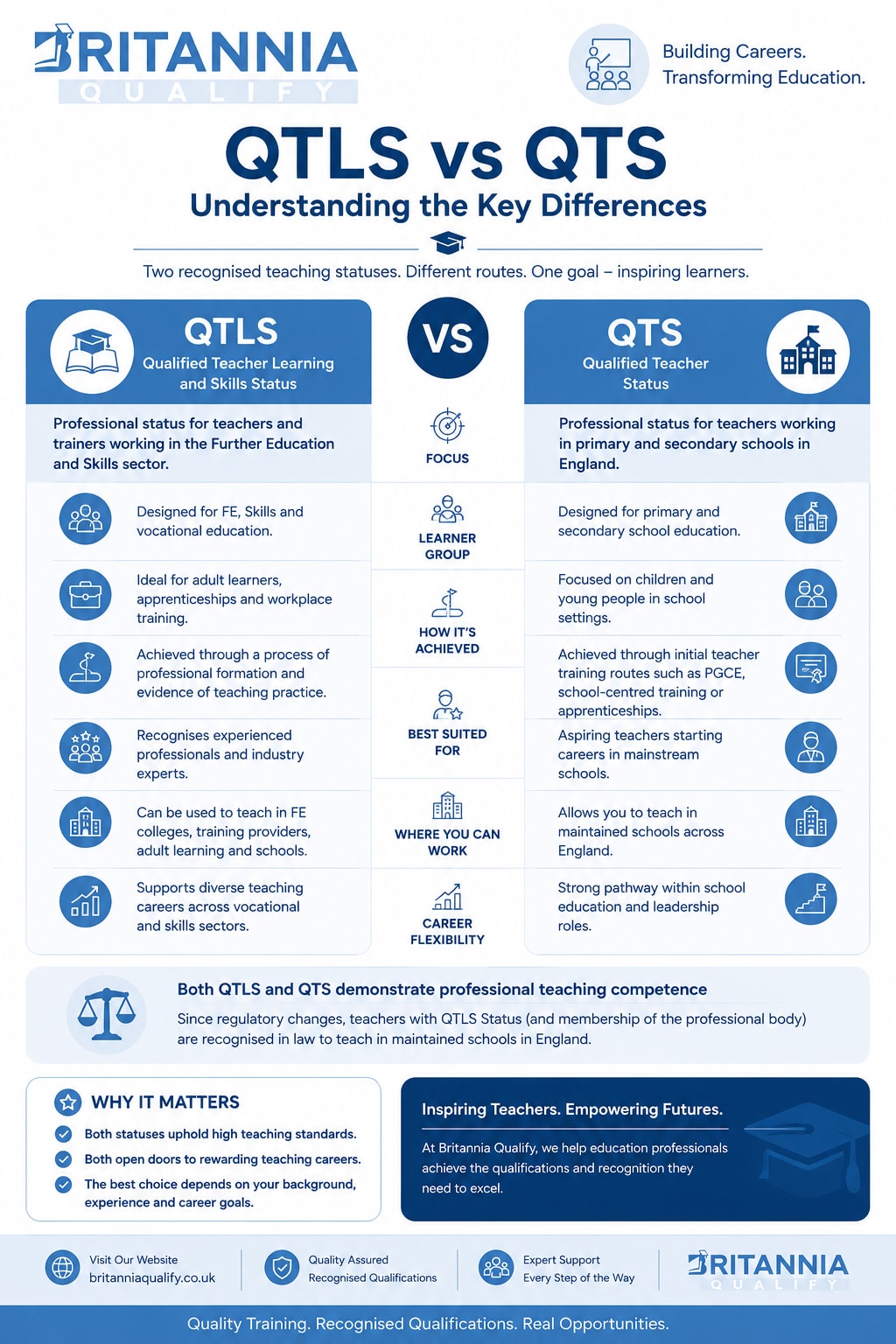
At first glance, they appear similar. Both are recognised professional teaching statuses. Both can open doors to teaching opportunities. Both demonstrate professional competence.
Yet many aspiring teachers, trainers, lecturers, and education professionals still wonder:
- Is QTLS the same as QTS?
- Which status do employers prefer?
- Can you teach in schools with QTLS?
- Is one route easier than the other?
- Which option suits vocational educators best?
The answer isn’t always as straightforward as people think.
While both statuses can lead to rewarding teaching careers, they were designed for different educational pathways and professional backgrounds.
Understanding the difference can help you make a more informed decision about your future in education.
What Is QTS?
Qualified Teacher Status (QTS) is the professional status typically awarded to individuals who complete recognised teacher training routes designed for primary and secondary schools in England.
Traditionally, people achieve QTS through routes such as:
- University-based teacher training
- Postgraduate Certificate in Education (PGCE)
- School-centred initial teacher training
- Teacher apprenticeships
QTS is often associated with teaching children and young people within mainstream schools.
For many years, it was viewed as the standard route for those entering school teaching careers.
What Is QTLS?
Qualified Teacher Learning and Skills Status (QTLS) is a professional status designed primarily for teachers and trainers working within the Further Education (FE) and Skills sector.
This includes professionals teaching:
- Adult learners
- Vocational qualifications
- Apprenticeships
- Workplace training
- Further education programmes
- Professional development courses
Unlike traditional school-focused routes, QTLS was developed to recognise the expertise of educators who teach practical, vocational, and occupational subjects.
Today, many experienced trainers and lecturers pursue QTLS Status as a way of demonstrating professional teaching competence and commitment to ongoing development.
Why Does the QTLS vs QTS Debate Still Exist?
The confusion largely comes from history.
For many years, QTS was widely recognised within schools, while QTLS was associated primarily with further education settings.
However, education has changed significantly.
Employers increasingly recognise that effective teaching is about much more than simply delivering information.
Modern education values:
- learner engagement
- subject expertise
- communication skills
- professional practice
- evidence-based teaching
- continuous improvement
As educational environments have evolved, the distinction between teaching sectors has become less rigid than many people realise.
This has led more educators to compare QTLS vs QTS when considering their career options.
What Is the Main Difference Between QTLS and QTS?
The biggest difference lies in the routes through which they are achieved.
QTS Route
Typically involves:
- Initial teacher training
- School placements
- Classroom teaching experience
- Teaching children and young people
The focus is often centred on compulsory education settings.
QTLS Route
Typically involves:
- Teaching qualifications within the FE sector
- Professional formation
- Evidence of teaching competence
- Reflective professional practice
The focus often reflects the realities of vocational and adult learning environments.
While the routes differ, both pathways require educators to demonstrate professional teaching standards.
Can Teachers With QTLS Work in Schools?
This is one of the most searched questions online.
The simple answer is yes.
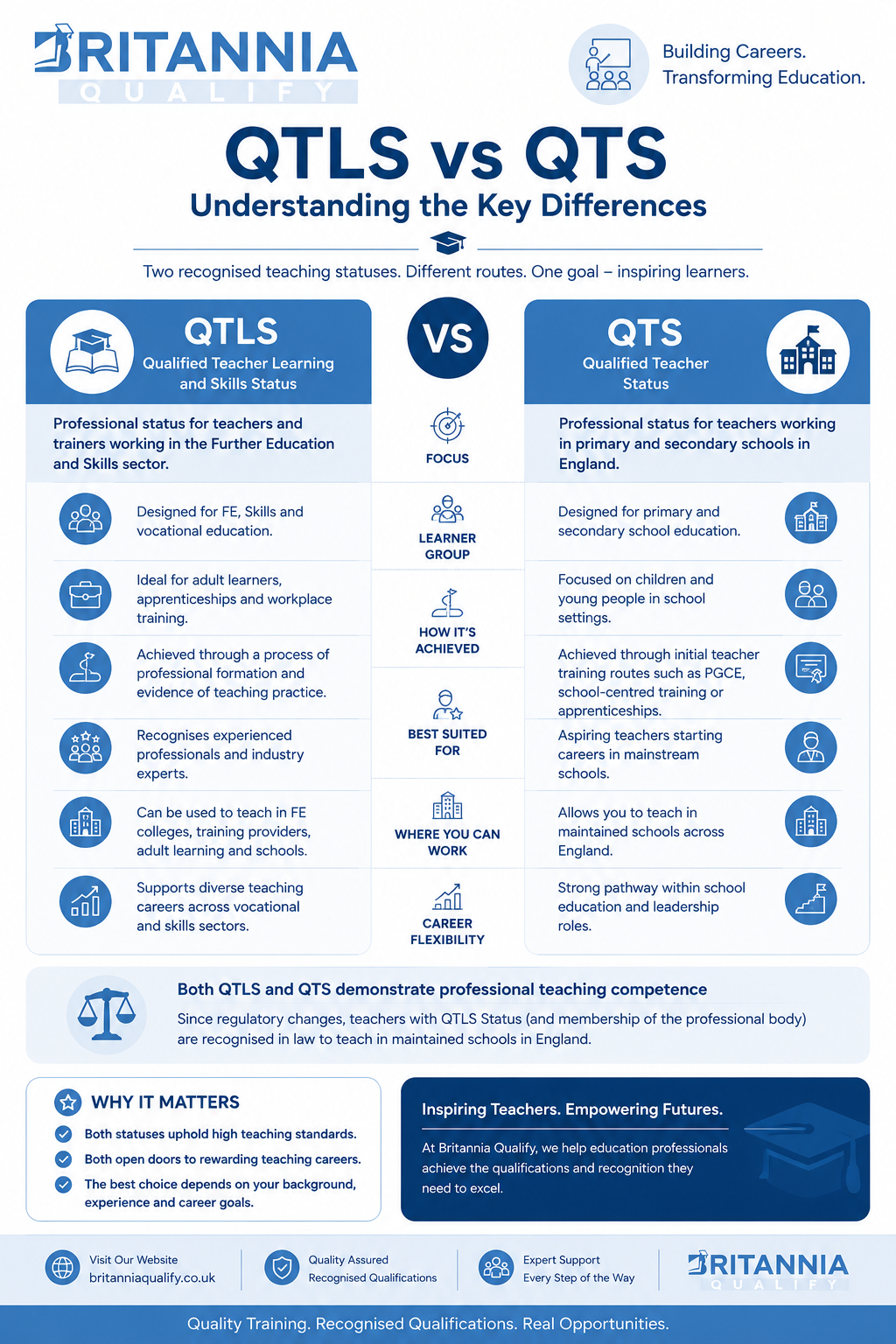
Since regulatory changes in England, teachers who hold QTLS Status and are members of the professional body responsible for maintaining that status are recognised in law similarly to teachers holding QTS for teaching in maintained schools.
This development significantly increased awareness of QTLS across the education sector.
As a result, many educators who began their careers in further education now consider opportunities within school settings as well.
Who Typically Chooses QTLS?
The Qualified Teacher Learning and Skills Status route often appeals to professionals who already possess substantial vocational or industry experience.
Examples include:
- Construction trainers
- Health and social care educators
- Engineering lecturers
- Business trainers
- Assessors
- Apprenticeship tutors
- Functional Skills teachers
These professionals often bring significant occupational expertise into the classroom.
For them, QTLS provides professional recognition that reflects both teaching competence and subject knowledge.
Why Vocational Experience Is Becoming More Valuable?
Across the UK, employers increasingly value practical skills alongside academic knowledge.
Students and learners want education that feels relevant to real-world careers.
This shift has increased demand for educators who can combine:
- professional expertise
- industry knowledge
- teaching ability
- learner support
Many vocational teachers have years of experience working within their industries before moving into education.
QTLS was designed with this type of professional journey in mind.
Is QTLS Easier Than QTS?
This is another common misconception.
Neither status should be viewed as “easier”.
Both require commitment, professional development, and evidence of effective teaching practice.
The difference is not necessarily difficulty.
The difference is suitability.
Someone planning to teach primary school pupils may naturally follow a QTS pathway.
Someone teaching vocational learners, apprentices, or adult students may find the QTLS route more aligned with their professional background.
Choosing the right route depends on career goals rather than perceived difficulty.
What Qualifications Can Lead Towards QTLS?
Many educators begin their journey with qualifications such as:
- Level 3 Award in Education and Training (AET)
- Level 4 Certificate in Education and Training (CET)
- Level 5 Diploma in Teaching (DiT)
These qualifications help develop essential teaching skills, including:
- lesson planning
- assessment
- learner engagement
- inclusive teaching
- reflective practice
As educators gain experience, some choose to pursue QTLS Status to further demonstrate professional competence.
Why Professional Recognition Matters?
Modern education increasingly focuses on quality, consistency, and learner outcomes.
Educational organisations want confidence that teachers can:
- engage learners effectively
- adapt to different learning needs
- assess progress fairly
- support achievement
- maintain professional standards
Professional statuses such as QTLS and QTS help provide that confidence.
They signal that an educator has demonstrated recognised teaching standards and a commitment to professional practice.
Career Opportunities for Teachers With QTLS
Educators holding Qualified Teacher Learning and Skills Status may work across a wide range of settings, including:
- Further education colleges
- Independent training providers
- Apprenticeship organisations
- Adult learning centres
- Workplace learning programmes
- Community education projects
- Schools
This flexibility is one reason interest in QTLS continues to grow.
Many professionals appreciate the ability to combine industry expertise with educational practice across multiple learning environments.
The Growing Importance of Lifelong Learning
The modern workforce changes rapidly.
New technologies, regulations, and professional standards mean that people often retrain several times throughout their careers.
As a result, adult education and vocational learning have become increasingly important.
This has created greater demand for qualified educators who understand:
- adult learning principles
- vocational training
- workplace development
- skills-based education
The QTLS pathway aligns particularly well with these evolving educational needs.
So, Which Is Better: QTLS or QTS?
The honest answer is neither.
A better question is:
Which route best supports your career goals?
If your ambition is to teach within traditional school settings from the outset, QTS may be the most direct route.
If you already work in vocational education, apprenticeships, workplace training, or further education, QTLS may align more naturally with your professional experience.
- Both statuses demonstrate teaching competence.
- Both can support career progression.
- Both contribute to improving learner outcomes.
The best choice depends on where you want your teaching career to take you.
Final Thoughts
The discussion around QTLS vs QTS often focuses on differences, but the similarities are equally important.
Both routes recognise professional educators.
Both require evidence of effective teaching practice.
Both support the development of skilled, reflective, and learner-focused professionals.
As education continues evolving beyond traditional classroom models, employers increasingly value educators who can combine subject expertise with excellent teaching skills.
Whether you pursue Qualified Teacher Status (QTS) or Qualified Teacher Learning and Skills Status (QTLS), the ultimate goal remains the same:
Helping learners develop knowledge, confidence, skills, and opportunities for the future.
And in 2026, that matters more than ever.
About the Creator
Britannia Qualify
Britannia Qualify is unique in that we convert passion into purpose through specialist and supportive and future-facing educational and training.
Enjoyed the story? Support the Creator.
Subscribe for free to receive all their stories in your feed.
Comments
There are no comments for this story
Be the first to respond and start the conversation.