
purpose of the pouch at the lower jaw in Anole lizard?
Fact base Analysis
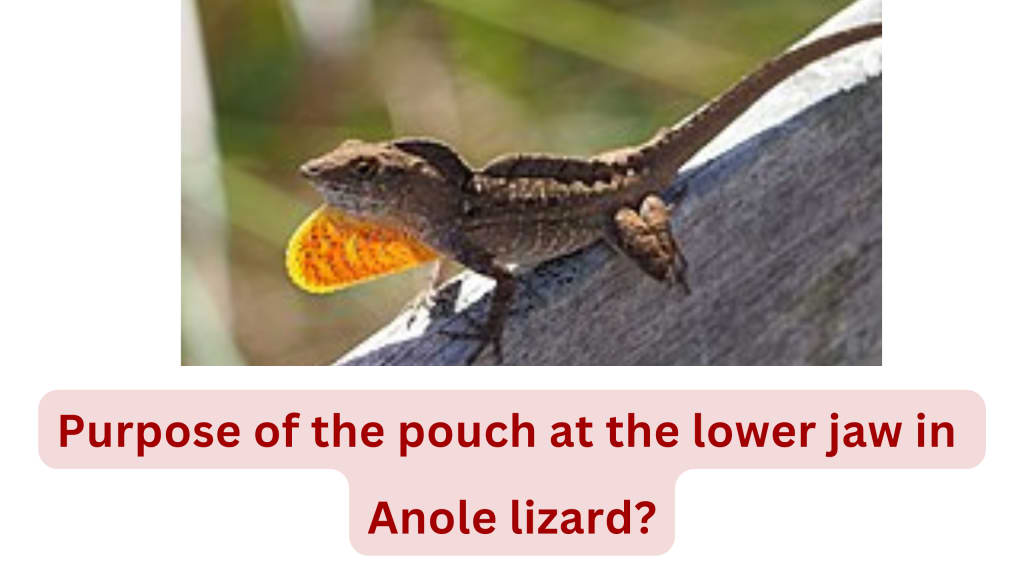
The pouch at the lower jaw of anole lizards, also known as dewlap, serves a variety of purposes, including communication, thermoregulation, and territorial displays. In this analysis, I will provide a detailed explanation of the function and importance of the dewlap in anole lizards, supported by scientific research and observations.
Communication: Anoles use their dewlaps as a primary means of communication. The dewlap serves as a visual display to attract mates, establish dominance, and warn off rivals. Anoles have brightly colored dewlaps, and the coloration can change depending on the mood and behavior of the lizard. For instance, during courtship displays, the dewlap of the male anole will become more vibrant, signaling to female anoles that he is ready to mate. On the other hand, when a male anole feels threatened, its dewlap will become darker and more conspicuous, serving as a warning to potential rivals.
Territorial displays: Anoles are territorial animals and use their dewlap as a means of establishing dominance over their territory. When a male anole sees a rival encroaching on its territory, it will puff up its dewlap and perform a display in which it bobs its head and flaps its dewlap rapidly. This display serves to intimidate the rival and demonstrate that the male anole is the dominant individual in the area. In some cases, these displays can escalate into physical altercations, but often, the display alone is enough to establish dominance and avoid a fight.
Thermoregulation: In addition to its role in communication and territorial displays, the dewlap of anole lizards also plays a role in thermoregulation. Anoles are ectothermic, which means that their body temperature is regulated by the environment rather than through internal mechanisms. The dewlap, which is rich in blood vessels, helps the lizards regulate their body temperature by serving as a heat-exchange mechanism. When the lizard needs to warm up, it will expose its dewlap to the sun, allowing it to absorb heat. When it needs to cool down, it can tuck its dewlap into its body, reducing the amount of heat it absorbs from the environment.
Adaptation to changing environments: Anoles are able to adapt to changing environments, and their dewlap plays a crucial role in this process. For example, in a habitat with dense vegetation, anoles will develop smaller dewlaps, as a large dewlap would be cumbersome and interfere with their ability to move through the dense vegetation. On the other hand, in more open habitats with less vegetation, anoles will develop larger dewlaps, as they have more space to display and use their dewlaps effectively. This ability to adapt to changing environments is an important part of the survival strategy of anoles, as it allows them to make the most of their available resources.
Conclusion:
In conclusion, the dewlap at the lower jaw of anole lizards serves a multi-functional role in the survival and reproduction of these reptiles. It plays a crucial role in communication, territorial displays, and thermoregulation, and has the ability to adapt to changing environments. This adaptability, combined with the versatility of the dewlap, makes it a key factor in the success of anole lizards as a species.
About the Creator
Wildlife Topics and Articles
I have spent countless hours exploring the wild and observing the incredible diversity of species that call it home.
My goal is to share this knowledge and inspire others to appreciate the beauty and significance of the natural world.
Enjoyed the story? Support the Creator.
Subscribe for free to receive all their stories in your feed.
Comments
There are no comments for this story
Be the first to respond and start the conversation.