
Power Semiconductors - All You Want to Know
Power Semiconductors Types & Structures
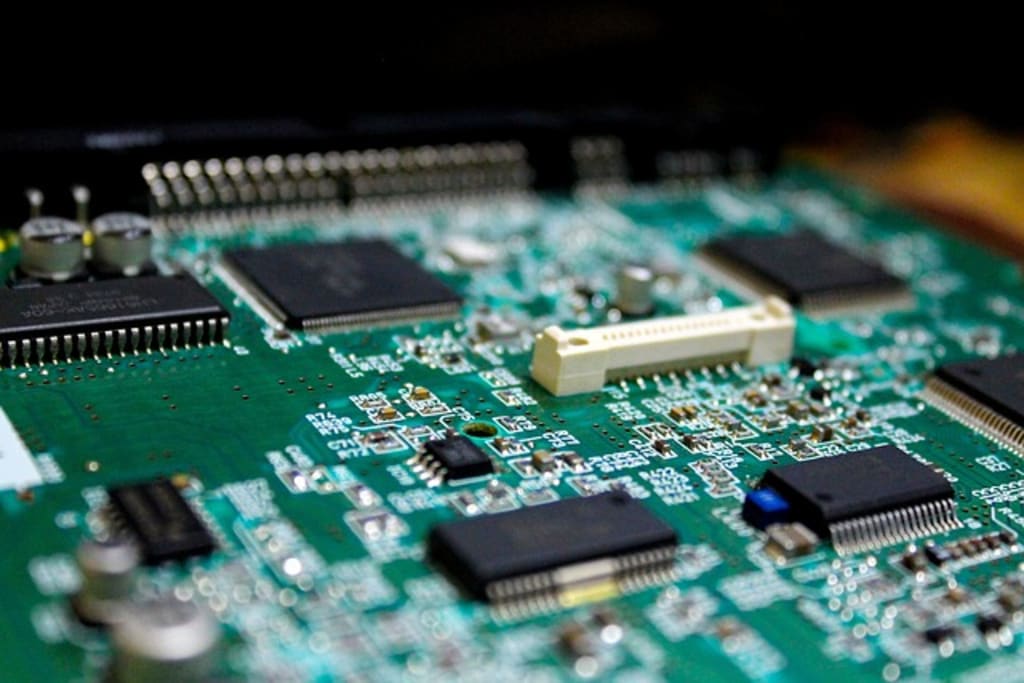
Power semiconductors are efficient devices that can handle high voltage and current with lesser losses. They play a crucial role in power electronics, which is responsible for controlling and converting electrical energy in a wide range of applications. These applications include power supplies, motor drives, renewable energy systems, electric vehicles, and industrial automation.
Power semiconductors are typically made from materials such as silicon (Si), silicon carbide (SiC), and gallium nitride (GaN). These materials offer advantages over traditional silicon, including higher breakdown voltage, faster switching speeds, lower losses, and the ability to operate at higher temperatures.
Power Diodes are essential components in power electronics as they allow current to flow in one direction while blocking it in the reverse direction. This characteristic is crucial for rectification, where alternating current (AC) is converted into direct current (DC). Power diodes are commonly used in rectifier circuits to convert AC power from the electrical grid into DC power suitable for powering electronic devices. They are also utilized in freewheeling circuits in power supplies and motor drives, where they provide a path for the current to flow and dissipate energy during the switching off of inductive loads.
Power Transistors are versatile devices capable of amplifying or switching electrical signals, making them suitable for high-power applications. There are two main types of power transistors: bipolar junction transistors (BJTs) and metal-oxide-semiconductor field-effect transistors (MOSFETs). BJTs are known for their high-current and high-voltage capabilities, making them suitable for power amplification tasks. They are widely used in audio amplifiers, radio transmitters, and high-power applications that require precise control over current. On the other hand, MOSFETs offer low on-state resistance, fast switching speeds, and excellent thermal performance. They are commonly used in power supplies, motor drives, and voltage regulation circuits.
Insulated Gate Bipolar Transistors (IGBTs) combine the advantages of both MOSFETs and BJTs. They offer the high input impedance of MOSFETs and low on-state conduction losses of BJTs, making them ideal for high-voltage and high-current switching applications. IGBTs are extensively used in motor drives, inverters, and other power control systems where efficient and reliable switching is required. They play a vital role in electric vehicles, renewable energy systems, and industrial automation.
Silicon-Controlled Rectifiers (SCRs) are four-layer solid-state devices that act as controllable switches for high-power applications. They have three operating states: off state, forward-blocking state, and conducting state. SCRs are widely used in AC power control, motor speed control, and voltage regulation applications. Their ability to handle high currents and voltages makes them suitable for controlling power to industrial machinery, lighting systems, and heating equipment.
Thyristors are a broader category of devices that includes SCRs as well as triacs and diacs. Triacs are bidirectional devices capable of controlling AC power by regulating the current in both directions. They are commonly used for AC power control, light dimming, and motor control applications. Diacs, on the other hand, are used for triggering triacs and other thyristor-based devices. They are commonly employed in circuits that require precise control of triggering and timing, such as in lamp dimmers and motor speed controllers.
Silicon Carbide (SiC) and Gallium Nitride (GaN) are wide-bandgap semiconductor materials that offer superior performance compared to traditional silicon in high-power applications. SiC and GaN power semiconductors can handle higher voltages, switch at faster speeds, and operate at higher temperatures. These characteristics make them suitable for applications that demand high efficiency, high-frequency operation, and compact designs. SiC and GaN devices are increasingly used in power supplies, electric vehicle chargers, renewable energy systems, and aerospace applications.
The use of power semiconductors improves energy efficiency and reduces power losses in various industries. They enable the development of advanced electronic systems capable of handling higher power levels, which is particularly important in the fields of renewable energy, electric transportation, and industrial automation.
In summary, power semiconductors are crucial components in power electronics, enabling the control and conversion of electrical energy. They are made from materials such as silicon, silicon carbide, and gallium nitride, and encompass devices like power diodes, power transistors, IGBTs, SCRs, and thyristors. The advancement of power semiconductor technology contributes to improved energy efficiency and the development of advanced electronic systems in various industries.
About the Creator
Enjoyed the story? Support the Creator.
Subscribe for free to receive all their stories in your feed.
Comments
There are no comments for this story
Be the first to respond and start the conversation.