
Online UPSC Coaching vs Traditional UPSC Coaching: Which is Better ?
In this blog we evaluate the difference between Online UPSC Coaching and Traditional UPSC Coaching by examining their strengths and weaknesses.

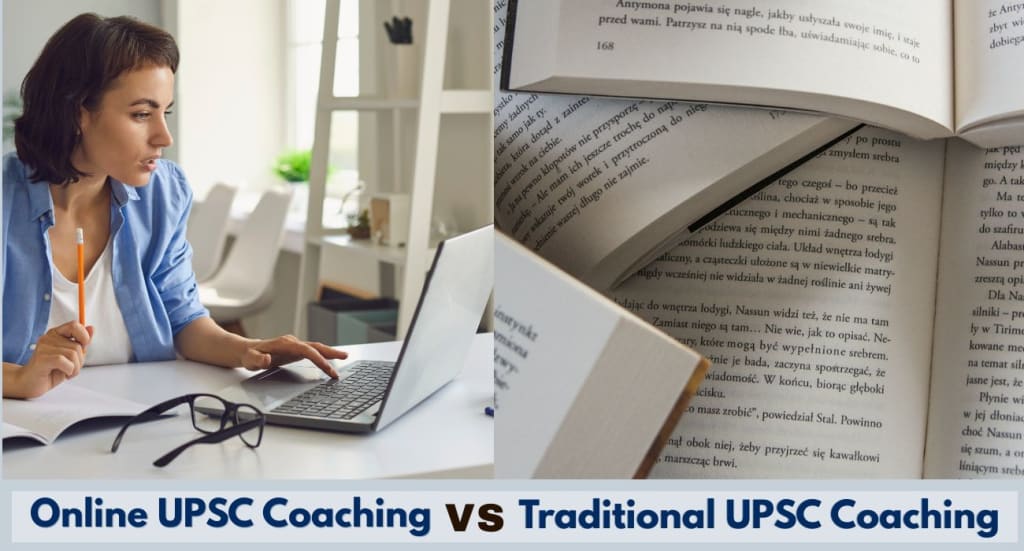
The Civil Service Exam (CSE) conducted by Union Public Service Commission (UPSC) is one of the most coveted and exacting exams in India. It takes a lot of effort, discipline, and the right kind of preparation to crack this test. Today, the surge between online UPSC coaching with respect to traditional classroom-based UPSC coaching is a crucial factor that dominates the decision-making of UPSC aspirants. Some Coaching platforms have facilitated UPSC online coaching to reach more people, thanks to the surge in popularity of online classes. In contrast, traditional coaching facilities are decades old, and many candidates vacillate between online and traditional coaching.
Difference between Online UPSC Coaching and Traditional Coaching
In this blog we evaluate the difference between Online UPSC Coaching and Traditional UPSC Coaching by examining their strengths and weaknesses. Moreover, we will discuss the tragic and unintentional occurrence in basement coaching classes where children have died, leading to concerns about the safety and security of students.
Online UPSC Coaching
The popularity of online UPSC coaching among IAS aspirants has grown rapidly due to its availability and flexibility. The advent of digital platforms has brought online coaching institutes like Vajirao and Reddy Online Live UPSC Classes into the mainstream. These online platforms have revolutionised traditional learning methods by providing live, interactive sessions, recorded lectures, and study materials that are accessible 24/7.
Advantages of Online UPSC Coaching
Below are some of the advantages associated with online UPSC coaching that students should consider before coming to a conclusion-
Flexibility: The flexibility of online coaching for UPSC is one of its major advantages. Learning can be done at the convenience of the student. Without the burden of strict deadlines, they can attend live sessions and listen to recorded lectures, as well as revise their own content at their convenience.
Cost-Effective: Generally speaking, online coaching is less expensive than in-person coaching. There are no fees for commuting, and online platforms often offer affordable packages that allow students to access the material for longer periods of time.
Wider Reach: Online IAS coaching transcends geographical boundaries. Students from all parts of India, including rural and remote regions can receive coaching that matches the quality of coaching provided in major cities.
Convenience and Comfort: This allows students to study from home, which saves them time and energy that would have otherwise been spent commuting. Furthermore, coaching platforms frequently offer recorded lectures, enabling learners to revisit lessons and study at their own pace.
Personalised Learning Experience: Online coaching portals such as Vajirao and Reddy IAS Online Live Classes provide students with individualised study plans, doubt-clearing sessions, and direct access to mentors for individual revisions.
Challenges of Online UPSC Coaching
Following are some of the challenges of Online UPSC coaching-
Lack of Peer Interaction: Online coaching, which involves real-life classes and doubt-clearing sessions, does not provide the same level of social interaction as traditional coaching. Numerous students prefer a classroom setting that allows for active discussion, involvement in study groups, and learning from peers.
Self-Discipline Required: Those seeking online coaching must exhibit strong levels of self-motivation and discipline. If a physical classroom is not present, some students may struggle to maintain their studies. Those who lack self-motivation can experience procrastination as well.
Technical Issues: Among the difficulties encountered during online UPSC coaching are technical issues. The learning experience can be frustrating and disrupted by issues such as poor internet connectivity, audio-visual difficulties, or technical malfunctions, particularly during live sessions.
Limited Networking Opportunities: The preparation for IAS necessitates the involvement of other candidates, mentors, and professionals. While online coaching offers some interaction, it lacks the networking opportunities that traditional coaching provides, allowing students to directly engage with their peers and seniors as well as faculty members.
Traditional UPSC Coaching
Traditional UPSC coaching has been the go-to method for UPSC preparation for many years. The Institutes have long had a reputation for providing comprehensive IAS Classroom Course for the Civil Services Exam.
Advantages of Traditional UPSC Coaching
Following are some of the main advantages of Traditional UPSC Coaching-
Structured Learning Environment: Regular classroom coaching involves structured and disciplined learning. Consistency in class, assignments, and exams is ensured through the use of a consistent timetable, which aids in maintaining focus.
Face-to-Face Interaction: The ability to communicate and collaborate with faculty and peers in a conventional classroom allows students to quickly address any concerns. The students can participate in discussions that could potentially enhance their comprehension of complex concepts, and teachers can offer instant feedback.
Peer Motivation: During a typical classroom coaching, students can benefit from the presence of peers who share their motivation and goal. Competition and enthusiasm in the classroom can serve as a source of motivation.
Accountability: In traditional coaching, students are encouraged to take responsibility. Classes and exams are a daily routine, and students are monitored by teachers for their advancement.
Comprehensive Study Material: Well-reputed coaching centers offer comprehensive study materials and mock exams to ensure success. Professionally designed materials are regularly updated to suit the changing UPSC syllabus.
Challenges of Traditional UPSC Coaching
Here are some of the challenges that come with Traditional UPSC Coaching-
Costly: The cost of online coaching is significantly lower than that of traditional coaching. The expenses, which include tuition, transportation, and accommodation, can be heavy on the pockets, particularly for students who are not from the city.
Rigid Schedule: In conventional or traditional coaching centres, there is a fixed schedule, and students have limited options for selecting class times. It is a tough task for students with other obligations or those who like to learn quickly.
Geographical Constraints: Students residing in remote areas may face challenges when trying to access top coaching institutes in major cities. They encounter a significant hurdle, as they must relocate or journey long distances, which can be both taxing and physically demanding.
Safety Concerns in Traditional Coaching Institutes
A recent case of children dying in the basement of coaching classes has sparked concerns about the safety and well-being of students in traditional coaching settings. In multiple instances, coaching institutes are situated in poorly-ventilated premises, such as basements, which could become dangerous should an emergency arise. Many learning facilities lack infrastructure and safety protocols, such as a fire exit, emergency protocol, and trained staff. While the issues just mentioned are serious, there have been unfortunate accidents. This is a matter that we must all consider. Student's safety must always come first in any institutional setting.
Which is Better in 2025: Online UPSC Coaching or Traditional Coaching?
This question remains open and unanswered, as both online UPSC coaching and traditional coaching are effective sources of information. The aspirant's needs, level of education, and financial situation are the primary factors that determine whether they choose online or traditional mode of UPSC coaching.
Choose Online Coaching if:
- You need to be flexible in terms of time and place.
- You are accustomed to learning independently and have the courage to tackle your own studies.
- Your objective is to avoid the expenses of commuting or moving.
Choose Traditional Coaching if:
- You desire a disciplined and orderly setting with actual people.
- You thrive on peer motivation and receive direct feedback from instructors.
- You possess the financial means and the flexibility to handle the strict deadlines that traditional coaching demands.
Conclusion
Both offline and online UPSC coaching in Delhi has its benefits and drawbacks. While traditional coaching is more structured and interactive, online UPSC coaching offers flexibility, affordability, and accessibility. Nevertheless, one aspect is certain; while demand for UPSC coaching keeps growing, it is important for coaching institutes, online or otherwise, to prioritise student safety, well-being, and the quality of education. The unfortunate deaths due to basement classes exemplify the need for better regulations and physical spaces for a better safety of students.
In summation, whether one opts for online UPSC coaching or traditional coaching is ultimately a matter of individual preference and circumstance. Either way, with proper planning, discipline and support from mentors you can clear the UPSC civil services exam.
About the Creator
vajiraoreddyias
Vajirao and Reddy IAS Institute is one of the Best UPSC Coaching in Delhi, known for its top results, expert faculty and student-focused approach. Our institute offers personalized coaching,study materials, and regular test series.
Enjoyed the story? Support the Creator.
Subscribe for free to receive all their stories in your feed.
Comments
There are no comments for this story
Be the first to respond and start the conversation.