
New Dimensions of Education: Evolution of Learning with Augmented Reality (AR) and Virtual Reality (VR).
Augmented Reality (AR) and Virtual Reality (VR).

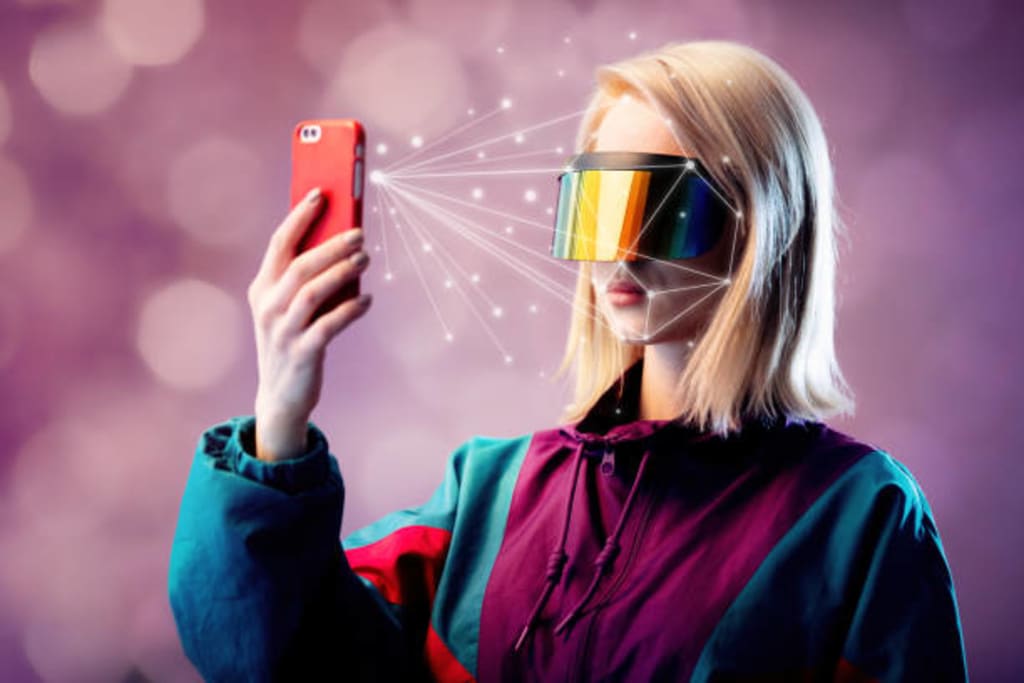
🔹 Today's education system is evolving very fast. Technology is now replacing the traditional chalk-board teaching methods, and the biggest part of this revolution is Augmented Reality (AR) and Virtual Reality (VR). Both these technologies promise to make learning interactive and engaging. AR and VR technologies are taking the traditional methods of education to a new dimension. They not only integrate theoretical learning with practical knowledge but also boost the imagination and creativity of students. As these technologies become more accessible and affordable, it's easy to imagine a future where learning will be an adventurous journey—where classrooms are virtual and concepts are understood with a real-world experience. :- > The future of education is set to be redefined with AR and VR. Are you ready to be a part of this revolution? •{Let's know about this amazing revolution.}•
•> What are (AR) and (VR) and what is their role in education?
Augmented Reality (AR) : (AR) is a technology that overlays digital elements (such as 3D images, sounds, text) on top of the real world. This helps students understand complex topics. For example, imagine a biology student is exploring information about human anatomy through a 3D hologram, which he can understand in detail by rotating it.
Virtual Reality (VR) : Virtual Reality (VR) is an immersive technology that takes users into a virtual environment. (VR) provides a fully immersive experience, in which students use a VR headset to take virtual tours of historical landmarks or explore planets and galaxies in space.
Role of (AR) and (VR) in Education: AR and VR have transformed education from traditional methods to an interactive and engaging experience. These technologies provide practical learning, enhanced creativity, real-world connections, and interactive engagement that makes it easier for students to explore concepts and theories with real-world examples. AR and VR are taking today's education system to a new level. These technologies not only make learning easier, but also boost students' problem-solving and analytical skills.
Benefits and Practical Uses of (AR) and (VR) in Education: Benefits of AR and VR in Education :
- Interactive Learning Experience:-> Instead of boring textbooks, interactive tools are used, just like a history student can understand visually well by seeing the battle field of World War 2 through VR.
- Practical Knowledge Boost:-> Engineering and medical students can get hands-on experience of real-world scenarios through AR and VR. Through this, they can practice complex surgeries or understand the internal mechanics working of machinery deeply without any risk.
- Distance Learning Redefined:-> Online classes involve students from both sides sharing a virtual classroom, even if they are miles apart.
- Cost-Effective Training:-> No need for expensive lab setups and international trips; global experiences are available right in the classroom through VR.
Practical Uses of AR and VR in Classrooms :
- Virtual Field Trips:-> Using VR headsets, students can explore the Taj Mahal, Great Wall of China, and world-famous landmarks from anywhere in the world without traveling.
- STEM Education Support:-> It becomes easy for students to visually understand the concepts and theories of Science, Technology, Engineering, and Mathematics with the help of AR and VR and to cover the syllabus of all fields.
- Special Education Advancements:-> These technologies can be effective tools for students, supporting their specific learning styles and special needs for creativity.
🔹Summary :-
In this article we saw how Augmented Reality (AR) and Virtual Reality (VR) have redefined the modern education system. (AR) overlays digital elements on top of the real-world, while (VR) provides immersive virtual environments. Both technologies make learning in any field interactive and engaging, and provide practical and innovative approaches that replace traditional methods.
As these technologies become more accessible and affordable, it is easy to imagine a future where learning is an adventurous journey, where classrooms are virtual and concepts are understood with a real-world experience.
About the Creator
Altaf Shaikh
Hey dear readers,
I am Altaf Shaikh from India and I'm professional content writer and Data specialist. I'm Tech freelancer,
Enjoyed the story? Support the Creator.
Subscribe for free to receive all their stories in your feed.
Comments
There are no comments for this story
Be the first to respond and start the conversation.