
NCTB Science Class-8 Ch:01 Guide Notes
Chapter:01, Page:02

Q/A (SUGGESTED)
*Tip: Read the whole page aloud twice along with writing for a better concept and understanding. Remember it must not be memorized without understanding the concept.*
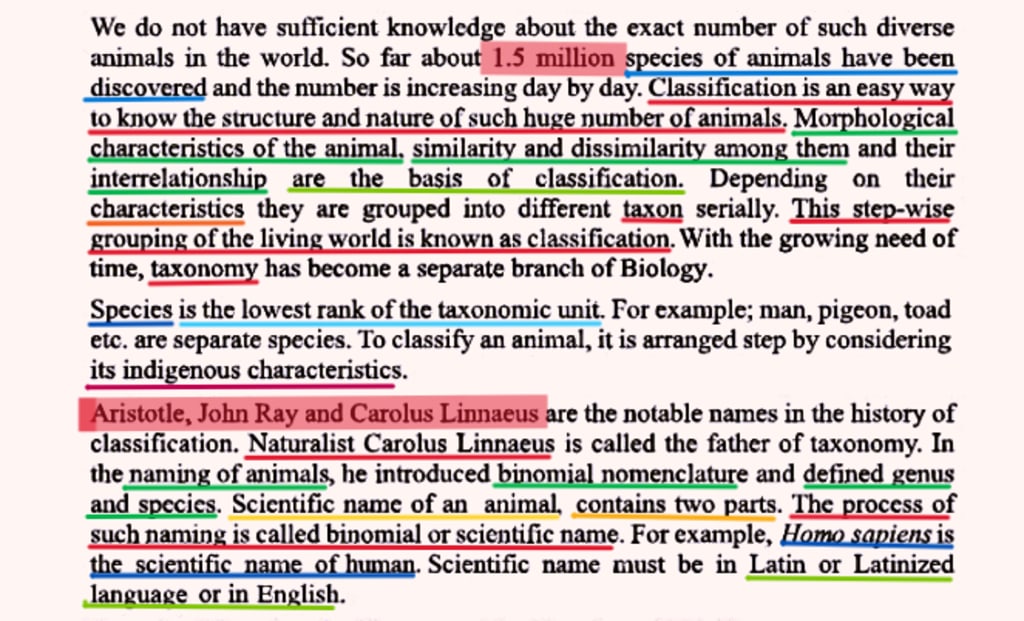
1. How many number of animal species have been discovered so far?
Ans: 1.5 million number of animal species have been discovered so far.
2. What is 'classification'?
Ans: 'Classification' is an easy way to know the structure and nature of a huge number of animals.
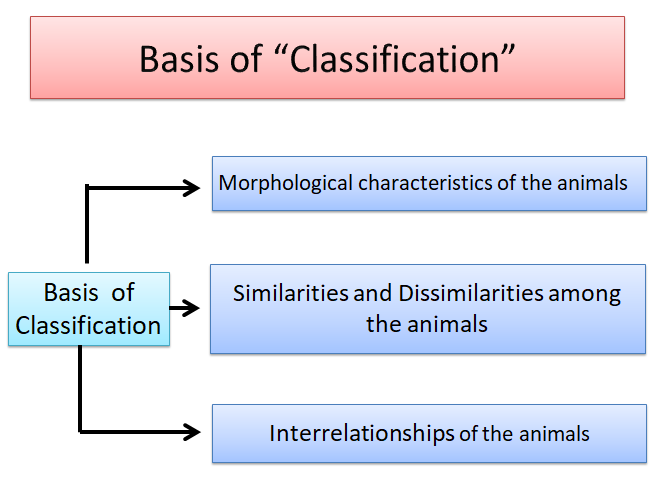
3. What are the basis of 'classification'?
Ans: The basis of 'classification' are:
- Morphological characteristics of the animals
- Similarities and Dissimilarites among the animals
- Interrelationships of the animals
4. What is taxon?
Ans: "Taxon" (plural: taxa) means a group of one or more organisms that a scientist has classified together due to sharing certain characteristics. It can refer to any level in biological classification — like species, genus, family, order, etc. For example:
- Species: Homo sapiens (humans) is a taxon.
- Genus: Canis (includes dogs, wolves) is a taxon.
5. What is taxonomy?
Ans: Taxonomy is the science of classifying living things into groups based on their Shared Characteristics. It organizes all life forms into a structured system — like sorting them into categories (taxa / taxon) such as kingdom, phylum, class, order, family, genus, and species.
6. Difference between taxon and taxonomy?
Ans: In short:
- Taxon = one group (like a species or genus).
- Taxonomy = the system and rules for making and organizing those groups.
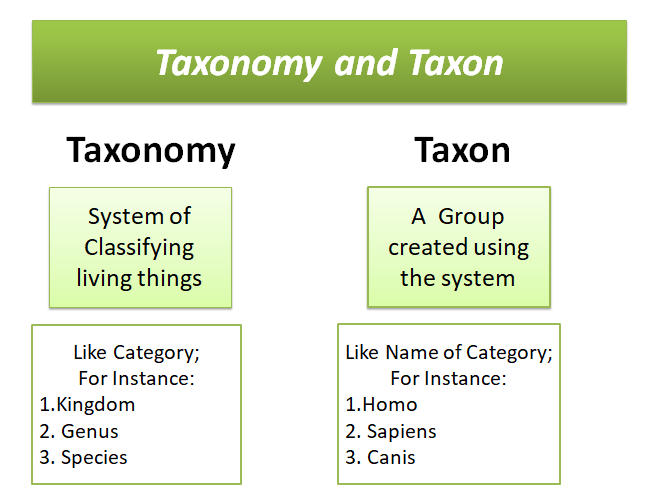
*Ques no. 4, 5, and 6 are outside the book. It's for better understanding of taxon and taxonomy.*
7. What is the lowest ranch of taxonomic unit?
Ans: Species is the lowest ranch of taxonomic unit.
8. What is the process of classifying an animal based on?
Ans: The process of classifying an animal is based on considering its indigenous characteristics.
9. What must be considered about an animal before arranging its classification?
Ans: Before arranging an animal’s classification, its indigenous characteristics must be considered.
10. What is considered when classifying an animal?
Ans: When classifying an animal, its indigenous characteristics are considered.
11. Name some notable name in the history of classification.
Ans: Some notable name in the history of classification are:
- Aristotle
- John Ray
- Carolus Linnaeus
12. Who is known as the father of taxonomy?
Ans: Carolus Linnaeus is known as the father of taxonomy.
13. Who is Carolus Linnaeus ?
Ans: Carolus Linnaeus is a Naturalist, who is known as the father of taxonomy.
14. Who introduced Binomial Nomenclature in the naming of animals?
Ans: Carolus Linnaeus introduced 'Binomial Nomenclature' in the naming of animals.
*The below Ques no.15 gives a clear understanding of 'Binomial Nomenclature' concept.*
15. What is 'Binomial Nomenclature' ?
Ans: Binomial means 'Two Names'. Binomial Nomenclature is the system of giving every living thing a two-part scientific name.
- The first part is the genus name (written with a capital letter).
- The second part is the species name (written with a small letter).
For example:
- Homo sapiens ( Scientific name for human)
- Homo → Genus (capital H)
- sapiens → Species (small s)
- Panthera leo (lion)
- Panthera → Genus (capital P)
- leo → Species (small l)

*The upper Q/A gives a clear understanding of 'Binomial Nomenclature' concept.*
16. Who defined Genus and Species in 'Binomial Nomenclature'?
Ans: Carolus Linnaeus defined Genus and Species in 'Binomial Nomenclature' in the naming of the animals.
17. What is the process of naming an animal with two part scientific names (Genus and Species)?
Ans: 'Binomial Nomenclature' is the process of naming every living thing with a two-part scientific names (Genus and Species).
18. Then What is the 'Scientific name'?🤔
Ans: 'Scientific name' is the process of naming every living thing with a two-part scientific names (Genus and Species) with Binomial Nomenclature rule.
19. Then the difference between ' Binomial Nomenclature' and 'Scientific name'?
Ans: The difference between ' Binomial Nomenclature' and 'Scientic name' is being cleared below:
- Binomial Nomenclature is the system or method used to give names to living things.
- Scientific name is the result — the two-word name given by using Binomial Nomenclature.
In simple words:
- Binomial Nomenclature = the rule.
- Scientific name = the name you get after applying the rule.
Example:
- Binomial Nomenclature tells us that humans must have a two-word Latin name (Genus and Species).
- The scientific name for humans is Homo sapiens.
Summary:
- They are related but not exactly the same.
- Binomial Nomenclature is the method; scientific name is the final name.
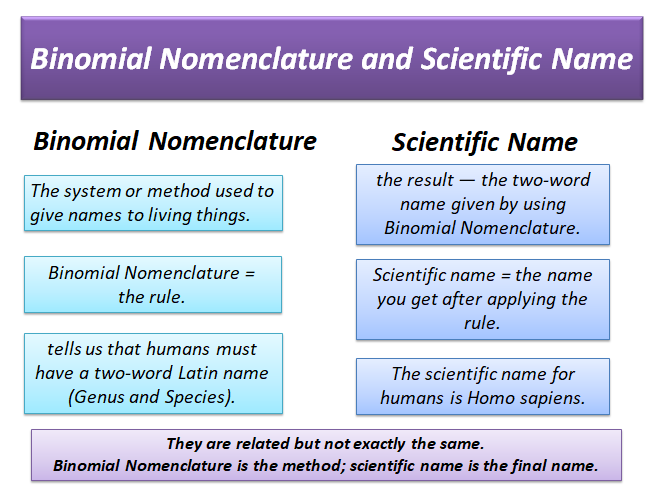
* Ques no. 17, 18, and 19 gives a clear distinction between 'Binomial Nomenclature' and 'Scientific Name'. Recommended to read it twice or thrice*
20. In which language the 'scientific name' can be named?
Ans: In Latin/Latinized language or in English, the 'scientific name' must be named.
21. In how many language the 'scientific name' can be named?
Ans: The 'scientific name' must be named in two either languages. They are:
- In Latin/Latinized language.
- In English
22. What is the other name of 'scientific name'?
Ans: The other name of 'scientific name' is "Binomial" which means Two Names.
*Tip: Read the whole page aloud twice along with writing for a better concept and understanding. Remember it must not be memorized before having a clear concept.*
About the Creator
ur_studyGuide
Hi Everyone! Here I will be willing to post NCTB Class 8 Guide notes from for students for passing exams to students to top exams. Good luck!
Enjoyed the story? Support the Creator.
Subscribe for free to receive all their stories in your feed.
Comments
There are no comments for this story
Be the first to respond and start the conversation.