
My Child Knows Letters But Not Letter Sounds? Here's What I Learned Before I Started Worrying
I thought my child was falling behind because she knew every letter but couldn't say their sounds. After months of frustration, I discovered why this happens and what actually helps at home.

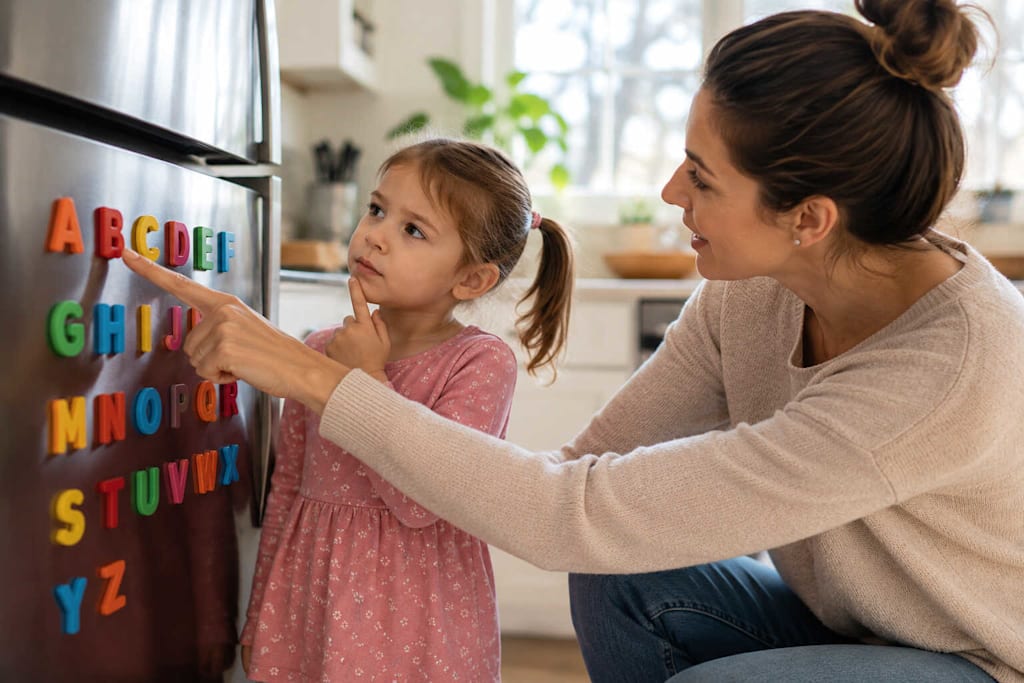
My daughter was four. She could sing the ABC song front to back without missing a beat. She pointed at the magnetic letters on our refrigerator and named them like she was reading a menu. A, B, C, D, all the way to Z. I felt good about it. I told my mother-in-law she was doing great. Then one evening I pointed at the letter B and asked, "What sound does this make?"
She looked at me like I had asked her to solve calculus. Her face went blank. She stared at the B, then at me, then back at the B. Nothing. She could name it. She could spot it in a book. But the sound? She had no idea what I was talking about.
I felt a knot in my stomach. I had assumed knowing the letters meant she was halfway to reading. Turns out I had it backwards.
Why I Started Worrying
I did what every parent does. I went online. I typed "my child knows letters but not letter sounds" into Google and braced myself. The first few articles I found were either too clinical or too vague. Some said it was completely normal. Others hinted at learning disabilities if a child wasn't blending sounds by age five. I didn't know what to believe.
I started quizzing her more. I pulled out flashcards I had bought at a dollar store. I would hold up a letter and say, "What sound?" She would guess sometimes. Other times she would just name the letter again, like she couldn't hear the difference between my question and a request for the name. I got frustrated. She got frustrated. We both ended up in tears one night over the letter M.
I thought I was helping. I was actually making her dread the whole thing.
What I Didn't Understand About Letter Names vs. Letter Sounds
Here's what took me too long to figure out. Letter names and letter sounds are two completely different skills. Knowing that the shape "B" is called "bee" is visual recognition. It's memorizing a symbol, like memorizing that a red octagon means stop. But knowing that "B" makes the /b/ sound is auditory processing. It's connecting a visual symbol to a sound you hear in your mouth.
Kids can memorize the alphabet song the same way they memorize a nursery rhyme. The sequence gets locked in their brain through rhythm and repetition. But that doesn't mean they understand what those symbols represent phonetically. It's like knowing the words to a song in a language you don't speak. The sounds come out, but the meaning isn't there.
The alphabet song actually works against us sometimes. Because the letters are sung in order, kids learn the sequence, not the individual sounds. When my daughter sang "A, B, C," she wasn't thinking about the /a/ sound or the /b/ sound. She was following a melody. When I asked her to isolate the sound of B, I was asking her to pull apart something she had only ever experienced as a whole song.
Why Children Learn Names Before Sounds
Think about how we teach the alphabet. We point at letters and say their names. "That's an A." "That's a T." We do this because it's natural. The name is what we call the letter. But the sound is what the letter does in a word. And that's a more abstract concept for a young brain.
Children are also surrounded by letter names more than letter sounds. They see alphabet books, alphabet puzzles, alphabet apps. Everything is labeled with the name. The sound is hidden inside words, and pulling it out requires a level of phonemic awareness that develops later. A child has to hear that "ball" starts with /b/, separate that /b/ from the rest of the word, and then connect it to the written letter B. That's three mental steps, and each one is hard.
Most kids around age three start connecting some letters to sounds, but it's scattered and slow. By age four, many know all the letter names. But matching every letter to its sound usually comes closer to kindergarten. Some kids get there earlier. Some get there later. Both are normal.
The Mistakes I Made at Home
I made every mistake. I drilled her with flashcards because I thought repetition would force it. I would hold up a card and say, "Sound, not the name. Just the sound." She would freeze. The pressure made her brain shut down. I didn't realize that forcing a child to perform on demand turns learning into a test they are afraid to fail.
I also mixed up uppercase and lowercase too early. She knew uppercase letters from books and signs, but lowercase letters confused her. When I showed her a lowercase "b" and she called it a "d," I corrected her sharply. She cried. I felt terrible. Similar-looking letters are genuinely hard for young kids. Their brains are still learning to distinguish visual details. Getting angry about it helps nobody.
Another mistake: I tried to teach too many sounds at once. I would do five letters in a sitting because I thought more was better. Her attention span was about eight minutes on a good day. I was cramming information into a brain that needed time to absorb one thing at a time.
What Actually Worked
The shift happened when I stopped making it a lesson. I started weaving sounds into normal life without her noticing.
At the grocery store, I would pick up a banana and say, "Banana starts with /b/." Not "B says buh." Just the sound, casual, like I was talking to myself. She started doing it back. She would point at cereal boxes and say, "/k/ for corn flakes." It wasn't perfect. Sometimes she was wrong. But she was trying, and she wasn't stressed.
We used bath letters. I bought foam letters that stuck to the tub wall. During bath time, I would stick up a few and we would make silly words. Not real words necessarily. Just sounds pushed together. /c/ /a/ /t/. Cat. She liked the game. It didn't feel like school. It felt like splashing around with sounds.
Sidewalk chalk became our thing. I would write letters on the driveway and she would hop from one to another while saying the sound. Physical movement helped her remember. When her body was involved, the sound stuck better than when she was sitting still staring at a card.
I also stopped correcting her every time. If she said a sound wrong, I would just say the word correctly in my response. She would say, "/d/ for dog," and I would say, "Yeah, dog starts with /d/. Good hearing." If she said /b/ for dog, I would say, "Dog starts with /d/. Can you hear it? /d/ /d/ dog." No shame. Just a gentle redirect.
The Progression I Didn't Know About
I used to think learning letters was one big step. You learn the alphabet, then you read. But it's actually a long staircase with a lot of small steps.
First, kids notice letters. They see them on signs, in books, on screens. They might not know what they mean, but they recognize them as symbols. Then they remember the names. They can point and say, "That's a T." Then, slowly, they start connecting sounds. They hear that /t/ is inside "turtle" and they connect it to the letter T.
After that comes hearing sounds inside words. This is called phonemic awareness, and it's huge. A child has to hear that "cat" is made of three sounds: /c/ /a/ /t/. Not the letter names. The actual sounds. Then they have to blend those sounds together to make the word. That blending step is where reading actually begins.
Most kids don't blend sounds smoothly until they are five or six. Some earlier, some later. If your child knows letter names but not sounds, they are on the staircase. They are not behind. They are just on a different step than you expected.
While trying to understand how structured phonics lessons are normally organized, I wanted to see what the progression looked like after children became comfortable with letter sounds. I wasn't searching for another activity. I simply wanted to understand how reading instruction usually develops from this point. I came across a guide that breaks down the typical sequence from letter sounds through blending and early word reading, and it helped me see where we were headed rather than where we were stuck.
That research helped me stop panicking about where she was and start thinking about where she was going.
Why Playful Practice Beats Forced Drilling
Kids learn sounds when they are relaxed and engaged, not when they are anxious and performing. The brain's language centers work better when there is no threat of failure. Every time I quizzed my daughter and she got it wrong, I saw her confidence drop. Every time we played a sound game in the car and she got it right, I saw her light up.
The difference is emotional safety. When learning feels like a game, kids take risks. They guess. They experiment with sounds. When learning feels like a test, they shut down. They avoid. They start saying "I don't know" before they even try.
I stopped using flashcards as a quiz tool. I started using them as a game piece. We would spread them on the floor and she would pick the ones she wanted to talk about. She chose. That control mattered. When she chose the letter S, we would find five things in the room that started with /s/. It was her game, not my lesson.
Everyday Moments That Build Sound Awareness
You don't need special tools. You need special attention.
At breakfast, I would point at the cereal box and say, "What sound do you hear at the beginning of Cheerios?" She would say, "/ch/." Not because she was reading the box. Because she was listening to me say the word and pulling out the first sound. That's phonemic awareness, and it matters more than knowing letter names.
In the car, we played "I spy" with sounds instead of colors. "I spy something that starts with /m/." She would look around and say, "Mirror?" "Nope." "Music?" "Nope." "Mom?" "Yep." We laughed. She learned.
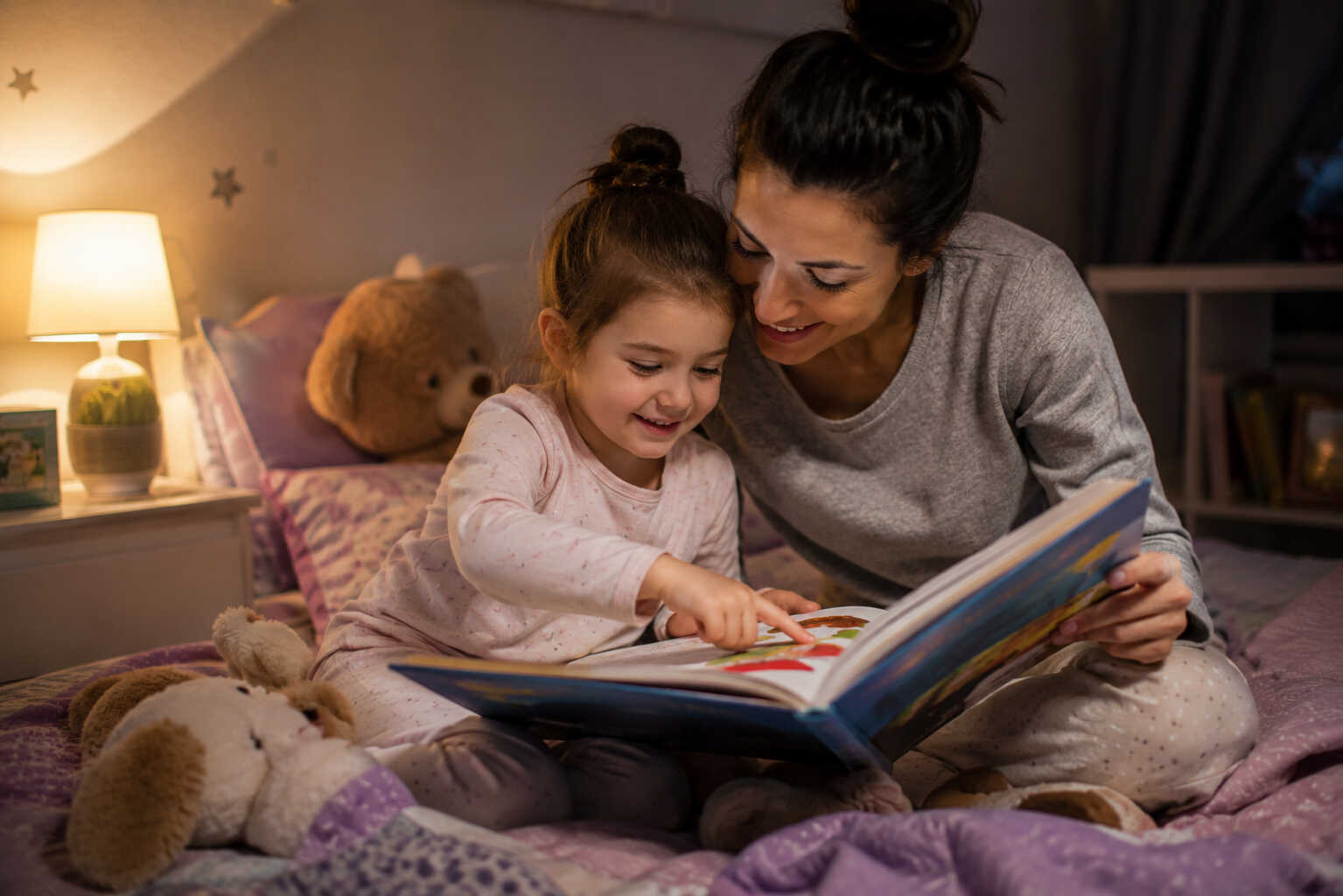
At bedtime, I would read her favorite books and pause at words. "Look at this word. Dog. Can you hear the sounds? /d/ /o/ /g/." I would stretch them out slowly. She would repeat them. Sometimes she would blend them into the word. Sometimes she wouldn't. Either way, we kept reading. The story mattered more than the lesson.
Even family names worked. Her brother's name is Sam. We would say, "Sam starts with /s/. What else starts with /s/?" She would list things. Sun. Sock. Sandwich. The connection between the sound and real life made it stick.
Different Kids, Different Timelines
I joined a parent group online and started reading about other families' experiences. Some kids knew all their sounds by three and a half. Others were six before it clicked. Both groups of parents said the same thing: once it clicked, it clicked fast.
After understanding the sequence itself, I became curious how different parents felt about structured approaches and whether every child benefited from the same type of program. Reading different experiences helped me understand that there isn't one solution for every family. Some parents swore by formal phonics programs. Others said their child learned sounds organically through daily conversation and play. Some used apps. Some used books. Some used a mix.
What I took from those stories was this: the method matters less than the consistency and the emotional tone. Kids who learned sounds in a low-pressure, high-frequency environment did well. Kids who were pushed hard before they were ready often developed anxiety around reading that lasted years.
When to Actually Worry
I want to be honest about this because I spent months worrying about nothing.
If your child knows letter names but not letter sounds, that alone is not a sign of a learning disability. It is a sign of normal development. Most kids separate these two skills by several months or even a year.
What would be more concerning is if your child shows multiple signs together. Trouble learning nursery rhymes. Not recognizing letters in their own name. Not understanding that words can be broken into parts. Avoiding books entirely. A family history of reading difficulties. If several of these are present, it's worth talking to a pediatrician or a speech therapist.
But if your child is four, knows the alphabet song, can point at letters and name them, but draws a blank when you ask for the sound? That is not a red flag. That is a child who is learning in the normal sequence.
What Progress Really Looks Like
I used to measure progress day by day. Did she know the sound today? Did she forget it yesterday? That mindset made me crazy.
Real progress happens over weeks and months. One week she might know /m/ and /s/ reliably. The next week she might add /t/ and /p/. Then she might seem to forget /m/ for a few days. That's normal. The brain is sorting and filing new information. It looks messy from the outside.
Around five and a half, I noticed she could hear sounds in words without me prompting her. We were walking past a stop sign and she said, "Stop starts with /s/." I hadn't asked. She just noticed. That's when I knew the connection was forming on its own. It wasn't because of my flashcards. It was because of months of casual, playful exposure.
The Practical Takeaway
If your child knows letters but not letter sounds, here is what actually helps.
Stop quizzing. Start playing. Make sounds part of normal conversation, not a test. Use bath time, car rides, grocery shopping, and bedtime as your classroom. Let your child lead sometimes. If they want to talk about the letter B for three days straight, do it. If they ignore letters for a week, let them. Learning happens in bursts, not straight lines.
Focus on phonemic awareness before phonics. Can your child hear that "cat" has three sounds? Can they tell you what sound "ball" starts with? That hearing skill comes before connecting sounds to written letters. If they can't hear the sounds in spoken words, written letters won't make sense yet.
Be patient with similar letters. B and D, P and Q, M and N. These confuse every young child. Their brains are learning visual discrimination. It takes time.
Keep reading aloud. The best thing you can do for your child's reading future is to keep books enjoyable. If they associate reading with stress and pressure, they will avoid it. If they associate it with closeness and stories, they will seek it out.
And remember: knowing letter names is a real skill. Your child has learned 26 symbols and their labels. That is not nothing. The sounds will come. They almost always do.
You Are Not Behind
I spent a year thinking I was failing my daughter because she couldn't tell me what sound F made. I compared her to kids in her preschool who were "reading" sight words. I felt like I had missed some window.
I hadn't. She was exactly where she was supposed to be. The alphabet song had given me false confidence, and her blank stare at the letter B had given me false panic. Both were normal. Both were part of the process.
Your child is not broken. You are not behind. The sounds will come when the brain is ready, and your job is to make the waiting period feel safe and fun. That's it. No flashcard marathons. No worksheets. Just attention, patience, and a lot of silly sound games in the grocery store aisle.
The reading will happen. I promise.
About the Creator
Understandshe
I write about healing, self-growth, and the messy but beautiful journey of becoming. Honest lessons, real stories, and gentle insights you’ll also find on UnderstandShe.
Enjoyed the story? Support the Creator.
Subscribe for free to receive all their stories in your feed.
Comments
There are no comments for this story
Be the first to respond and start the conversation.