
Modernizing Real Estate Pedagogy: The Evolution of Digital Outreach Systems
How Technical Proficiency and Communication Frameworks Define Success in the 2026 Housing Market

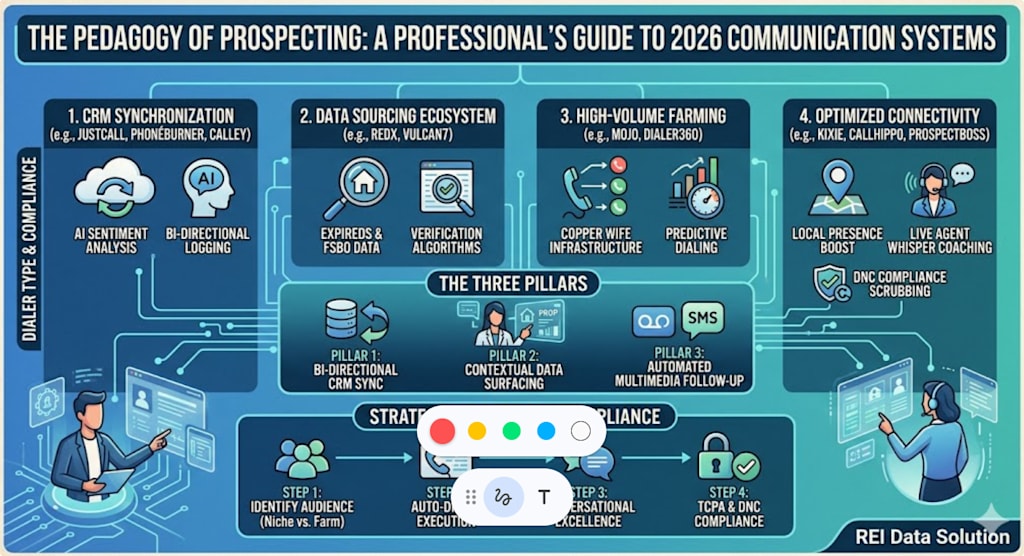
In the competitive landscape of the 2026 real estate market, the traditional image of the agent, hand-dialing numbers from a spreadsheet, has become an artifact of the past. For professionals across the United States and Canada, the methodology of outreach has undergone a fundamental shift from manual labor to systematic management. As the industry evolves, the "Education" of a modern agent must now include a deep understanding of communication architecture. Mastering these systems is no longer just about efficiency; it is about reclaiming the time necessary to provide high-level advisory services to clients.
The Cognitive Shift: From Manual Dialing to Strategic Conversation
The primary bottleneck for real estate growth in the digital age is "keypad fatigue." When an agent spends four hours manually dialing, their mental energy is drained by the mechanical repetition of the task rather than the psychological nuance of the conversation. In a relationship-based industry, this is a critical failure.
Modern educational frameworks for licensees now emphasize the "separation of concerns." Technology handles the mechanics of the connection, while the human professional handles the empathy, negotiation, and problem-solving. This technical foundation allows an agent to maintain a higher "emotional IQ" throughout their workday, as they are not bogged down by the frustration of busy signals and disconnected lines.
The Three Pillars of Communication Architecture
To properly educate new and seasoned agents on these systems, we must break down the three core components that make modern outreach successful. These are the pillars that transform a simple phone call into a data-driven interaction.
1. Bi-Directional CRM Integration
A Customer Relationship Management (CRM) system is the "brain" of a real estate business. In 2026, the most effective communication tools utilize API-driven, bi-directional synchronization. This means that every call duration, outcome, and follow-up task is recorded automatically. For a broker or mentor, this provides a transparent audit trail, allowing for data-backed coaching rather than relying on an agent's subjective memory of their daily activity.
2. Contextual Awareness and Data Surfacing
Trust in real estate is built in the "critical five" the first five seconds of a conversation. Modern systems utilize "heads-up" dashboards that surface property tax history, previous listing data, and local market trends the moment a call is connected. This allows the agent to lead with value rather than asking redundant questions, immediately establishing themselves as a local market expert.
3. Automated Multimedia Sequences
Educational research into consumer behavior suggests that brand recognition requires multiple "touches" across different mediums. Modern outreach systems facilitate this by triggering automated SMS and email follow-ups the moment a call concludes. This ensures a consistent professional presence without requiring the agent to stop their workflow to send manual messages.
Technical Case Studies: Navigating the 2026 Software Landscape
When selecting a system to implement, professionals must understand which technical "niche" a tool occupies. Rather than looking for a one-size-fits-all solution, the modern agent must match the tool to their specific business model.
• Predictive Efficiency for Teams: In large-scale operations, tools like Dialer360 utilize algorithms to predict when an agent will finish a call, dialing the next lead in advance. This is a study in "zero-downtime" logistics, ideal for high-volume neighborhood farming.
• Infrastructure-Based Rapport: High-volume prospecting often suffers from the "telemarketer delay." Systems like the Mojo Dialer solve this through specialized copper-wire infrastructure, ensuring that the connection is instantaneous when a prospect answers, a vital tactical advantage for maintaining rapport.
• The Data-Centric Approach: For agents focusing on specialized niches like expired listings or "For Sale By Owner" (FSBO) properties, platforms like RedX and Vulcan7 act as both the engine and the fuel. Their 2026 verification algorithms serve as a benchmark for data integrity in the industry.
• Trust-Building via Local Presence: Answer rates are a common pain point. Technology from providers like Kixie addresses this by displaying a local area code to the recipient. This "Connection Boost" methodology is a key study in behavioral psychology, significantly reducing the barrier of skepticism.
• The Quality-First Framework: Not all outreach is about volume. PhoneBurner represents a "power dialer" philosophy where the agent remains in total control of the pace. This is the preferred method for high-value lead follow-up, where the quality of the preparation outweighs the quantity of the calls.
• Professional Development and Coaching: Education is an ongoing process. Systems like CallHippo have introduced "whisper" features, allowing a coach to speak to a trainee during a live call without the prospect hearing. This facilitates real-time, on-the-job training that is far more effective than traditional classroom role-playing.
• Mobile and Solo Practitioner Agility: For the agent who works primarily from the field, mobile-first solutions like Calley demonstrate that enterprise-level efficiency can now be contained within a smartphone, lowering the barrier to entry for new licensees.
Legal Compliance and the Ethics of Outreach
A comprehensive guide must address the regulatory framework of 2026. The Telephone Consumer Protection Act (TCPA) and the National Do Not Call (DNC) Registry are the two most important legal concepts for an agent to master.
Utilizing automation without "DNC scrubbing" is a violation of professional ethics and can lead to severe fines or the revocation of a real estate license. Modern systems, such as ProspectBoss, integrate these compliance checks into the dialing process. Educating oneself on these legalities is not just about avoiding punishment; it is about respecting the consumer's right to privacy and maintaining the integrity of the profession.
Conclusion: The Synergy of Tech and Humanity
While the communication systems of 2026 are more powerful than ever, they remain tools, not replacements for human expertise. The most successful real estate professionals are those who use technology to handle the "numbers game" so they can focus on the "human game."
By removing the friction of manual processes, these systems allow agents to do what they were truly hired for: solving complex financial problems, navigating emotional negotiations, and building communities. The goal of real estate technology is not to make agents more like machines, but to give them the time to be more human.
About the Creator
Enjoyed the story? Support the Creator.
Subscribe for free to receive all their stories in your feed.
Comments
There are no comments for this story
Be the first to respond and start the conversation.