
MILLIMETER WAVES
SMART IOT APPLICATIONS FOR 5G AND BEYOND
The word "internet" has become more and more inclusive over the past few decades, encompassing many aspects of life. Nonetheless, studies discovered that figuring out how best to use the Internet was really challenging. The rise in internet traffic has led to the development of the
IoT devices are connected to the Internet by a range of clever technological innovations, including RFID, WSN, Bluetooth, NFC, and LTE technologies. A common definition of the Internet of Things is "devices connected to the internet." Information gathered from multiple sources is distributed by this organization via the internet and designated locations (Khanna & Kaur, 2020).
The Internet of Things (IoT) is a well-known and innovative technology that uses linked physical things to transform the world around us. Low power gadgets are referred to as IoT devices.
that exchange information online (Akpakwu et al., 2018). Additionally, its innovative networking architecture will enable the growth of already-existing networks. People primarily used devices with internet connections until recently. These gadgets included tablets, computers, and cell phones. Any system that can connect to the internet—such as intelligent tags and sensors—will be acceptable. According to Ding et al. (2020), network ubiquities refer to the state in which any equipment is always, everywhere, and for everyone connected to networks. The Internet of Things revolution ushers in a sophisticated era of services and apps. i.e. the creation of intelligent cities, where a range of sensors and Internet of Things gadgets monitor daily activities in the city and assist with energy conservation, forecasting, and preventing traffic congestion, among other things (Fadlullah et al., 2011).
Furthermore, Goudos et al. (2017) have identified supply chain management, logistics, and healthcare as potential areas of use. IoT creates connections between different "units" and promotes Machine-to-Machine (M2M) communication, which is a way for systems to exchange data without the need for human intervention. Using cogent communication channels can help achieve this (Uddin et al., 2019).
Furthermore, over time, cellular and wireless networking systems have advanced significantly, enhancing end-user connectivity experiences. About every ten years, a plethora of new standards and guidelines are released to improve the functionality of already-existing specifications by redefining new communication conventions. After its introduction in the late 20th century, cellular technology progressed from analog to digital systems to provide high-quality internet services (Gupta & Jha, 2015).
Generations of cellular networks have mostly changed in response to the growing trend of mobile phone users, data consumption, and the demand for higher levels of Quality of Experience (QoE). Experts predict that there will be about 50 billion mobile devices on the market in the coming decades, which will result in a significant increase in data traffic (Panwar et al., 2016).
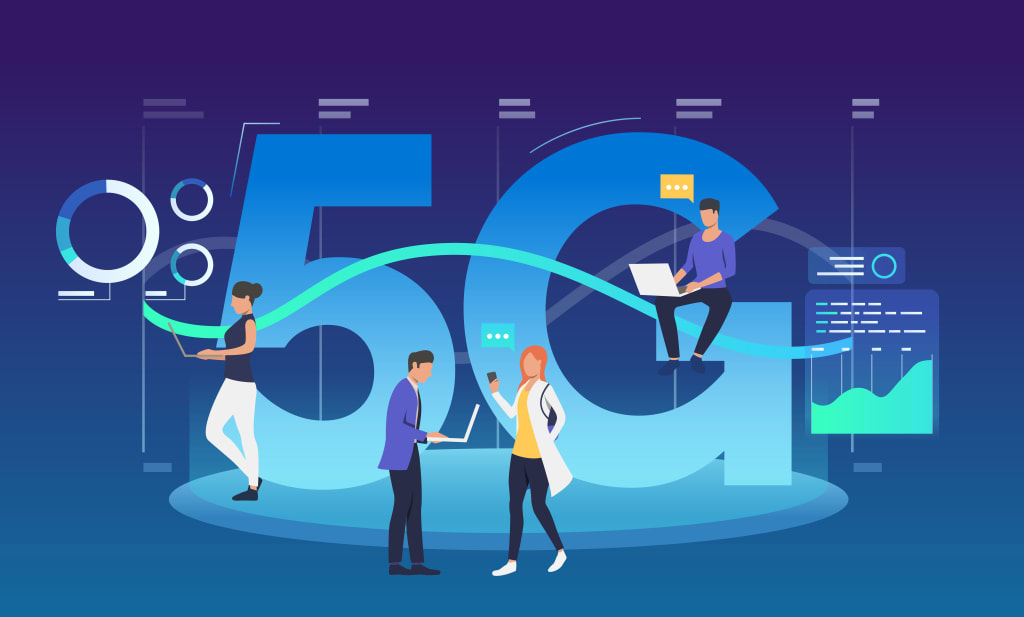
Fifth generation (5G) mobile networks will meet the various IoT requirements. To guarantee the proper assistance of large devices, new ecosystems, and network services, 5G wireless connection is essential. It is expected that 5G cellular networks for the Internet of Things will effectively address important requirements like maximum bandwidth, low data latency, and accessibility to accommodate more users, dependable power usage infrastructures, and the availability of integrated end-user networking solutions (Uwaechia & Mahyuddin, 2020).
Furthermore, it has been suggested that millimeter wave connectivity, which makes use of the vast bandwidth in the mmWave region of 30GHz to 300GHz, is essential to 5G wireless technologies in order to facilitate multi gigabit networking capabilities (Niu et al., 2015).
Because of their vast bandwidth availability, the millimeter-wave frequency bands are thought to be potential possibilities for satisfying the expanding demand for capacity.
A wider range of channel circumstances is supported by directional mmWave channels as opposed to semi-omnidirectional and sectored microwave signals. For the fifth generation and beyond, realistic millimeter wave channel models are essential for mobile communication network design and analysis. Using mmWave and sub-Terahertz technology will enable many new applications, including imaging, remote cognition, and precise positioning (Ju et al., 2019).
Furthermore, there is a significant propagation loss for mmWave communication due to the high carrier frequencies. The behaviors and capabilities of the mmWave frequency spectrum will be examined and analyzed in this thesis while taking atmospheric conditions like temperature, humidity, rain, and so on into account. We will examine the wireless channel propagation methods, Path-Loss (PL), Shadow Fading (SF) reception power, and Path-Loss Exponent (PLE) that impact the fulfillment of networks in time-delays.
About the Creator
Md. Shihab Shahriyar
In the embrace of St. John's, I, Shihab, weave tales where pets meet prose. Join me on Vocal for stories stirred by fur and the sea's whisper. 🐾✍️🌊
Enjoyed the story? Support the Creator.
Subscribe for free to receive all their stories in your feed.
Comments
There are no comments for this story
Be the first to respond and start the conversation.