
MBBS Abroad for Indian Students 2026: Countries, Costs, and How to Choose Wisely
A practical guide comparing top destinations, real costs, recognition requirements, and what to look for in an internationally accredited medical program.
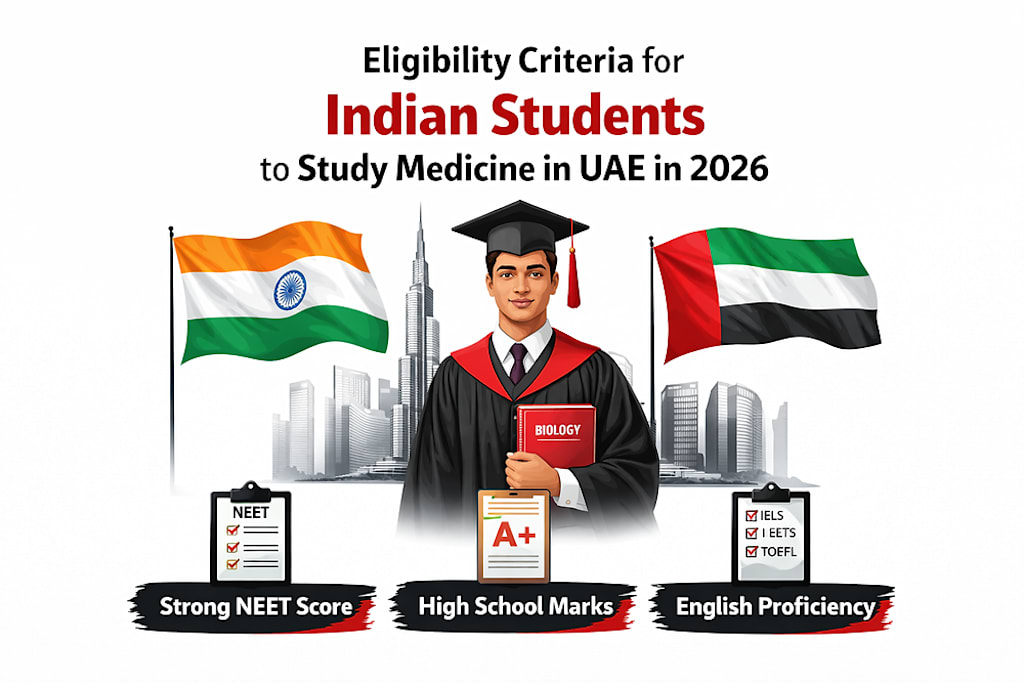
Every year, more than two million Indian students sit for NEET. Around 90,000 secure a government medical college seat. The rest — genuinely talented, hardworking students with a real passion for medicine — are left asking a difficult question: what now?
Some settle for overpriced private colleges in India. Some abandon the dream entirely. A growing number are taking a smarter route: studying medicine abroad in internationally accredited programs that are globally recognized and, in many cases, more affordable than people expect.
This guide covers what Indian students actually need to know about MBBS abroad in 2026 — which countries are worth considering, what it really costs, and how to avoid the mistakes that trap too many families every year.
Why More Indian Students Are Looking Abroad in 2026
The reasons are straightforward. Private medical colleges in India now charge between Rs. 50 Lakhs and Rs. 1.5 Crore for an MBBS, often with limited clinical exposure and no international recognition. Meanwhile, India's NExT (National Exit Test) has become the clear, established pathway for foreign-educated doctors to return and practice in India — making the process more predictable than ever before.
Safety concerns around certain Eastern European destinations have also shifted interest toward the UAE, Malaysia, and Gulf alternatives. And cost transparency has improved dramatically, allowing families to make honest comparisons for the first time. For many students today, MBBS abroad is not the backup plan. It is the better plan.
Which Countries Are Worth Considering?
Russia and the Philippines remain popular for their lower costs — typically Rs. 25 to 45 Lakhs total — but students should research NExT pass rates carefully, as these vary widely by institution. Kazakhstan and Uzbekistan are cheaper still but come with inconsistent infrastructure and lower safety ratings.
Poland and Italy offer EU-accredited degrees and strong recognition, usually costing Rs. 50 to 80 Lakhs in total. Malaysia is a well-balanced option — safe, culturally familiar, WHO and MQA accredited, and generally costing Rs. 40 to 60 Lakhs.
The UAE stands apart for reasons most guides miss. It combines safety, English-medium instruction, and a large South Asian community with access to globally accredited degrees through structured pathway programs — making it one of the most practical starting points for Indian students today.
What Does It Actually Cost? Real Numbers for 2026
Most online figures are misleading because they list tuition alone. A realistic all-in budget includes tuition, accommodation, food, annual flights home, books, health insurance, visa fees, an emergency fund, and post-graduation NExT preparation costs.
When everything is added up honestly, a six-year program at a reputable institution typically falls between Rs. 75 Lakhs and Rs. 1.2 Crores — broadly comparable to Indian private medical colleges, but with a globally portable degree as the result.
The Recognition Question
This is the most important part of any decision. As of 2026, foreign-educated doctors must clear the NExT exam to practice in India. To be eligible, the university must be listed in the WHO World Directory of Medical Schools, and the degree must be recognized by the regulatory authority of the country where it was awarded.
Before enrolling anywhere, always verify the institution is individually listed in the WHO directory. Country-level accreditation does not automatically cover every university within that country. Check this directly — do not rely on an agent's word.
Red Flags That Should Give You Pause
The MBBS abroad market has too many agents selling programs that do not deliver. Watch for institutions leading with "no NEET required" as their primary pitch, fee structures with unexplained miscellaneous charges, any university not listed in the WHO directory, and programs promising guaranteed pass rates. No legitimate medical program makes that promise — medicine is rigorous everywhere.
High-pressure tactics asking you to decide within 24 to 48 hours are also a clear warning sign. Reputable programs do not need them.
The UAE Pathway Model
One structured approach gaining serious attention among Indian families is the pathway program model, where students complete pre-clinical years in the UAE before transitioning to a partner university abroad for the clinical phase and final degree.
Gulf Medical University in Ajman offers this through its Thumbay International Pathway Program — three years of pre-clinical sciences in the UAE, followed by three years of clinical training at a partner university in Poland, Italy, Malaysia, Ghana, Egypt, the UK, the US, or other destinations. The final degree is awarded by the partner university and recognized in the awarding country, making it eligible for the NExT pathway.
The UAE phase costs from approximately Rs. 15 Lakhs per year — comparable to mid-tier private colleges in India, with a globally recognized outcome. Students know their final destination from day one, which eliminates the uncertainty that undermines many other programs. Further details about the program structure and 2026–27 admissions are available at gmu.ac.ae.
How to Choose: The Short Version
Verify WHO directory listing independently. Calculate the real total cost — not just tuition. Evaluate the clinical training hospitals specifically. Speak with current students directly. And visit or video-call the campus before committing. A university confident in its program will welcome all of these steps.
The application deadline for most 2026–27 programs is August 2026. Starting the process in May or June gives students the best chance of a smooth experience — documents, entrance requirements, and visa processing all take more time than most families anticipate.
Closing Thought
MBBS abroad in 2026 is a legitimate, well-structured path for Indian students who approach it with the right information. Verify everything independently, understand the real costs, and choose based on evidence. The opportunity is real — so is the homework required to make the most of it.
About the Creator
Enjoyed the story? Support the Creator.
Subscribe for free to receive all their stories in your feed.
Comments