
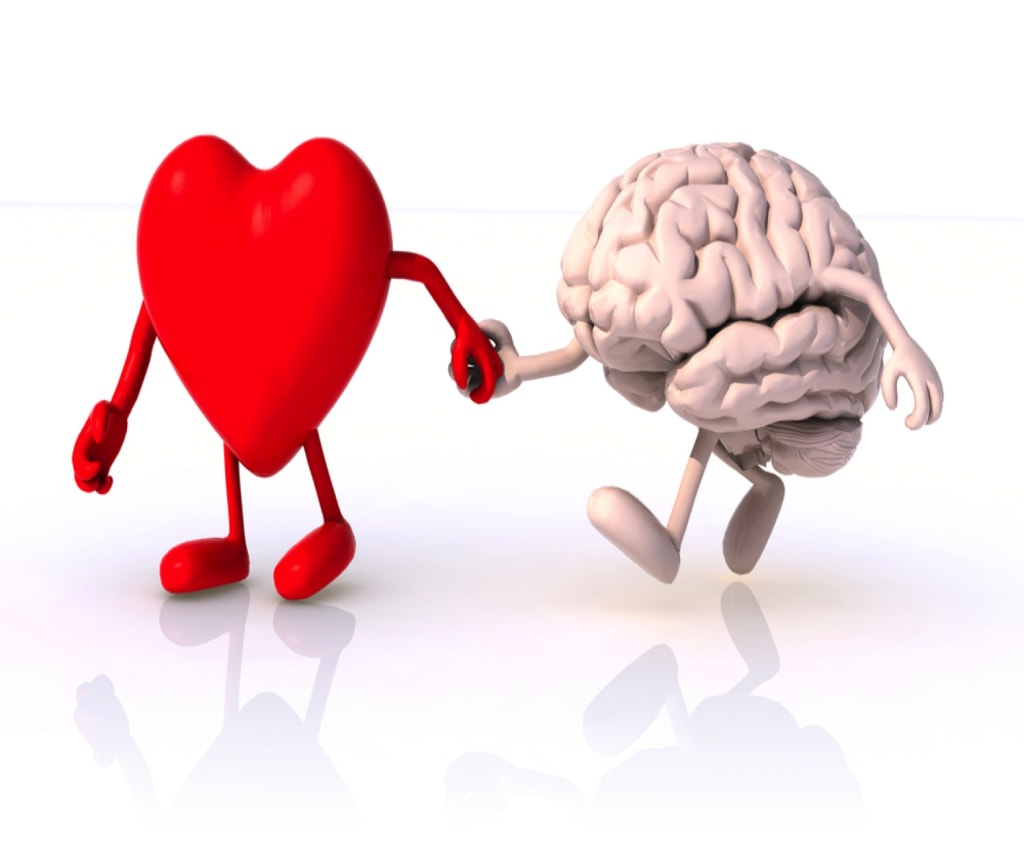
Love is a complex emotion that is influenced by a variety of factors, including our brains. The brain plays a role in all stages of love, from the initial infatuation to the long-term attachment.
In the early stages of love, the brain is flooded with dopamine, a neurotransmitter that is associated with pleasure and reward. This is why we often feel euphoric and obsessed with our new love interest. The brain also releases oxytocin, a hormone that is associated with bonding and attachment.
Over time, the brain adapts to the presence of love and the levels of dopamine and oxytocin decrease. This is why the initial excitement of love often fades and is replaced by a more stable and secure love.
However, even when love is long-lasting, it can still be painful when it ends. The brain responds to heartbreak in a similar way to how it responds to physical pain. The insular cortex, a region of the brain that processes pain, is activated when we experience heartbreak. We may also experience withdrawal symptoms, such as craving contact with our ex-partner.
Over time, the brain heals from heartbreak and the pain subsides. However, this process can take time and it is important to be patient with yourself. There are things you can do to help the healing process, such as exercise, spending time with friends, and listening to music.
The role of the brain in love:
* **The ventral tegmental area (VTA)** is a small region of the brain that is located in the midbrain. It is involved in reward and motivation, and it is activated when we experience things that we find pleasurable, such as food, sex, and love. The VTA contains dopamine neurons, which are responsible for sending signals to other parts of the brain that are involved in pleasure and reward. When these neurons are activated, they release dopamine, which produces a feeling of pleasure.
* **The prefrontal cortex** is a large region of the brain that is located at the front of the brain. It is involved in cognitive functions, such as decision-making, judgment, and impulse control. The prefrontal cortex is also involved in social cognition, which is the ability to understand and respond to the emotions of others. When we are in love, the prefrontal cortex is deactivated. This is why we often make impulsive decisions and overlook our partner's flaws.
* **The insular cortex** is a region of the brain that is located in the temporal lobe. It is involved in processing pain, both physical and emotional. The insular cortex is also involved in self-awareness and empathy. When we experience heartbreak, the insular cortex is activated. This is why heartbreak can feel so physically painful.
* **Oxytocin** is a hormone that is released during social bonding. It is associated with feelings of trust, attachment, and love. Oxytocin is produced in the hypothalamus and released by the pituitary gland. It acts on receptors in the brain and body, and it has a number of effects, including increasing feelings of trust and bonding, reducing stress, and promoting relaxation.
* **Vasopressin** is another hormone that is released during social bonding. It is associated with feelings of loyalty and commitment. Vasopressin is produced in the hypothalamus and released by the pituitary gland. It acts on receptors in the brain and body, and it has a number of effects, including increasing feelings of loyalty and commitment, reducing aggression, and promoting pair bonding.
These are just a few of the brain regions and hormones that are involved in love. The science of love is still a relatively new field, and there is much that we do not yet understand. However, the research that has been done so far has shed some light on the neural and hormonal basis of this complex emotion..
do you want TO KNOW MORE ABOUT LOVE JUST WIT FOR NEXT ARTICLE
About the Creator
Enjoyed the story? Support the Creator.
Subscribe for free to receive all their stories in your feed.
Comments
There are no comments for this story
Be the first to respond and start the conversation.