
Lets explore the Seven Stages of Artificial Intelligence Evolution
AI
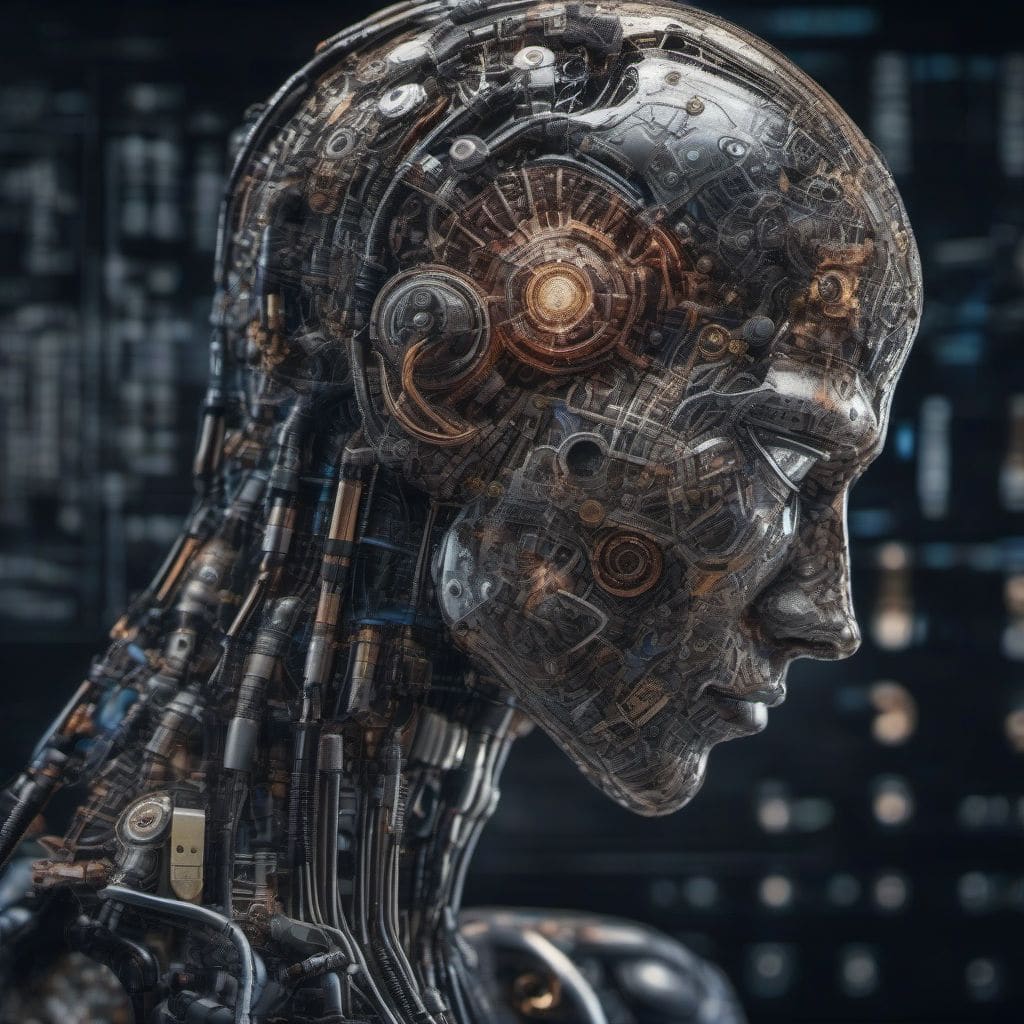
In an ever-evolving world where technology takes center stage, understanding the intricate journey of artificial intelligence (AI) becomes increasingly important. Delving into the seven distinct stages of AI development offers a comprehensive perspective on its evolution, challenges, and immense potential. This article will take you on a detailed exploration of each stage, shedding light on the past, present, and future of AI.
**Introduction: Navigating the AI Landscape**
As technology continues to shape our lives, AI's role has grown exponentially. From rule-based systems to the realm of superintelligence, the AI journey showcases the remarkable progression from basic algorithms to machines that mimic human-like intelligence.
**Stage 1: The Dawn of Rule-Based AI Systems**
At the inception of AI development, we encounter the first stage: rule-based AI systems. Also referred to as one-task systems, these rudimentary AI models operate based on predetermined rules or algorithms provided by programmers. Visualize a game of chess against a computer, where every move adheres to preset rules. While effective in tasks with well-defined rules, these systems lack the capacity to learn or adapt beyond their coded parameters.
**Stage 2: Embracing Context Awareness and Retention**
Moving forward, the second stage introduces context awareness and retention systems. These systems mark a significant shift, as they possess the ability to understand and retain context from previous interactions. Smartphone assistants like Siri and Google Assistant exemplify this stage. These virtual aides not only execute commands but also learn from past conversations, enhancing user experiences with personalized responses.
**Stage 3: Mastery in Domain-Specific Systems**
Advancing further, the third stage unveils domain-specific AI systems. These systems transcend context comprehension by achieving high proficiency within a specific domain or field. These AI applications are designed to excel in specialized tasks. IBM's Watson, renowned for dominating Jeopardy!, and Google's AlphaGo, which conquered the ancient game of Go, exemplify this stage. These systems possess an in-depth understanding of their domains, enabling them to analyze vast datasets and make informed decisions swiftly.
**Stage 4: Embarking on Thinking and Reasoning AI**
The fourth stage witnesses AI systems mirroring human thinking and reasoning capabilities. Distinguished from previous stages, these systems comprehend intricate concepts, solve unfamiliar problems, and even generate creative ideas. This is made possible through techniques like machine learning and deep learning, enabling AI to learn from experience and improve performance over time. Despite these advancements, these systems remain tools rather than fully autonomous, human-like entities.
**Stage 5: The Emergence of General Artificial Intelligence (AGI)**
Stepping into the realm of AGI, the fifth stage introduces a concept that envisions AI matching human intelligence across various aspects. AGI is expected to possess the ability to learn, adapt, and apply knowledge to a wide range of tasks. Unlike domain-specific systems, AGI's potential extends beyond individual domains, with the capacity to exhibit reasoning skills akin to humans. Achieving AGI remains theoretical, sparking debates about ethical implications and philosophical ramifications.
**Stage 6: Unveiling Superintelligent AI (ASI)**
The sixth stage marks the advent of superintelligent AI (ASI), where AI systems transcend human abilities in tasks of economic significance. ASI possesses cognitive capabilities that far exceed human limits. This stage holds the potential for AI to innovate, tackle complex global challenges, and uncover insights beyond human comprehension. However, with great power comes great responsibility, as the ethical implications and unintended consequences of ASI raise important questions.
**Stage 7: The Enigma of the AI Singularity**
The final stage, the AI Singularity, is a speculative concept that contemplates a future where technological advancement becomes uncontrollable due to the exponential self-improvement of ASI. This phenomenon could lead to unforeseen shifts in human civilization. The term "singularity" originates from physics, representing a point where familiar rules break down. In the AI context, it symbolizes a scenario where ASI not only surpasses human intelligence but continually accelerates its own advancement, sparking unprecedented change.
**Conclusion: Embracing the AI Revolution**
The journey through these seven stages of AI paints a fascinating portrait of technology's evolution. From rule-based beginnings to the uncharted territory of singularity, each stage highlights AI's evolving complexity. While certain stages remain theoretical or speculative, they collectively underscore the transformative potential of AI and the ethical considerations it necessitates. As we venture into the future, the role of AI in our world will continue to expand, shaping industries, economies, and the very fabric of our existence.
About the Creator
Enjoyed the story? Support the Creator.
Subscribe for free to receive all their stories in your feed.
Comments
There are no comments for this story
Be the first to respond and start the conversation.