
Latest Threats Targeting Cloud Environments and Strategies to Mitigate Risks
Unmasking Emerging Cloud Security Threats: Proven Strategies to Safeguard Your Data and Infrastructure
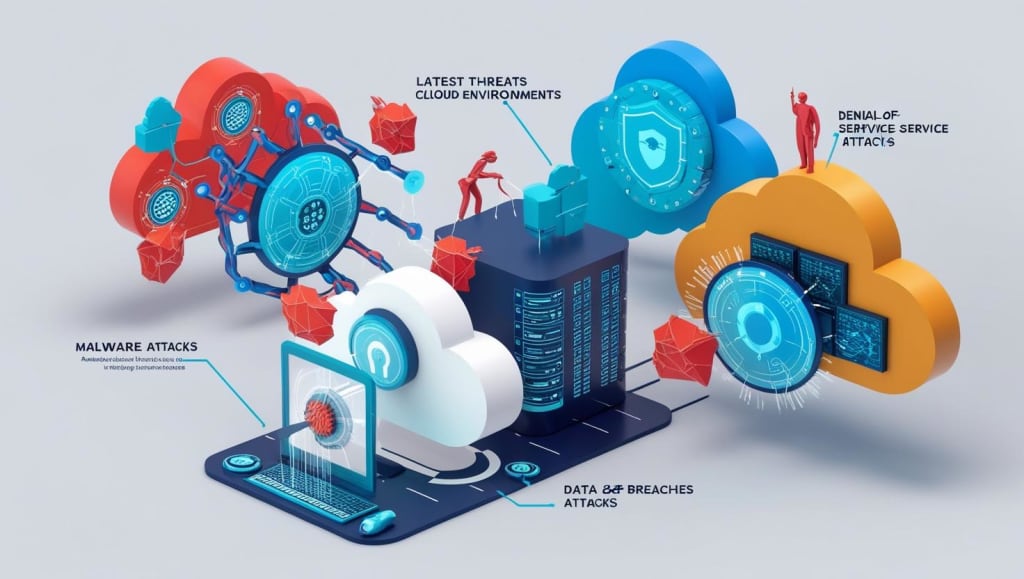
Cloud computing has brought in a new breath of life to businesses within the country, the scalability, efficiency, and flexibilities, but with this comes an alarming level of cloud security threats. Cybercriminals keep advancing with their nefarious plans targeting cloud environments, stealing sensitive data, disrupting operations or holding companies hostage with ransomware attacks.
The major organizations in Delhi and all over India are moving to the cloud, and this is when the need for robust cloud security measures has never been more crucial. From financial institutions to government agencies and startups, Delhi has become a hub for technology-driven enterprises.But this fast adoption of cloud services also means that businesses must stay ahead of cyber threats to avoid catastrophic security breaches.
Let's discuss the new cloud security threats and the best strategies to combat them.
1. Ransomware Attacks on Cloud Infrastructure
Among the most critical security threats in the world today, one is ransomware, whereby hackers encrypt a firm's data and demand its release by paying them. A classic example of the infamous CloudNordic ransomware attack that occurred in 2023 will be taken into consideration. There was a particular ransomware attack on the cloud service provider, which irreversibly destroyed customer data. The instance came along with severe economic and reputational damage.
How to Mitigate:
✅ Regular Backups – Always maintain offline backups of critical data.
Zero Trust Architecture – Verify users and devices at every step.
• EDR - Sophisticated security controls to detect and halt ransomware from all possible stages of spreading it.
2. Misconfigured cloud storage leakage of data
Misconfigurations are silent killers. The latest case of Toyota (2023) discovered that the customer data had been exposed in the misconfigured cloud databases for over a decade! Most enterprises inadvertently expose their cloud storage to the public, and gigantic data leaks result.
Ways to Mitigate
✅ Enable Strong Access Controls - Use Identity and Access Management (IAM) to control it.
✅ Regular Security Audits – Perform frequent security checks to identify vulnerabilities.
✅ Data Encryption – Encrypt data both in transit and at rest to prevent unauthorized access.
3. API Security breaches
APIs are the backbone of cloud applications. Unsecured APIs lead to devastating breaches. The most recent example is of T-Mobile, 2023, wherein hackers used an API vulnerability to siphon off data of 37 million customers.
How to Mitigate:
API Gateways – Install layers of security monitoring API traffic.
Token-Based Authentication – Utilize OAuth or JWT tokens for safe access to your API.
Rate limiting- It prevents API abuse by limiting a request on a per-user basis
4. Cloud Security: Insider Threats
Not everything is evil in the world. An insider threat is by disgruntled employees or compromised accounts. In 2023, Tesla showed how two former employees leaked company confidential data that damaged reputation.
How to Mitigate:
✅ Minimum Privilege Access – Access by only those individuals who require them.
✅ Continuous Monitoring with UEBA is used to determine suspicious activities
✅Stringent Off-boarding Process The cloud access needs to be automatically revoked for leaving employees
5. Supply Chain Attacks on the Cloud Service Provider
Hackers are now attacking third-party vendors to gain access to cloud systems. The MOVEit Data Breach (2023) impacted government agencies and major corporations around the world, compromising millions of records due to vulnerabilities in a widely used cloud file transfer service.
How to Mitigate:
✅ Vet Third-Party Vendors – Perform security assessments before integrating any cloud services.
✅ Patch Management – Regularly update and patch software to fix vulnerabilities.
✅ Multi-Factor Authentication (MFA) – Strengthen security by requiring multiple forms of verification.
Why Delhi is at the Center of Cloud Security Advancement
The city, being a critical IT and financial hub, its companies are more prone to cyber threats. Government firms, MNCs, and start-ups of Delhi which operate within the emerging technology ecosystem of the city require cloud security for their data and operations.
Besides, some of India's greatest cybersecurity institutions are located in Delhi; therefore, it is a prime location for learning and specializing in cloud security. Regardless of being a working professional or being a student, one needs to equip himself with advanced cybersecurity skills to effectively combat modern threats.
Final Thoughts
Cloud security is not a choice but a necessity. From ransomware attacks and API breaches to insider threats and misconfigurations, the risks are evolving rapidly. Organizations must proactively adopt security best practices to safeguard their cloud environments from malicious attacks.
Staying updated with the latest information, substantial investment in strong cybersecurity measures, and strengthening the security strategy can enable businesses in Delhi and the entire Indian nation to face the ever-increasing cloud threats. Cyber Security Courses Delhi can help professionals develop needed skills for the effective deal with these challenges in the respective areas.
About the Creator
Enjoyed the story? Support the Creator.
Subscribe for free to receive all their stories in your feed.
Comments
There are no comments for this story
Be the first to respond and start the conversation.