
Kotter's 8-Step Change Model: Advantages, Challenges and Potential Alternatives
What are the 8 Steps in Kotter’s Change Model?

Organizations built for Change are more likely to survive and thrive - John Kotter.
John Kotter’s 8-step change model is shaping organisations worldwide driving towards success. Published in 1995 in Kotter’s book Leading Change, this model inspires businesses to bring within their workplace.
With the corporate world evolving, the need for Change is not a need, but it has become a necessity. As the philosopher Heraclitus says, Change is the only constant thing in life.
Hence, businesses must adapt to practices to achieve long-term success.
While bringing Change is essential, it is also challenging. According to the report conducted by CEB Corporate Leadership Council, 2016, only 30% businesses survive the Change which makes the failure rate about 70%.
This was something, a retired Harvard University John Kotter realised when he analysed companies attempting for large-scale change efforts. Hence after research he developed a 8 Step model to lead Change in the corporate world.
In this blog, we will explore Kotter's 8-Step change model in depth, along with its perks, challenges and potential alternatives.
What is Kotter’s Change Model?
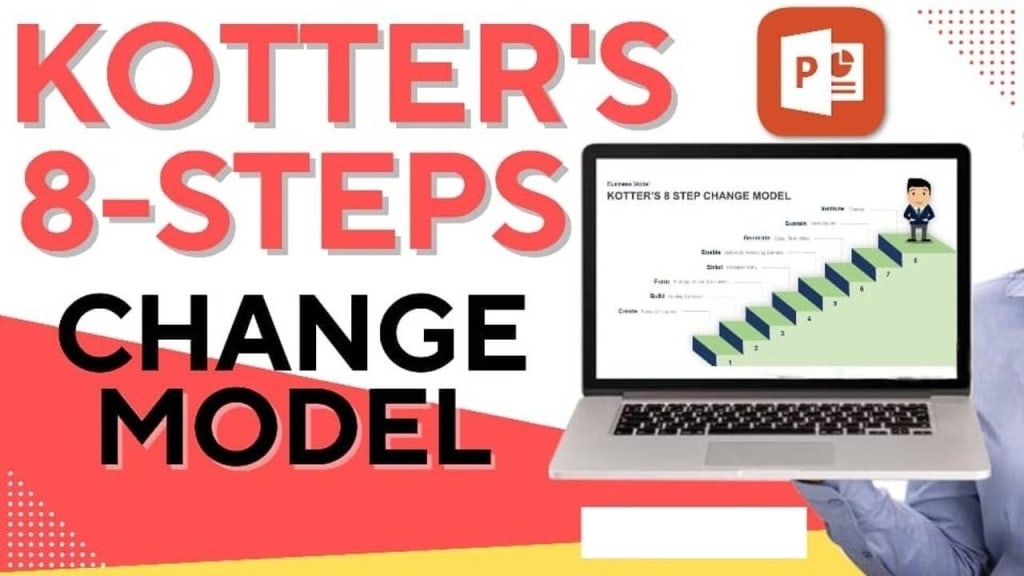
John Kotter’s 8-Step change model is a framework that helps companies manage Change within. It consists of eight crucial steps, including:
1. Create a sense of urgency
2. Form a powerful coalition
3. Create a Vision for Change
4. Communicate the vision
5. Empower broad-based action
6. Generate short-term wins
7. Build on Change
8. Anchor the company towards Change.
The main purpose of Kotter’s model is to guide businesses towards a structured approach so that not only they can initiate Change but also succeed. Each step in this model depends on one another. Furthermore, this model is based on teamwork and employee willingness. By implementing the Kotter’s 8-step change model, companies can learn about future opportunities and respond to threats better.
According to Kotter, Change doesn't happen overnight. It is a gradual process. Using this change model is easy and has proven to be successful. Top companies like Ford Motors, Microsoft, IBM, etc. used these models as a way to bring Change within their organisations.
To understand this framework and its purpose, consider reading this blog: Kotter’s 8-Step Change Model.
What are the 8 Steps in Kotter’s Change Model?
From creating a sense of urgency to forming a powerful coalition, communicating the vision, here are the 8 steps in Kotter’s change model.
Let us dive deep into each of them to better understand this framework.
Step 1: Create a sense of urgency
Change does not happen by itself. In fact, companies must understand the need for Change and how it can help them for it to occur.
Hence, the first step of this change model is to create a sense of urgency and make employees aware of the need for change.
By highlighting potential threats and opportunities, leaders can create momentum. Furthermore, they can help encourage proactive behaviour towards transformation by being honest and communicating effectively with the employees.
Note:
According to Kotter, if an organization needs to bring change, it must ensure that 75% of its employees agree. Hence, this makes step 1 a bit time-consuming and requires effort.
Step 2: Form a powerful coalition
The next step is to form a group of powerful people from every department and levels within the organisation. Having the leaders with the same vision for Change can make this process go smoothly. Additionally, this coalition must include the key stakeholders and individuals who hold expertise along with commitment to lead this transition.
Also, building trust, actively listening to employee’s concerns and addressing their needs is essential in this step.
Step 3: Create a Vision for Change
Once the group is formed, the third step is to develop a clear vision which states why change matters and how it can be successful in the long-term. When implementing this third step of change model, the leaders must make sure that the vision articulated is understandable. Furthermore, it must align with the organisational goals and core values perfectly.
Step 4: Communicate the vision
Once the vision is created, the next step in Kotter’s 8 step change model is to convey the vision to other employees within companies clearly.
For this, effective communication is a must to ensure that individuals not only understand the need for Change but also willingly accept it.
Furthermore, the leaders must use different modes of communication to persuade the employees that this Change is achievable along with the rewards they can get.
Step 5: Remove obstacles
Convincing employees and implementing Change is not easy, so companies face obstacles at every step. The fifth step of Kotter’s change model states that identifying and eliminating every barrier is crucial for a smooth transition.
From outdated processes, lack of resources, unsatisfied employees' resistance for Change and unsupportive management, removing obstacles like these are essential.
Addressing these challenges can help businesses prevent any setback. It’s not that hard. By appreciating employee efforts, providing training, and removing things that stop them from taking action, leaders can ensure Change happens perfectly.
Step 6: Generate short-term wins
Achieving early successes is essential to create momentum and allows employees to work harder. Therefore, leaders must generate and celebrate short-term wins. By breaking the targets in manageable chunks, making achievable targets visible and appreciating individuals for their efforts, leaders can use these wins to foster Change.
This way, they can show how change shapes their success and boost confidence, allowing employees to take better initiatives.
Step 7: Build on Change
According to Kotter, the biggest reason businesses fail to implement Change is that they declare wins in the early stages.
He says that sustaining Change requires continuous efforts. Therefore, his seventh step states building on Change. Leaders must encourage employees to make changes until they have reached the desired outcomes.
Additionally, by analyzing short-term wins, identifying the areas for improvement, addressing complex issues and bringing fresh perspectives, companies can reinforce transformation.
Step 8: Anchor the company towards Change
The last step in Kotter’s 8-step change model is to make change stick and anchor the company towards it. It’s the leader's responsibility to incorporate this into the organisation's culture. For this, they must include new practices into daily operations.
Furthermore, according to Kotter, including employees at every step when bringing Change is essential if companies want to make this model a success.
Potential Advantages and Challenges of Kotter’s 8-Step Change Model
Kotter’s 8-step change model is known to have potential advantages like employee engagement, focus on leadership, etc.
However, it can pose challenges like employee resistance, lack of flexibility, etc. Come on! Let us dive deep into the advantages and fallouts of Kotter’s 8-step model for Change to see if it’s suitable.
Perks
Given that Kotter’s change model was developed in the 90s, is it still relevant?
Well, yes! Top Companies worldwide use this model to install change within their organization, which has proven successful. Here are the top advantages of implementing this change model.
- Structured Roadmap: Kotter-s 8-step model is a structured framework acting as a roadmap for the companies looking to implement Change. Furthermore, it is easy to use and defined, reducing any sort of confusion or uncertainty.
- Employee Engagement: The model emphasises on including employees and building a powerful coalition. Well, this fosters engagement and fosters a sense of ownership, leading to a high level of satisfaction.
- Focus On Leadership: Another perk of using Kotter’s 8 step change model is that it is focused on influential leadership, ensuring Change is guided by those individuals who can inspire and guide the employees.
- Vision Centric Approach: This model aligns the change initiatives with organisation’s goals, core values and visions, providing a perfect sense of direction for leaders.
- Cultural Integration: By incorporating Change into the organisation’s culture, this model ensures long-term sustainability and also helps avoid backsliding.
Challenges
Like any other model, Kotter’s 8-step change model has flaws. Hence, businesses looking forward to following this model and learning about these challenges is essential. They include:
- Employee Resistance: Not all employees are happy with the Change. This can lead to resistance and either derail or slow down the process.
- Lack of Flexibility: This 8-step model is a rigid structured framework, which can be harder to adapt to complex situations or unforeseen challenges. Furthermore, it might require more dynamic adaptation.
- Difficulty Establishing Urgency: While creating a sense of urgency is the first step of Kotter’s change model, it is also difficult. Moreover, most employees might not see the need for change leading to problems.
- Time Consuming: There is no doubt that this change model is effective if implemented right. But it is time consuming and can take weeks, months or years to establish Change. Furthermore, it requires extensive planning, making it an unsuitable choice for companies that must immediately Change.
- Not Enough Emphasis on Employees: Kotter’s model does involve employees in the change process. Yet, it does not address their concerns, needs, or fears, leading to disengagement. Moreover, it can sometimes be driven by the leadership, neglecting the input of lower management and employees.
- Requires High Level of Communication Skills: Having effective communication and persuasion skills are essential to convey the change process. But, not all leaders have these qualities to articulate the Change or motivate employees, causing problems.
Kotter’s 8-step change model does have some challenges. But, with proper planning and careful execution, big companies can implement Change.
Note: This change model is not suitable for all organizations and industries.
How to Overcome the Challenges of Using Kotter's 8-step Model?
Although the Kotter’s 8-step change model is recognised worldwide, it does come with challenges we talked about above and can hinder its success if not implemented right. Hence, companies must use measures to overcome these barriers to ensure a successful transformation.
Here are some ways they can overcome these challenges.
- Address Resistance and Build Buy-In: Many employees might not see the need for Change and can be resistant. Hence organisations must address these issues by listening to the employees, be open about everything and including the key stakeholders in decision making.
- Provide Flexibility and Adaptability: Not all steps suit the organization’s needs. Hence to make sure this model is effective, must change the steps, ensuring flexibility and adaptability on different levels.
- Focus on Culture Alignment: Make sure to align the change vision with existing company culture and core values for smoother integration.
- Work on Short-Term Wins: Maintaining momentum throughout the change process is essential. Hence leaders must identify and celebrate the short-term wins to motivate teams and build confidence.
- Tackle Potential Short-Comings of the Model: Kotter’s change model alone is not enough in big organisations. Hence they must combine this framework with other strategies to address gaps and boost employee engagement.
What are Some Alternatives to Kotter's 8-step Model?
While Kotter’s change model is effective, other frameworks might suit different organizations.
Here are some alternatives to this:
- Lewin’s Change Model: For those businesses going through structural or cultural changes, Lewin’s model is perfect. It includes three phases; unfreeze, change and freeze.
- ADKAR Model: This model includes Awareness, Desire, Knowledge, Ability, Reinforcement. For those organisations looking to prioritise employee well-being, it is perfect.
- Agile Model: This change model is best for the fast-paced environments where flexible strategies are required to respond to the change.
Apart from this, there are other models too. Now, the question is: How can you choose the right one?
How do you Choose the Right Alternative?
To choose the right alternative, here are some factors to consider:
- Consider the scale and complexity of change and whether a flexible or structured approach like Kotter’s 8-step model is more suitable.
- Additionally, if Change needs to be urgent, then agile change models like Lewin’s change model is the perfect option.
- Not all employees agree with Change. Hence, organizations facing employee resistance must consider opting for models that address psychological needs like the ADKAR model.
Wrapping Up!
That’s a wrap! There is no doubt that John Kotter’s 8-step change model remains a recognised model. Its structured and leadership-centric approach makes it a valuable tool for those businesses striving for transformation.
But, it’s not without challenges like employee resistance, lack of flexibility, time constraints and the need for strong communication skills.
The good thing is by understanding these challenges and using proactive measures, organisations can enhance the model’s effectiveness. Additionally, exploring alternatives like Lewin’s or ADKAR’s change model can help them tailor their strategies according to their needs.
The success of any change depends on leadership, strong commitment, and the ability to adapt.
Companies focusing on continuous change to succeed in the thriving business world.
About the Creator
Ellie Grayson
Ellie Grayson, with her love for marketing, write amazing blogs on various fields of the same domain. Her proficient writing and informative blogs have always been the finest help for beginners.
Enjoyed the story? Support the Creator.
Subscribe for free to receive all their stories in your feed.
Comments
There are no comments for this story
Be the first to respond and start the conversation.