
KING NARASIMHADEVA — Who Constructed the Sun Temple
Why do we call the sun temple the Black Pagoda?
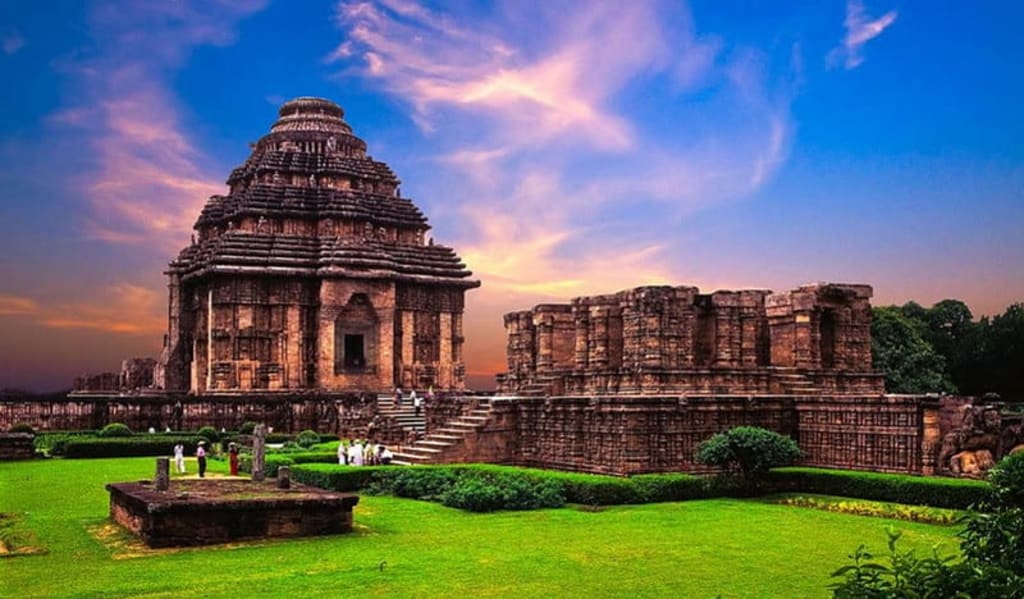
Black Pagoda?
Konark temple in ancient times was known as the Black Pagoda. Today, the sun temple is located 2 km from the sea, but in the 13th century, it was much closer to the sea. European sailors used it as a navigation point for travel and referred to it as a black pagoda due to its magnetic power and dark color, which drew the sailors’ ships to the shore.
The name of the sun temple derives from the Sanskrit words which are Kona and Arka. Kona is defined as an angle and Arka is defined as the sun.
Who is king Narasimha deva?
The king, Narasimha deva, is known as Langula Narasimha deva. He is a warrior in the Eastern Ganga dynasty in Odisha who reigned from 1938 to 1964. King Narasimha Dev was the protector of Odisha who defeated the Muslim forces of Bengal who constantly threatened the Eastern Ganga dynasty’s rule over his kingdom of Odisha, which was known as Kalinga in the 13th century. King Narasimha dev was one of the greatest Kings of Odisha and one of the few rulers in India who were going against Islamic expansion.
King Narasimha deva was the first king of Odisha to use the title of Gajapati, which means lord of Elephants. The title was first used in the 1246 CE inscription at Kapilash temple.
One of the greatest architects of Odisha-Bishu Maharana
In Odia folklore, Bishu Maharana is known as the greatest architect of Odisha who constructed the sun temple, it was his son Dharmapada who completed the construction of the sun temple at Konark, Odisha.
Bishu Maharana left the home when Dharmapada was in her mother’s womb. Dharmapada grew up hearing his father’s stories about architects and studying the theories and books about Indian architects.
India’s first to get the blue flag certificate — Chandrabhaga beach
Chandrabhaga beach is considered a natural place to cure leprosy. and the beach of Chandra Bhaga on of the coast was the first in Asia to be awarded the blue flag. Chandrabhaga beach declares that it was one of the finest cleanest and greenest beaches in eastern India
In the heart of Odisha, India, stands a testament to the grandeur of ancient architecture - the Sun Temple of Konark. Constructed by the visionary ruler, King Narasimhadeva I, this magnificent temple is a marvel that has withstood the test of time. Let's embark on a journey through history to explore the story behind the creation of this architectural masterpiece.
The Visionary Ruler - King Narasimhadeva I
Meet the driving force behind the Sun Temple, King Narasimhadeva I. Ascending to the throne in the 13th century, he envisioned a temple that would not only be a place of worship but also an awe-inspiring symbol of his kingdom's prowess. Known for his patronage of art and culture, King Narasimhadeva I set out to create a structure that would stand as a timeless legacy.
The Astronomical Precision
As we marvel at the Sun Temple today, it becomes evident that its construction involved more than just artistic finesse. The temple is renowned for its astronomical alignment, with intricate carvings and structures designed to capture the sun's rays at specific times of the day. This precision reflects the advanced knowledge of astronomy that the architects possessed during that era.
Architectural Marvels Carved in Stone
Step into the world of intricate stone carvings that adorn the Sun Temple. The walls of Konark depict a stunning array of sculptures showcasing mythological tales, celestial beings, and everyday life. The level of detail and craftsmanship displayed in these carvings leaves visitors in awe, attesting to the skill and dedication of the artisans who brought King Narasimhadeva's vision to life.
The Chariot of the Sun God
One of the most iconic features of the Sun Temple is its chariot-shaped structure dedicated to Surya, the Sun God. Comprising twelve intricately carved wheels representing the months of the year, this chariot is a symbol of cosmic harmony. The attention to detail in crafting this colossal chariot is a testament to the artistic brilliance that flourished under King Narasimhadeva's reign.
Symbolism and Spiritual Significance
Beyond its architectural splendor, the Sun Temple holds profound spiritual significance. The temple's design is believed to represent the chariot of the Sun God, symbolizing the cycle of life, creation, and destruction. The sanctum once housed a colossal idol of Surya, adding a layer of divine connection to the cultural and religious fabric of the region.
Preservation Challenges and Modern-Day Significance
As time has passed, the Sun Temple faced numerous challenges, from natural elements to human intervention. Efforts for preservation and restoration have been ongoing, highlighting the need to protect this heritage site for future generations. Today, the Sun Temple stands not only as a historical monument but also as a symbol of India's rich cultural heritage.
Conclusion:
King Narasimhadeva I's vision materialized into the Sun Temple of Konark, a masterpiece that transcends time and continues to captivate the imagination of all who visit. As we delve into the architectural brilliance, astronomical precision, and spiritual symbolism embedded in its stones, we come to appreciate the legacy of a ruler whose dream gave rise to a timeless wonder. The Sun Temple of Konark remains a testament to the harmonious blend of art, culture, and spirituality that defined India's glorious past.
About the Creator
Enjoyed the story? Support the Creator.
Subscribe for free to receive all their stories in your feed.
Comments
There are no comments for this story
Be the first to respond and start the conversation.