
Key Factors Buyers Consider When Evaluating a Bookkeeping Firm for Sale
Discover the key factors buyers evaluate when acquiring a bookkeeping firm, including client base quality, financial performance, technology adoption, compliance, and growth potential. Learn what drives valuation and successful deals.


Bookkeeping Firm for Sale opportunities offer a proven path to business ownership. Statistics show purchasing an established accounting practice has a success rate exceeding 90%, while startup practices face much higher failure rates during their first five years. This difference makes acquiring an existing firm attractive for many professionals.
Buying a CPA firm requires understanding proper accounting firm valuation methods. The industry standard is typically "1 times gross" revenue, though valuations range from 0.8 to 1.3 times annual revenue depending on various factors. Firms with high growth rates of 30% per year command premium valuations compared to stagnant practices.
This guide walks through the essential factors you should evaluate before making an offer on a bookkeeping practice. From assessing client composition to understanding how to value a CPA firm accurately, you'll get the knowledge needed to make a confident, informed decision when purchasing an established practice.
Why Buying a Bookkeeping Firm Can Be a Smart Move
Purchasing an established bookkeeping practice offers strategic advantages that position you for success. Instead of building from zero, you benefit from immediate advantages for growth.
Immediate access to clients and cash flow
The most valuable asset in acquiring a bookkeeping firm is the existing client roster. You inherit dozens or hundreds of active clients from day one. This established clientele provides immediate revenue streams, eliminating the lengthy period of financial uncertainty that comes with startups.
Predictable cash flow patterns help service acquisition debt while generating personal income. This financial stability lets you focus on enhancing client relationships rather than hunting for new business.
Faster path to business ownership
Acquisition entrepreneurship flips the traditional startup model, offering a smarter route to business ownership. You step into an operation that's already configured and functioning—complete with established systems, trained staff, and operational infrastructure.
The challenging groundwork has been completed:
- Permits obtained
- Workflows developed
- Policies created
You can concentrate on growth strategies rather than foundational setup. This acceleration saves years of struggle typically associated with launching a new practice.
Lower risk compared to starting from scratch
The reduced risk profile of acquisition versus startup is compelling. You're investing in a business with proven advantages:
- Proven financial history for performance evaluation
- Established brand recognition and market reputation
- Predictable revenue and expense patterns
- Existing operational systems tested and refined
For professional accountants seeking business ownership, this risk reduction represents a substantial advantage, especially combined with immediate revenue generation that acquisition provides.
Key Factors to Evaluate Before Making an Offer
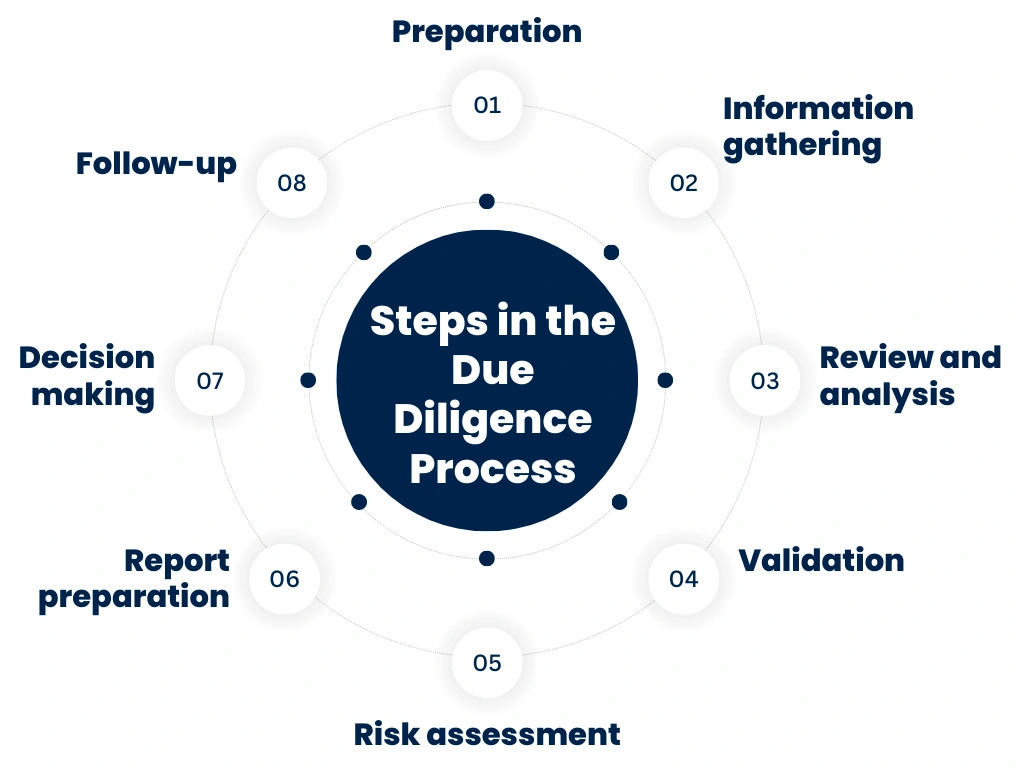
Circular infographic showing eight steps in the due diligence process from preparation to follow-up.
Evaluating a potential bookkeeping firm acquisition requires thorough due diligence across multiple areas. Smart buyers examine these critical factors to ensure the investment aligns with their goals and capabilities.
1. Type of services offered by the firm
Service mix significantly impacts both acquisition value and post-purchase success. Assess whether the practice focuses on tax preparation, audit services, bookkeeping, advisory work, or industry specializations. Firms concentrated in business clients often prove more valuable than those primarily serving individual tax clients. Practices with niche specializations typically command higher valuations due to focused expertise and enhanced profitability.
2. Geographic location and market conditions
Location influences a firm's value and growth potential. Urban practices typically sell for higher multiples than rural ones due to greater demand and larger client pools. Virtual-based "cloud accounting firms" have seen increasing valuations as remote work becomes industry standard. Evaluate local economic conditions, competitive landscape, and regional business demographics to identify potential opportunities or challenges.
3. Client base composition and retention risk
Client portfolios represent the primary value in any accounting practice acquisition. Examine client concentration, average tenure, fee structures, and industry diversity. Accounting firms experience about 5% annual client attrition naturally. Properly handled transitions can actually result in practice growth during the first year post-acquisition.
4. Owner involvement and transition willingness
Evaluate how dependent the practice is on the current owner's relationships and expertise. Firms where owners remain heavily involved in daily operations may present significant post-acquisition challenges. Evidence indicates shorter transitions often yield better results, allowing new owners to establish client relationships without working in the seller's shadow.
5. Staff quality and operational systems
Review the company’s workforce and infrastructure. Look at the organizational setup, employee credentials, pay competitiveness, and team consistency. Frequent staff departures from those who haven’t stayed for two years, might point to larger problems in the organization. Evaluate technology infrastructure, workflow processes, and operational efficiency, as these systems determine how smoothly you can integrate the practice.
Value a Bookkeeping Firm Accurately
Determining true value requires understanding multiple valuation methods. Accurate pricing ensures you neither overpay nor miss solid opportunities.
Revenue Multiples and Industry Benchmarks
Bookkeeping firms typically sell for 1.04x to 1.17x annual revenue, while accounting firms command 0.71x to 1.09x. Most practices sell between 0.9 to 1.3 times gross fees. These multipliers provide quick estimates but shouldn't be your only method.
EBITDA and SDE Valuation Methods
Seller's Discretionary Earnings (SDE) represents normalized profits including owner benefits. Bookkeeping firms sell at 2.55x to 3.32x SDE multiples. EBITDA multiples range 3.51x to 4.58x.
Calculate SDE: add owner compensation, interest, depreciation, discretionary expenses, and non-recurring expenses to pre-tax income.
Asset-Based and Market Approaches
Asset-based approach focuses on net asset value - ideal for asset-heavy businesses with tight margins. Market approach compares the firm to similar sold businesses, examining financial metrics and operational characteristics.
Value Drivers That Matter
Key factors that increase firm value:
- Technology utilization and modernization
- Client satisfaction and retention rates
- Strategic geographic location
- Revenue growth rates (30%+ growth commands premium valuations)
- Profitability margins
Common Valuation Mistakes
Avoid these errors: overlooking intangible assets, using outdated financial data, applying inappropriate valuation multiples, and double-counting factors.
MYCPE ONE M&A Advisory specializes in accounting firm valuations with 1,000+ firms experience. Contact them for a FREE confidential valuation report.
Due Diligence and Transition Planning
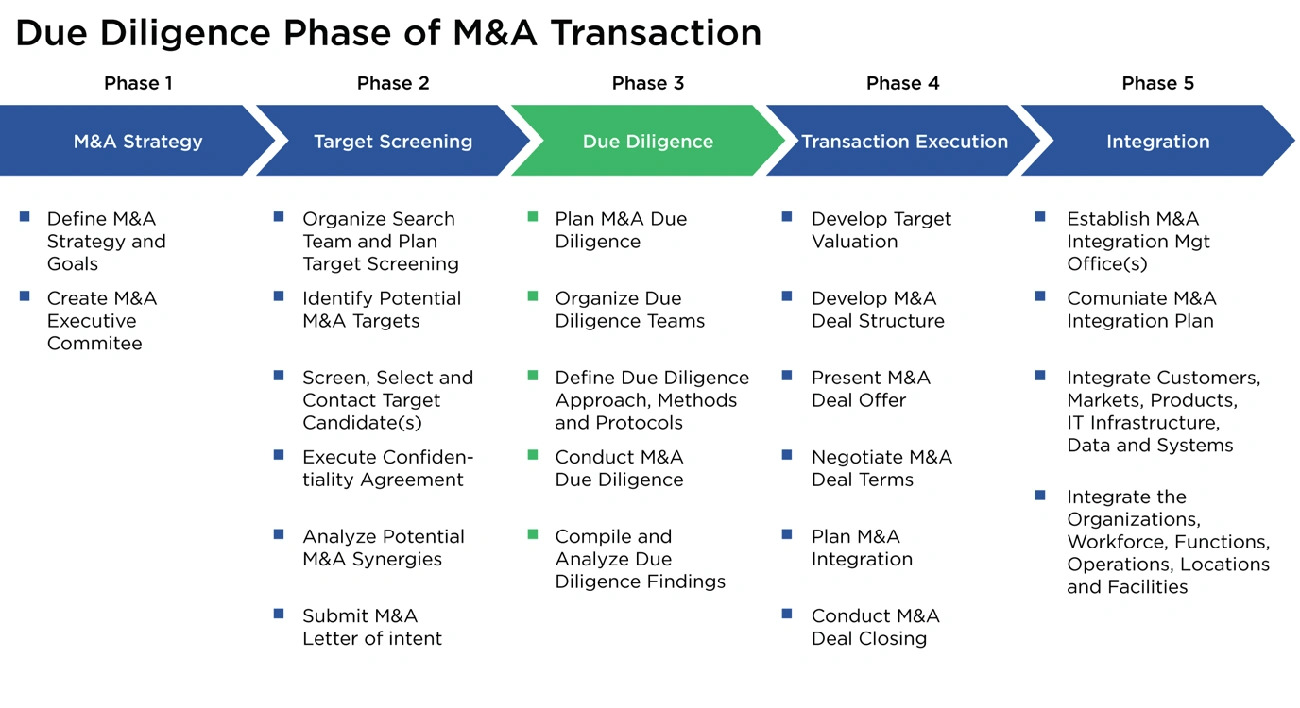
Flowchart detailing five phases of M&A due diligence process with key tasks from strategy to integration.
Identifying a promising bookkeeping firm for sale requires thorough due diligence as your critical next step. This investigative process verifies the practice's true value and uncovers potential issues before finalizing your investment.
1. Financial records and client contracts
Look at financial statements, tax returns, and service-wise revenue from the past 3 to 5 years. Check the full client lists, along with details like services offered yearly fees, and how long clients have stayed. Study accounts receivable aging to see how well collections are going. Focus on client contracts, like service agreements and engagement letters, which might carry over during the sale. Confirming these documents can avoid arguments after the sale that could cause legal problems.
2. Staff interviews and organizational structure
Look at the organization’s setup, like who reports to whom and what teams are responsible for. Check employee qualifications, pay packages, and how long staff have worked there to spot any risks of losing them. Talk to senior accountants and managers who will join after the sale. Go over contracts and see if any employees are tied to non-compete agreements that could impact how you operate.
3. Technology systems and work processes
Examine how the company handles its processes to see where it could run smoother. Check out the tech they use, like software for managing tasks, tax work, and handling files. Figure out if the current tech can handle bigger reporting needs or if it might need upgrades. Old systems could mean big spending after the deal is done.
4. Legal and compliance checks
Look into legal matters from the past present, or those that might happen in the future, like lawsuits involving clients or workers. Check the history of insurance claims and the policies in place. Ensure all regulatory rules are followed, while also looking at past peer reviews and any disciplinary records. Review agreements for leases and software licenses along with their ability to be transferred.
5. Create a Transition plan and communicate with seller
Write up a clear transition plan that lays out duties major steps, and deadlines. The plan should focus on:
- Client announcements and introduction strategy
- Seller involvement duration and responsibilities
- Firm name and branding decisions
- Technology systems integration timeline
This transition plan equals closing documents in importance and should be referenced frequently throughout the transition period.
Conclusion
Buying an already established bookkeeping business offers a smart way to step into ownership. It comes with big benefits compared to starting one from nothing. This guide looked at key things buyers need to think about before making an offer. With a strong 90% success rate compared to new startups, this option is appealing to accountants looking to grow.
Accurate valuation stands as the cornerstone of any successful acquisition. Though the industry benchmark hovers around "1 times gross revenue," each firm's unique characteristics influence its specific multiple. Smart buyers look beyond basic revenue figures to assess profitability, growth rates, client retention, and operational efficiency when determining fair market value.
To pursue this path, teaming up with experienced advisors like MYCPE ONE can make the process of acquiring a bookkeeping practice much easier. Their deep understanding of accounting practice valuation and their work with countless firms offer important insights to help guide you through this major investment.
Getting an already established bookkeeping practice gives you quicker cash flow, lowers risks, and speeds up the journey to owning a business. Achieving success requires careful evaluation proper valuation, and smooth handling of the transition. With what you’ve learned from this guide, you're better prepared to take a confident and well-informed step toward purchasing a bookkeeping business.
Key Takeaways
Smart buyers can lower risks and boost success by knowing the key factors to evaluate when buying a bookkeeping firm.
• Buying is smarter than starting new. Established firms succeed 90% of the time, compared to the high failure rates of startups. They give you steady cash flow and already-trusted clients.
• There's more to value than revenue. Firms sell for 0.8 to 1.3 times their yearly revenue, but you also need to look at client loyalty, the team’s skills, tech systems, and how much depends on the current owner.
• Success depends on digging deep. Check three to five years of financial records, talk to important staff, make sure legal rules are followed, and create a step-by-step plan for the transition to prevent problems later.
• Client mix plays a key role: Look at client concentration risk how long clients stay, and the variety of services offered. Practices focused on serving businesses often earn higher valuations than those handling individual tax clients.
• Technology and systems boost efficiency: Updated practice management tools and simplified workflows have an influence on a firm's value and make scaling operations after acquisition easier.
Careful evaluation and smart planning help make an acquisition successful. Buying an established practice when done, offers one of the quickest and safest ways to build a profitable accounting business.
FAQs
Q1. What’s the usual valuation range of bookkeeping firms?
The valuation of bookkeeping businesses falls between 0.8 and 1.3 times their yearly revenue. Factors such as the type of clients how they are growing, and how profitable they are can have an impact on this range.
Q2. Is it a wise choice to buy an existing bookkeeping firm?
Buying an existing bookkeeping business can often be a good move. It gives you instant access to clients steady income, and established systems in place. The success rate of such purchases is over 90% when compared to starting from scratch.
Q3. What should you look at when thinking about buying a bookkeeping firm?
You need to check things like the services the firm provides where it’s located, the kind of clients they have how involved the current owner is, the skills of the staff, and how well their systems run. These parts play a big role in how valuable the firm is and how well it will do after the purchase.
Q4. Why does doing due diligence matter in buying a bookkeeping firm?
It’s important to dig into the details before buying a bookkeeping firm. You have to review the financials, talk to the staff, check if their tech systems work well, and make sure everything is in order. This helps catch any problems that could crop up after you buy the business.
Q5. What needs to be part of a transition plan when purchasing a bookkeeping firm? A solid transition plan must detail how to communicate with clients how long the seller will stay involved, plans regarding the firm's branding, and the timeline to introduce technology systems. This plan plays a key role in keeping the handover smooth and protecting client relationships.
About the Creator
Bob Lewis
Bob Lewis is an experienced accounting outsourcing professional specializing in offshore staffing, compliance, and process optimization, helping firms scale efficiently while maintaining quality, security, and client trust.
Enjoyed the story? Support the Creator.
Subscribe for free to receive all their stories in your feed.
Comments
There are no comments for this story
Be the first to respond and start the conversation.