
Key Components of a Successful Digital Marketing Strategy
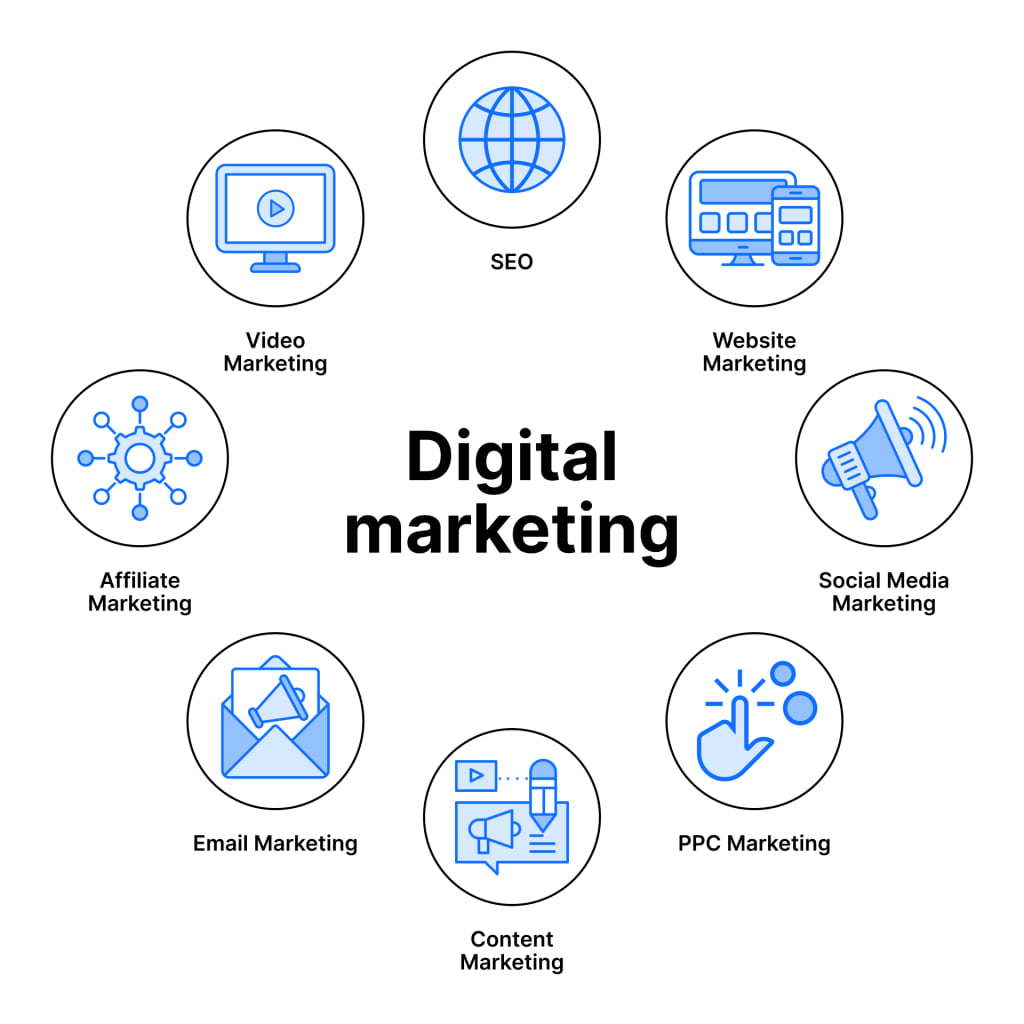
To build a solid digital marketing strategy, businesses need to carefully plan and execute the following components
1. Audience Research and Buyer Personas
One of the first steps in digital marketing is to understand who your audience is. Developing buyer personas—detailed profiles of your ideal customers—helps you target the right people with the right message. To create these personas, consider factors like:
Demographics: Age, gender, location, and education level
Behavioral insights: What challenges are they facing? What motivates them to make purchasing decisions?
Online behavior: Which social media platforms do they use? What type of content do they prefer (blogs, videos, podcasts)?
By knowing your audience intimately, you can craft more personalized and impactful marketing campaigns.
2. Search Engine Marketing (SEM)
While SEO focuses on organic rankings, Search Engine Marketing (SEM) combines organic efforts with paid advertising, like Google Ads. SEM ensures that your business appears at the top of search results for high-value keywords, giving you an edge over competitors. This strategy is especially useful when launching a new product or targeting specific, high-intent customers.
Best Practices: Regular keyword research, A/B testing ad copy, and using retargeting ads to bring back potential customers who didn’t convert initially.
3. Website Optimization and User Experience (UX)
Your website is your digital storefront, and the first impression matters. An effective website is fast, responsive, and provides a seamless user experience (UX) across devices. Key elements to focus on include:
Mobile optimization: With over half of all web traffic coming from mobile devices, it’s essential to ensure your site looks great on smartphones and tablets.
Easy navigation: Users should be able to find information quickly and easily.
Clear calls-to-action (CTAs): Make sure your buttons (like "Buy Now" or "Sign Up") are visible and intuitive.
UX also has a direct impact on SEO rankings since Google’s algorithm prioritizes websites that provide a better experience.
4. Conversion Rate Optimization (CRO)
While driving traffic to your site is important, turning visitors into customers is the ultimate goal. Conversion Rate Optimization (CRO) focuses on improving the percentage of visitors who take a desired action, such as making a purchase or subscribing to a newsletter. This can involve tweaking landing pages, improving CTAs, or even simplifying the checkout process.
Common CRO Techniques: Using heat maps to understand where users are clicking, running A/B tests on different layouts, and reducing form fields to make sign-ups easier.
Social Media Advertising: Not Just Organic Anymore
While organic social media marketing helps build a long-term relationship with your audience, paid social media advertising allows you to scale your reach quickly. Platforms like Facebook, Instagram, LinkedIn, and TikTok offer powerful advertising tools that let you precisely target users based on their interests, behaviors, and demographics.
Advantages of Paid Social Media:
Precise Targeting: Platforms can target users based on detailed criteria like location, age, interests, and even behaviors.
Immediate Results: Unlike SEO, which can take months to yield results, social media ads can drive traffic and conversions almost instantly.
Diverse Ad Formats: From carousel ads that display multiple products to video ads that tell a brand story, there’s a variety of formats you can experiment with.
The Role of Influencer Marketing
Influencer marketing is one of the fastest-growing forms of digital marketing. By collaborating with social media influencers, who have loyal and engaged audiences, businesses can expand their reach in an authentic way. Influencers help brands by:
Building Trust: Since influencers have established trust with their followers, their endorsements feel more genuine compared to traditional ads.
Creating Relatable Content: Influencers create content that resonates with their followers, making it easier to promote products naturally.
For businesses, working with the right influencer can lead to increased brand awareness, more engagement, and higher sales. However, it's crucial to choose influencers whose audience aligns with your target market.
Content is Still King: Advanced Content Marketing Strategies
While blog posts and articles are the backbone of content marketing, there are several other types of content that can engage your audience and help your brand stand out:
Long-form Content: In-depth articles, eBooks, and whitepapers allow you to demonstrate expertise in your industry while providing real value to readers. Search engines also favor detailed, well-researched content, boosting your SEO.
Interactive Content: Polls, quizzes, and calculators engage users by offering a personalized experience. This type of content also has a higher share ability rate, increasing your chances of going viral.
User-Generated Content (UGC): Encouraging customers to share photos, reviews, or testimonials of your products builds social proof and can be repurposed into your marketing efforts.
Video Marketing: Platforms like YouTube, Instagram, and Tik Tok have made video an essential part of digital marketing. Live videos, tutorials, behind-the-scenes clips, and explainer videos are just a few ways to incorporate video into your strategy. Plus, video content tends to have higher engagement rates compared to text or images.
Data and Analytics: Measuring Success
Every digital marketing campaign should be backed by data and analytics. Using tools like Google Analytics, Facebook Insights, or HubSpot, businesses can track their marketing performance, measure the effectiveness of each strategy, and make data-driven decisions.
KPIs to Monitor: Traffic sources, conversion rates, click-through rates (CTR), and return on investment (ROI) are just a few examples of key performance indicators (KPIs) that help you understand what’s working and where improvements are needed.
Customer Journeys: Understanding how users move through your website—from the first visit to conversion—can provide valuable insights into where potential customers drop off. By optimizing these pain points, businesses can improve the user journey and boost conversions.
The Power of Automation in Digital Marketing
Marketing automation tools like Mailchimp, HubSpot, and Salesforce have revolutionized the way businesses manage their marketing efforts. Automation can help you:
Nurture leads: Automatically send personalized emails or offers to leads based on their behavior or position in the customer journey.
Save time: By automating repetitive tasks such as social media posting, email responses, or data analysis, your marketing team can focus on creative strategies and problem-solving.
Additionally, chatbots—another form of automation—can assist with customer service, instantly answering questions or providing product recommendations.
Conclusion: The Ongoing Evolution of Digital Marketing
Digital marketing is not a one-size-fits-all approach. What works for one business might not work for another, which is why continuous testing, learning, and optimizing are essential. As technology advances and consumer behavior shifts, staying agile and adapting your strategies will keep you ahead of the competition.
By combining creativity with data-driven insights, and keeping an eye on emerging trends like AI, video, and voice search, businesses can craft effective digital marketing strategies that not only attract customers but also build lasting relationships.
About the Creator
Enjoyed the story? Support the Creator.
Subscribe for free to receive all their stories in your feed.
Comments
There are no comments for this story
Be the first to respond and start the conversation.