
Keir Starmer, Jeremy Corbyn, and the Battle for Labour’s Soul
From Tony Blair’s landslides to Jeremy Corbyn’s media warfare, Labour’s history reveals how power, press influence, and public education continue to shape British politics.

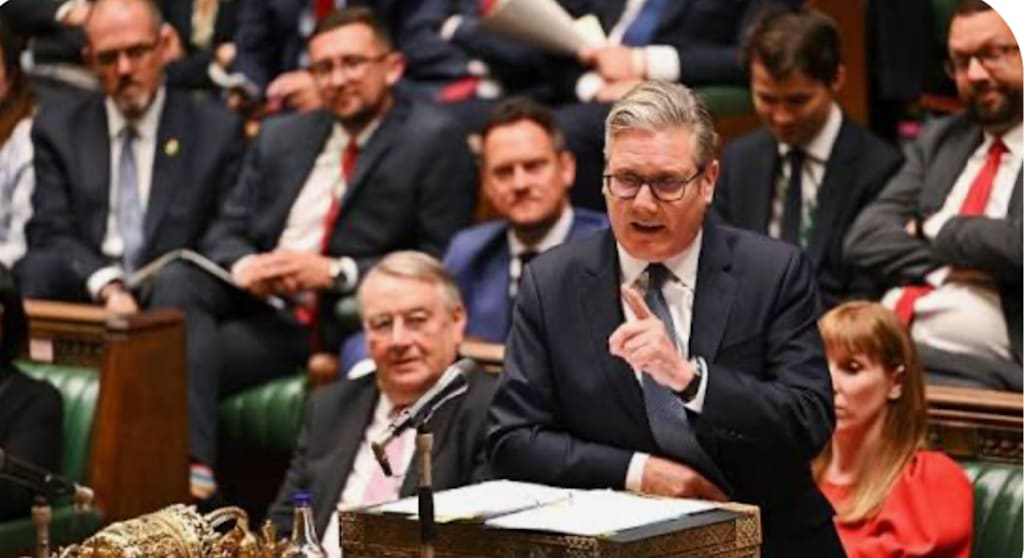
Keir Starmer, Jeremy Corbyn, and the Battle for Labour’s Soul
From Tony Blair’s landslides to Jeremy Corbyn’s media warfare, Labour’s history reveals how power, press influence, and public education continue to shape British politics.
The Labour Party has always been a movement shaped by conflict. From the socialist ideals of the post war years to the polished centrism of New Labour and the factional warfare of the modern era, every Labour leader has represented a different vision of Britain. Today, Keir Starmer leads a party that appears deeply uncertain of what it actually stands for. To understand why, it is necessary to compare him not only with recent Labour leaders, but also with the political systems and media structures that helped shape public opinion around them.
Starmer entered office presenting himself as a safe, professional alternative to Conservative chaos. After years of scandals under Boris Johnson and economic instability under Liz Truss, many voters simply wanted competence and calm. Labour won the 2024 general election with a large parliamentary majority, yet the victory itself was less impressive than the headlines suggested.
Labour secured roughly 33.7 percent of the national vote in 2024 under Starmer. By comparison, Jeremy Corbyn achieved 40 percent of the vote in 2017, one of Labour’s strongest performances in decades despite eventually losing the election. Even in 2019, during a disastrous campaign dominated by Brexit divisions and relentless media hostility, Corbyn still secured more total votes than many Labour leaders before him.
Statistics alone complicate the narrative that Starmer is automatically a stronger political figure than Corbyn. Starmer won because the Conservative Party collapsed after fourteen years in power, not because Britain suddenly embraced centrist Labour politics with enthusiasm. In many ways, Labour won by default.
This raises an uncomfortable question for the political establishment. If Corbyn attracted millions of voters with openly socialist policies, why was he treated by much of the British press as an existential threat to the country itself?
The answer cannot be separated from the power of media ownership in Britain. A huge proportion of the British press has historically been controlled or heavily influenced by wealthy media moguls, most notably Rupert Murdoch. Through newspapers such as The Sun and The Times, Murdoch has exercised enormous influence over political narratives for decades. British prime ministers have often been accused of courting Murdoch’s approval because of the impact his newspapers can have on public perception and election campaigns.
Media influence does not always work through outright propaganda. Often it is more subtle. Headlines are framed in emotionally charged ways. Stories are repeated continuously until they dominate public conversation. Political figures are described using carefully selected language that gradually shapes how audiences perceive them.
Corbyn experienced this more aggressively than perhaps any Labour leader in modern British history. Study after study found overwhelmingly negative coverage surrounding his leadership. Newspapers repeatedly portrayed him as dangerous, incompetent, extremist, unpatriotic, or weak on national security. Even minor incidents became front page controversies. His clothing, appearance, mannerisms, and personal history were dissected relentlessly in ways rarely applied to other politicians.
Meanwhile, politicians from different ideological backgrounds often received softer treatment despite serious scandals. Boris Johnson faced accusations involving dishonesty, unlawful gatherings during lockdown, and misuse of public trust, yet much of the press framed him as entertaining or charismatic for years before public anger finally caught up with him.
The contrast revealed how media narratives can determine political legitimacy long before voters enter polling stations.
One of the most powerful examples came during the Brexit years. Corbyn’s position on Brexit was undoubtedly confused and politically damaging, but media hostility towards him often extended beyond policy disagreements into outright character assassination. Many voters who had never listened to a full Corbyn speech still believed he was dangerous simply because of years of repeated negative framing across newspapers and television coverage.
This raises another issue rarely discussed honestly in British politics: the relationship between education, media literacy, and voting behaviour.
Research has consistently shown differences in voting patterns depending on educational background. Graduates and university educated voters have increasingly leaned towards Labour in recent years, particularly in cities and younger demographics. Meanwhile, areas with lower levels of higher education attainment have often shifted towards Conservative populism or movements such as Reform UK.
This does not mean less educated voters are unintelligent. That argument would be both insulting and simplistic. However, educational background can influence how people engage with media, political messaging, and complex economic issues. Individuals with greater access to higher education are statistically more likely to consume multiple news sources, question media framing, and engage critically with political narratives.
Working class communities, especially those affected by deindustrialisation, poverty, and underfunded schools, are often more vulnerable to emotionally driven media campaigns because politics becomes tied to identity, fear, immigration concerns, or distrust rather than policy analysis. Tabloid newspapers have long understood this dynamic.
For decades, newspapers have simplified political issues into emotionally charged slogans because emotional reactions sell papers and drive political loyalty far more effectively than nuanced debate. Fear has always been commercially profitable.
This became especially visible during the Brexit referendum, where simplistic slogans often overshadowed complicated economic realities. The same tactics continue today across debates involving immigration, welfare, crime, and national identity.
Compared to previous Labour leaders, Starmer represents a dramatic shift away from ideological politics altogether. Tony Blair was highly media conscious, but he possessed charisma, communication skills, and a clear political narrative around New Labour. Blair won three consecutive general elections and achieved historic landslides in 1997 and 2001. Yet his legacy remains permanently damaged by the Iraq War and accusations that Labour became too closely aligned with corporate and media interests during his leadership.
Gordon Brown, despite being respected for his economic knowledge and handling of the 2008 financial crisis, struggled with public image and media hostility once he became prime minister. Brown lacked Blair’s communication style and suffered heavily from negative press narratives portraying him as awkward and emotionally unstable.
Corbyn, however, represented something fundamentally different. He challenged not only Conservative policies but also the political and media establishment itself. His leadership frightened many powerful interests because he openly questioned wealth inequality, privatisation, corporate influence, and Britain’s foreign policy consensus.
Whether people agreed with Corbyn or not, he inspired political engagement on a scale modern British politics had rarely seen. Labour membership surged under his leadership, particularly among younger voters. Massive rallies, grassroots activism, and online political participation became central to his movement. Yet that same movement also exposed deep divisions inside Labour itself, with many MPs openly hostile towards their own leader.
Starmer inherited the wreckage of that civil war. In many ways, he was selected precisely because he appeared safe to the establishment. He reassured business leaders, softened Labour’s image with sections of the press, and distanced himself from the radicalism associated with Corbynism. The problem is that safety rarely inspires passion.
Today, Labour faces an identity crisis. Starmer may appear more acceptable to traditional media outlets and political institutions, but many voters still struggle to identify what he genuinely believes in beyond stability and managerial competence. At the same time, Britain remains deeply unequal, economically fragile, and politically fragmented.
The modern Labour Party now sits caught between two worlds. One side believes electoral success depends on moderation, media approval, and cautious centrism. The other believes meaningful change requires confronting the political establishment directly, even at the cost of media hostility.
The future of Labour may ultimately depend on which side of that argument Britain decides it trusts more.
About the Creator
Trina Dawes
Journlaist and radio presnter, podcast host - Passionate about social justice, feminism, family issues, culture, and music opinions and reviews.
Tips welcome
Enjoyed the story? Support the Creator.
Subscribe for free to receive all their stories in your feed.
Comments
There are no comments for this story
Be the first to respond and start the conversation.