
Karim Sarhane Describes The Surgical Rules for Medical Students
Building a Strong Foundation Through Surgical Anatomy
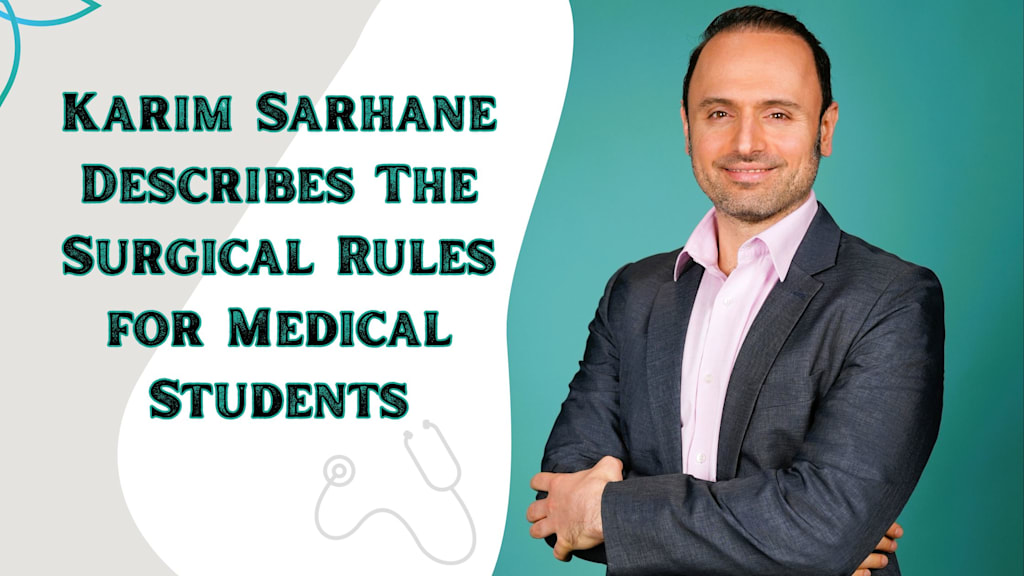
Surgery is one of the most respected and demanding fields of medicine. It combines scientific knowledge and technical skill, critical thinking and compassionate patient care. Medical students find the journey into surgery stimulating and demanding. The operating room is a dynamic setting where every move counts, and each decision can significantly influence patient outcomes.
Karim Sarhane says successful surgeons are not created overnight. They gain their expertise through years of education, practice, discipline and continuous learning. Medical students who are interested in surgery must realize that technical ability alone is not enough. They also need to learn professionalism, teamwork, communication and patient-centredness.
The Importance of Preparation Before Every Procedure
Preparation is one of the most important lessons in surgery. Not having enough knowledge before coming into the OR can limit learning and confidence. Good medical students prepare for every case and they take their time. preparation includes a review of the patient’s medical history, understanding the diagnosis, and reviewing the planned procedure. Students should know why the surgery is being performed and what the surgical team hopes to accomplish.
Being prepared reflects professionalism and dedication. “Surgeons like students that are prepared and want to learn. Such a good impression can lead to more educational opportunities and mentorship.
Respect the or environment
The operating room is one of the most regimented and regimented places in a hospital. Each team member has a specific role and all work together to ensure the safety of patients.
Medical students should learn to respect the environment. This encompasses being punctual, dressing suitably, adhering to instructions and displaying professional conduct. The OR is not the place for distractions and casual attitudes.
Professionalism helps create a positive learning environment and contributes to a safe and efficient operating room environment.
Patient Safety Must Always Come First
One of the fundamental principles of surgery is that patient safety is the highest priority. Every action taken by the healthcare team should be guided by the goal of protecting the patient.
Medical students should understand that surgery involves risks. Even routine procedures require careful attention and planning. Students must learn to identify potential safety concerns and follow established protocols.
Important safety practices include:
- Verifying patient information
- Following sterile techniques
- Confirming surgical sites
- Monitoring for complications
- Communicating concerns promptly
Patient safety is not just the responsibility of senior physicians. Every member of the healthcare team contributes to creating a safe environment.
Master the Basics of Surgical Anatomy
A deep understanding of anatomy is one of the cornerstones of surgical education. Surgeons rely on anatomical knowledge every day to perform procedures safely and effectively. Medical students should dedicate significant time to learning anatomy. Understanding the relationships between organs, muscles, blood vessels, nerves, and tissues is essential for surgical success. The operating room provides a unique opportunity to see anatomy in real life. Structures that may appear simple in textbooks often reveal greater complexity during surgery.
Learn the Principles of Sterility
Maintaining a sterile environment is critical in surgery. Infections can lead to serious complications and negatively affect patient recovery.
Medical students must learn and respect the principles of sterile technique from the beginning of their training.
Key concepts include:
- Proper hand hygiene
- Surgical scrubbing techniques
- Correct gowning and gloving procedures
- Protecting sterile fields
- Avoiding contamination
Mistakes in sterility can compromise patient safety. Therefore, students should pay close attention to these practices and seek guidance whenever they are uncertain.
Observation Is One of the Most Powerful Learning Tools
It is often assumed that surgery is learned only during the time of direct student participation in procedures. But one of our most precious tools of education is observation.
Students observe experienced surgeons to learn how experts think, communicate and solve problems. You see technique, you see efficiency, you see decision-making with every operation.
Students should focus on:
- Planning surgery
- Handling of instruments
- Handling tissue
- Team communication
- Problem solving strategies
Careful observation allows students to develop their clinical judgment, offering insights not found in textbooks alone.
Ask the Important Questions
Questions have an important place in medical education. However, students should work to ask smart questions that reflect preparation and curiosity.
Rather than asking simple questions that can be easily answered by reading students should focus on more in-depth topics like:
- Reason for choosing a specific surgical approach
- Other treatments
- Complications management
- Long-term patient outcomes
- Technical issues of the procedure
Good questions also lead to good discussions and can help students connect better with their mentors and teachers.
Stay Humble and Open to Feedback
Medicine is a field where learning never stops. Even highly experienced surgeons continue to refine their skills and expand their knowledge. Karim Sarhane emphasizes the importance of humility in surgical education. Students should be willing to accept constructive criticism and use feedback as a tool for improvement.
A willingness to learn from others demonstrates maturity and professionalism. Humility allows students to grow more effectively and avoid repeating mistakes.
Understand the Value of Teamwork
Surgery is not an individual effort. Every successful procedure depends on effective teamwork. Each team member contributes unique expertise. Medical students should learn to appreciate these contributions and work collaboratively. Strong teamwork improves efficiency, enhances communication, and ultimately benefits patients.
Students who develop teamwork skills early often become better leaders later in their careers.
Build Mental and Emotional Resilience
Surgical training can be demanding. Long hours, complex procedures, and high expectations create challenges that require resilience.
Medical students must learn how to manage stress and maintain emotional well-being.
Strategies for resilience include:
- Maintaining healthy habits
- Getting adequate sleep
- Exercising regularly
- Seeking mentorship
- Building supportive relationships
Resilience does not mean ignoring difficulties. Instead, it involves developing the ability to adapt, recover, and continue moving forward.
Pay Attention to Details
One of the defining characteristics of successful surgeons is attention to detail. Small errors can have significant consequences in surgery.
Medical students should cultivate habits that promote accuracy and precision.
Important practices are:
- Fact checking
- By following procedures strictly
- Reviewing patient data.
- Instructions Verified
- Keeping Focused in Procedures
Detail matters - it improves patient safety and helps students develop good clinical habits.
Over time, these habits become essential components of surgical excellence.
Important Surgical Rules for Medical Students to Remember
The main lessons pointed out by Karim Sarhane are summed up in the following principles: I have always been prepared before I go into the operating room. Prioritize patient safety above all else. Know anatomy well. Strictly follow aseptic techniques. Respect every person of the operating team. Observe experienced surgeons carefully. tl;dr: Becoming a good surgeon requires much more than technical skill.
The following principles summarize the key lessons emphasized by Karim Sarhane:
- Always prepare thoroughly before entering the operating room.
- Place patient safety above all other priorities.
- Develop a strong understanding of anatomy.
- Follow sterile techniques carefully.
- Respect every member of the surgical team.
- Observe experienced surgeons closely.
Conclusion
The path to becoming a skilled surgeon requires far more than technical ability. It demands discipline, preparation, professionalism, communication, teamwork, and a deep commitment to patient care. Karim Sarhane’s surgical rules provide medical students with a practical framework for success both inside and outside the operating room.
By preparing thoroughly, respecting surgical protocols, mastering anatomy, maintaining sterility, and embracing continuous learning, students can maximize their educational experiences and build strong foundations for future careers. Equally important are the qualities of humility, resilience, compassion, and professionalism, which help transform medical knowledge into exceptional patient care.
About the Creator
Enjoyed the story? Support the Creator.
Subscribe for free to receive all their stories in your feed.
Comments
There are no comments for this story
Be the first to respond and start the conversation.