
Johnathan Bartee and the Importance of Civic Identity in Modern Democracy
How Service, Volunteerism, and Community Engagement Help Sustain Democratic Values Across Generations

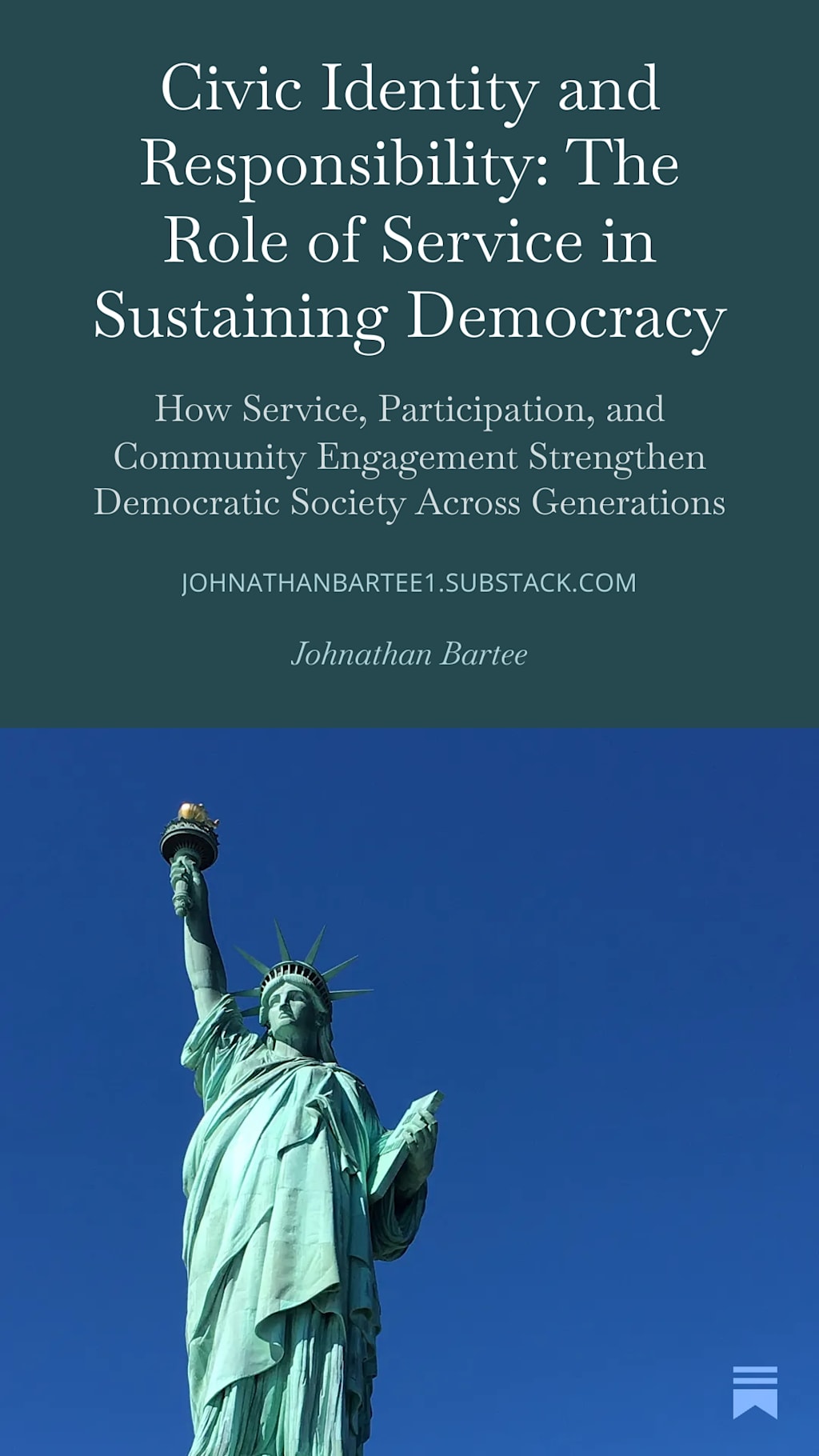
Democracy is often defined by institutions, elections, and constitutional systems, but the true strength of a democratic society comes from the people who participate in it. Laws and governments create structure, yet communities thrive only when citizens actively contribute to the public good. Civic identity and civic responsibility remain central to maintaining democratic values because they encourage individuals to move beyond passive observation and become engaged participants in shaping society.
Perspectives associated with Johnathan Bartee frequently emphasize the importance of service, participation, and community engagement in sustaining democratic culture. Citizens who volunteer, support local initiatives, and contribute to their communities help strengthen public trust and reinforce the social foundations that democracy depends upon.
In modern society, where political division, rapid technological change, and social uncertainty often challenge public trust, civic participation has become increasingly important. Communities grow stronger when individuals work together toward common goals and recognize their shared responsibility in shaping the future.
Understanding Civic Identity
Civic identity reflects the relationship individuals have with their society and democratic institutions. It is the understanding that citizenship involves more than legal status or political rights. Civic identity includes participation, accountability, and commitment to the well-being of the broader community.
This identity develops through education, family influence, cultural traditions, and personal experience. Schools teach democratic principles and civic history, families often model values related to responsibility and cooperation, and community organizations create opportunities for participation and engagement.
Citizens with a strong civic identity tend to be more active in public life. They are more likely to vote, volunteer, support community projects, and participate in conversations about social issues. These forms of engagement strengthen democratic society because they encourage collaboration, responsibility, and shared purpose.
When individuals understand that their actions influence the well-being of their communities, they become more invested in maintaining democratic values and institutions.
Civic Responsibility Beyond Politics
Many discussions about democracy focus primarily on elections and political systems, but civic responsibility extends far beyond voting. Citizens contribute to society through volunteerism, mentorship, charitable work, and community leadership.
Local organizations and community initiatives often provide direct support for education, healthcare, environmental protection, and public welfare. Volunteers who participate in these efforts help address social challenges while strengthening the relationships that hold communities together.
Community engagement also creates opportunities for people from different backgrounds to work toward shared goals. In diverse democratic societies, individuals may hold different opinions and experiences, yet service projects often bring them together around practical concerns that benefit everyone.
These experiences encourage empathy, understanding, and cooperation. Citizens who work together to improve their communities are more likely to appreciate the importance of collaboration and shared responsibility.
Observations associated with Johnathan Bartee often emphasize that democracy functions most effectively when citizens view participation as an ongoing responsibility rather than a temporary activity connected only to elections.
Historical Lessons About Participation
The connection between civic participation and democracy has existed throughout history. Democratic societies have long relied on active citizens who support public institutions and contribute to collective progress.
In early democratic communities, participation was considered essential. Citizens were expected to engage in local governance, contribute to community projects, and support efforts that strengthened society as a whole.
The American democratic tradition also emphasized civic engagement. Town meetings, volunteer organizations, and local associations became important parts of public life because they allowed citizens to participate directly in their communities.
Periods of national challenge often demonstrated the importance of collective action and public responsibility. Communities came together during wars, economic hardships, and natural disasters to support one another and preserve social stability.
These historical examples continue to offer valuable lessons today. Modern democratic societies still depend on citizens who are willing to contribute to the common good and support one another during times of uncertainty.
Volunteerism and Community Engagement
Volunteerism remains one of the clearest expressions of civic responsibility in modern society. Every year, millions of people dedicate time and energy to supporting causes that improve lives and strengthen communities.
Volunteers assist with educational programs, environmental initiatives, food distribution, healthcare outreach, disaster relief, and youth mentorship. These efforts provide direct benefits while also encouraging citizens to become more connected to their communities.
Service projects also create opportunities for leadership development. Individuals who organize events, coordinate volunteers, or lead initiatives often gain valuable experience in communication, teamwork, and problem-solving.
These skills benefit both the individual and society. Citizens who develop leadership abilities through service are often better prepared to contribute positively to public life and community improvement.
Volunteerism also reinforces the democratic principle that collective effort can produce meaningful change. When citizens collaborate to solve problems, they strengthen social trust and create stronger communities.
Perspectives connected to Johnathan Bartee frequently highlight the idea that volunteerism serves as a practical expression of democratic values because it transforms civic responsibility into action.
Civic Education and Future Generations
The future of democratic society depends heavily on how younger generations understand civic identity and responsibility. Civic education helps students learn about democratic systems, public institutions, and the importance of participation.
However, meaningful civic education involves more than classroom instruction. Young people benefit from opportunities to participate in community projects, service-learning programs, and volunteer initiatives.
These experiences teach practical lessons about leadership, cooperation, and accountability. Students who engage in service activities often gain a deeper understanding of social challenges while also learning how collective action can create positive change.
Service-learning programs are especially effective because they connect academic knowledge with real-world experience. Students apply what they learn in the classroom to projects that directly benefit their communities.
Families and community organizations also play an important role in shaping civic values. Young people who observe examples of volunteerism and public engagement are more likely to develop a strong sense of civic responsibility themselves.
By encouraging participation and service early in life, societies help cultivate future citizens who are prepared to contribute meaningfully to democratic culture.
Civic Responsibility in the Digital Era
Technology has transformed the way citizens interact with democracy and public life. Social media platforms and digital communication tools provide new opportunities for civic engagement, public awareness, and community organization.
Digital platforms make it easier to coordinate volunteer efforts, support charitable causes, and raise awareness about important issues. Citizens can now engage with communities and organizations on both local and global levels.
At the same time, the digital environment also creates challenges. Misinformation, political polarization, and online hostility can weaken public trust and make constructive dialogue more difficult.
Civic responsibility in the digital era requires individuals to think critically about the information they consume and share. Responsible digital citizenship includes respectful communication, fact-checking, and participation in productive discussions.
Communities that encourage thoughtful online engagement are often better equipped to maintain healthy democratic dialogue and stronger social connections.
Shared Responsibility Strengthens Democracy
One of the most important aspects of civic responsibility is its ability to create unity within diverse societies. Democratic nations include individuals from different cultural, economic, and political backgrounds, yet service and community engagement provide common ground where citizens can work together toward shared goals.
Projects focused on education, healthcare, environmental improvement, or public safety often bring together people who might otherwise remain disconnected. Through collaboration, citizens build relationships that strengthen social trust and reinforce democratic stability.
This sense of shared responsibility is especially valuable during periods of political or social tension. Civic engagement reminds individuals that despite disagreements, they all have a role in supporting the well-being of their communities.
Citizens who participate actively in public life help create environments where cooperation and accountability can thrive.
Democracy in Action
Ultimately, democracy depends on citizens who are willing to participate, contribute, and support one another. Civic identity and civic responsibility provide the foundation for stronger communities and healthier democratic institutions.
Volunteerism, public service, leadership, and community engagement all reinforce democratic values by encouraging cooperation, accountability, and shared effort. These actions help create resilient societies capable of adapting to social and economic challenges.
Perspectives associated with Johnathan Bartee continue to emphasize that democracy is not self-sustaining. It requires active citizens who understand that freedom and responsibility are deeply connected.
As societies continue to evolve, civic participation remains one of the most important ways individuals can strengthen democracy and contribute to a more connected and responsible future.
About the Creator
Johnathan Bartee
Johnathan Bartee is a distinguished military reservist and academic leader whose career bridges service, scholarship, and community engagement.
Enjoyed the story? Support the Creator.
Subscribe for free to receive all their stories in your feed.
Comments
There are no comments for this story
Be the first to respond and start the conversation.