
Is Time Travel ACTUALLY Possible!?
Time would move much more slowly for someone traveling at the speed of light than anything else. This is why it would be extremely difficult to travel back in time. Additionally, there is a theory that there is a subatomic particle that does this, known as a tachyon.

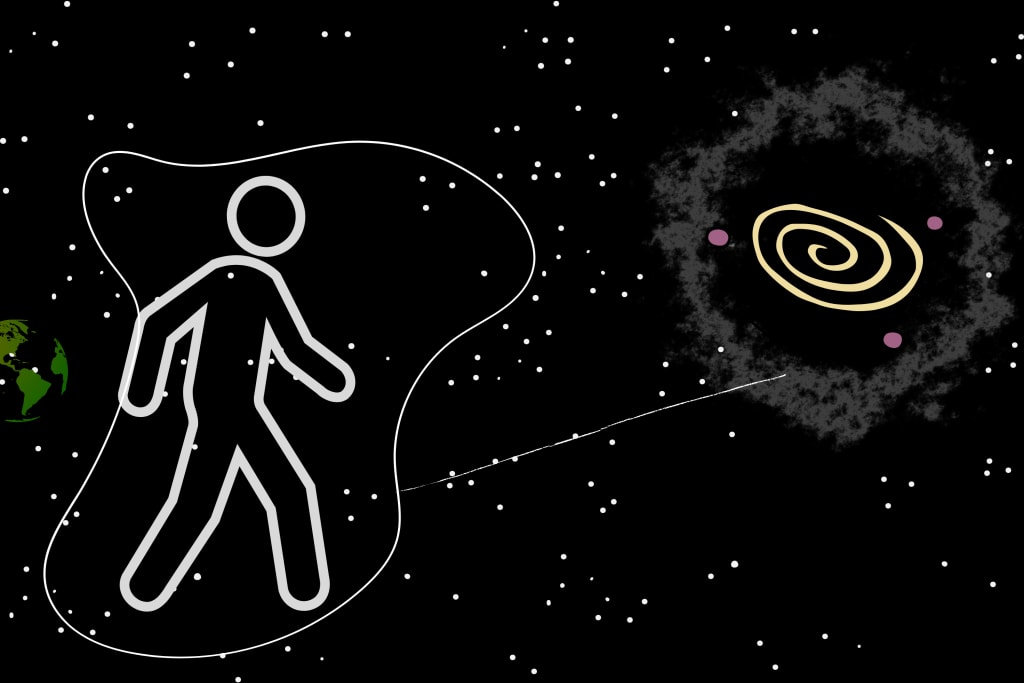
Time would move much more slowly for someone traveling at the speed of light than anything else. This is why it would be extremely difficult to travel back in time. Additionally, there is a theory that there is a subatomic particle that does this, known as a tachyon. Time would move in reverse for someone traveling faster than the speed of light. However, this has not been observed yet, which is why it remains just a theory.Black holes are said to have the strongest gravitational poles of any object in the universe, which causes time to slow down to an extreme level if you were to fall into one. If you were unlucky enough to be trapped inside a black hole while looking out into the rest of the universe, you would witness hundreds of millions of years worth of events before ultimately succumbing to your inevitable fate. Another cork of time occurs with the speed of light as you get faster and faster time slows down for you and this continues until you reach the theoretical maximum speed that anything can reach.
Finally, if you were to travel faster than the speed of light, time would be stagnant for you and events would happen instantaneously - meaning that cause and effect would work in reverse for you. There are also theories that suggest harnessing tachyons or wormholes could be the best route to travel through time,Although traveling through time at the speed of light is impossible, there are theories that suggest it could be possible to travel forward or backward in time. If true, this would be a way to travel without affecting cause and effect. Additionally, wormholes are thought to be a means of traveling through space and time,
A black hole is a region of spacetime where the gravitational pull is so strong that nothing, not even light, can escape from it. It is formed when a massive star collapses under its own gravitational force at the end of its life cycle. The process begins when the core of the star runs out of nuclear fuel, and the outward pressure from nuclear reactions can no longer counteract the inward pull of gravity. As a result, the core collapses, and if the mass is large enough, it forms a black hole.
The boundary around a black hole, beyond which nothing can escape, is called the event horizon. Once an object crosses the event horizon, it is effectively trapped inside the black hole, and no information or signals from that object can reach an observer outside the event horizon.
Black holes are characterized by their mass, charge, and angular momentum. They come in different sizes, ranging from stellar-mass black holes, which are a few times more massive than our Sun, to supermassive black holes, which can be millions or billions of times more massive than the Sun and are found at the centers of most galaxies, including our Milky Way.
The concept of black holes was first theorized by the physicist Karl Schwarzschild in 1916, based on Albert Einstein's theory of general relativity. Subsequent observations and theoretical work over the years have provided strong evidence for the existence of black holes in the universe.
Black holes have fascinating properties, including their ability to warp spacetime, their effect on nearby matter and light, and their potential role in the evolution of galaxies and the universe at large. They remain one of the most enigmatic and captivating subjects in astrophysics and cosmology.
About the Creator
Carol Gomez
Travel makes one modest. You see what a tiny place you occupy in the world.
Enjoyed the story? Support the Creator.
Subscribe for free to receive all their stories in your feed.
Comments
There are no comments for this story
Be the first to respond and start the conversation.