
Is the RBT Certification Worth It? Salary, Demand & Career Growth
Is RBT certification worth it? Explore salary, job demand, and career growth in ABA to decide if becoming a Registered Behavior Technician is right for you.

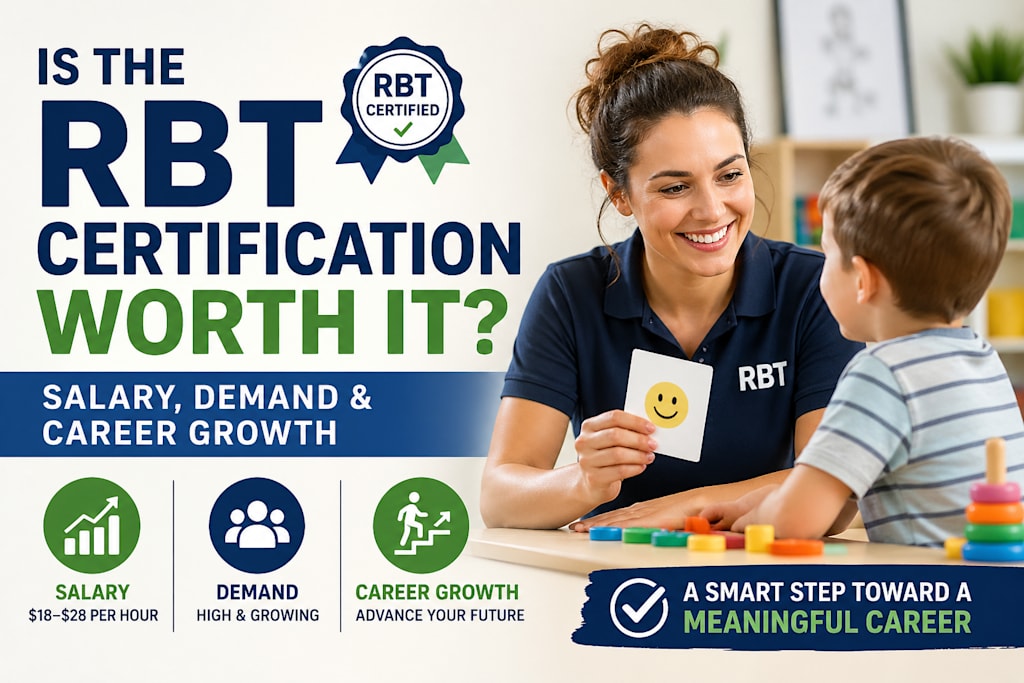
If you’re thinking about becoming a Registered Behavior Technician (RBT), you’re probably asking one big question: Is the RBT certification worth it?
Maybe you’ve seen job postings, heard about ABA therapy, or you’re considering a career in psychology or working with children. But before you invest your time and effort, you want a clear answer—will this certification actually pay off?
The short answer is yes—for many people, it absolutely does. But like any career path, it depends on your goals, expectations, and long-term plans.
In this guide, I’ll break down RBT salary, job demand, career growth, and real-world pros and cons so you can make an informed decision.
What Is RBT Certification?
The RBT (Registered Behavior Technician) certification is an entry-level credential in the field of Applied Behavior Analysis (ABA). RBTs work under the supervision of a BCBA and provide direct therapy to clients, often children with autism.
In real sessions, RBTs implement behavior plans, teach new skills, collect data, and help reduce challenging behaviors. This is not just a theory-based role—it’s hands-on, fast-paced, and highly impactful.
For many people, becoming an RBT is the first step into a long-term career in ABA or psychology.
RBT Salary: How Much Do RBTs Make?
One of the biggest factors in deciding whether the RBT certification is worth it is salary.
In the United States, most RBTs earn between $18 to $28 per hour, depending on location, experience, and employer. This typically translates to an annual salary of around $35,000 to $55,000.
Entry-level RBTs may start on the lower end, but pay often increases with experience, additional skills, and strong performance.
In high-demand areas or specialized settings, some RBTs earn even more, especially if they take on consistent hours or work in clinics with higher reimbursement rates.
While it may not be a high-paying career at the start, it offers steady income and clear growth potential, especially if you plan to advance in the field.
Job Demand: Are RBTs in High Demand?
Yes—RBTs are in extremely high demand across the United States.
The demand for ABA services has grown significantly over the past decade, especially due to increased awareness and diagnosis of autism spectrum disorder. Clinics, schools, and home-based therapy providers are constantly hiring trained RBTs.
In many areas, companies are actively looking for candidates and may even offer:
- Paid training
- Sign-on bonuses
- Flexible schedules
From a job security standpoint, this is one of the strongest reasons why the RBT certification is worth it. It’s a field where jobs are widely available and turnover creates ongoing opportunities.
Career Growth: Where Can RBT Certification Take You?
One of the biggest advantages of becoming an RBT is that it opens the door to long-term career growth.
Many RBTs go on to become:
- Board Certified Behavior Analysts (BCBAs)
- Behavior specialists
- Clinical supervisors
- Special education professionals
The RBT role gives you direct experience working with behavior, data, and intervention strategies. This experience is extremely valuable if you plan to pursue higher education in psychology, ABA, or related fields.
Even if you don’t stay in ABA long-term, the skills you gain—like behavior management, communication, and data analysis—are transferable to many careers.
Real-World Experience: What the Job Is Actually Like
This is where many articles fall short—they don’t tell you what the job really feels like day to day.
As an RBT, you will work directly with clients, often children, in structured sessions. You’ll run teaching programs, manage behavior, and collect data continuously.
Some sessions are incredibly rewarding. Seeing a child learn a new skill or communicate for the first time is something you don’t forget.
But the job can also be challenging. You may deal with tantrums, aggression, or non-compliance. It requires patience, consistency, and emotional control.
This is not a passive job—you are actively engaged the entire session. For the right person, that’s a huge positive. For others, it can feel overwhelming.
Pros of RBT Certification
The RBT certification offers several strong benefits that make it appealing, especially for beginners.
One major advantage is the low barrier to entry. You don’t need a college degree to get started, and the certification process is relatively quick compared to other healthcare roles.
Another benefit is the high demand and job availability. Many employers are actively hiring, making it easier to enter the field.
You also gain hands-on experience in psychology and behavior analysis, which is valuable for long-term career growth.
Most importantly, the work is meaningful. You are directly helping individuals improve their quality of life.
Cons of RBT Certification
While there are many benefits, it’s important to be realistic about the challenges.
The job can be physically and emotionally demanding. Working with challenging behavior requires patience and resilience.
Scheduling can sometimes be inconsistent, especially in home-based services where cancellations happen.
Pay, while decent, may not feel high enough for some people, especially without long-term advancement.
Understanding these challenges helps you decide whether this path aligns with your expectations.
Who Should Become an RBT?
The RBT certification is worth it if you enjoy working directly with people, especially children, and have an interest in behavior and psychology.
It’s a great fit for:
- Students pursuing psychology or ABA
- Individuals exploring careers in healthcare or education
- People who enjoy hands-on, active work
However, if you prefer a desk job or low-interaction roles, this may not be the best fit.
Is the RBT Certification Worth It?
The demand for ABA services continues to grow, making RBT certification more valuable than ever.
With increasing awareness of autism and insurance coverage for ABA therapy, the need for trained professionals is not slowing down.
For many people, becoming an RBT is not just a job—it’s a stepping stone to a long-term, stable, and meaningful career.
If you’re serious about becoming an RBT, practicing real exam-style questions can make a huge difference.
Using high-quality mock tests helps you understand how concepts like reinforcement, prompting, and data collection are applied in real scenarios.
You can start practicing with realistic questions on RBT practice exams to build confidence before your assessment.
Final Verdict: Is It Worth It?
So, is the RBT certification worth it? For most people—yes, especially if you are looking for:
- A quick entry into the psychology or healthcare field
- A job with strong demand and stability
- A pathway to higher-level roles like BCBA
However, it’s important to go in with realistic expectations. The job is rewarding but demanding, and success depends on your interest in working directly with clients.
About the Creator
Jennifer
Jennifer has completed a Bachelor of Arts (B.A.) in Psychology at the University of Nebraska-Lincoln and a Masters of Science (M.S.) in Applied Behavior Analysis at Florida State University.
Enjoyed the story? Support the Creator.
Subscribe for free to receive all their stories in your feed.
Comments
There are no comments for this story
Be the first to respond and start the conversation.