
TRADES AND TRANSPORTATION
The Indus Valley Civilisation was roughly contemporary with the other riverine civilisations of the ancient world: Ancient Egypt along the Nile, Mesopotamia in the lands watered by the Euphrates and the Tigris, and China in the drainage basin of the Yellow River and the Yangtze. By the time of its mature phase, the civilisation had spread over an area larger than the others, which included a core of 1,500 kilometres (900 mi) up the alluvial plain of the Indus and its tributaries. In addition, there was a region with disparate flora, fauna, and habitats, up to ten times as large, which had been shaped culturally and economically by the Indus.
Around 6500 BCE, agriculture emerged in Balochistan, on the margins of the Indus alluvium.In the following millennia, settled life made inroads into the Indus plains, setting the stage for the growth of rural and urban human settlements.The more organized sedentary life, in turn, led to a net increase in the birth rate. The large urban centres of Mohenjo-daro and Harappa very likely grew to containing between 30,000 and 60,000 individuals, and during the civilisation's florescence, the population of the subcontinent grew to between 4–6 million people. During this period the death rate increased as well, for close living conditions of humans and domesticated animals led to an increase in contagious diseases.According to one estimate, the population of the Indus civilisation at its peak may have been between one and five million.
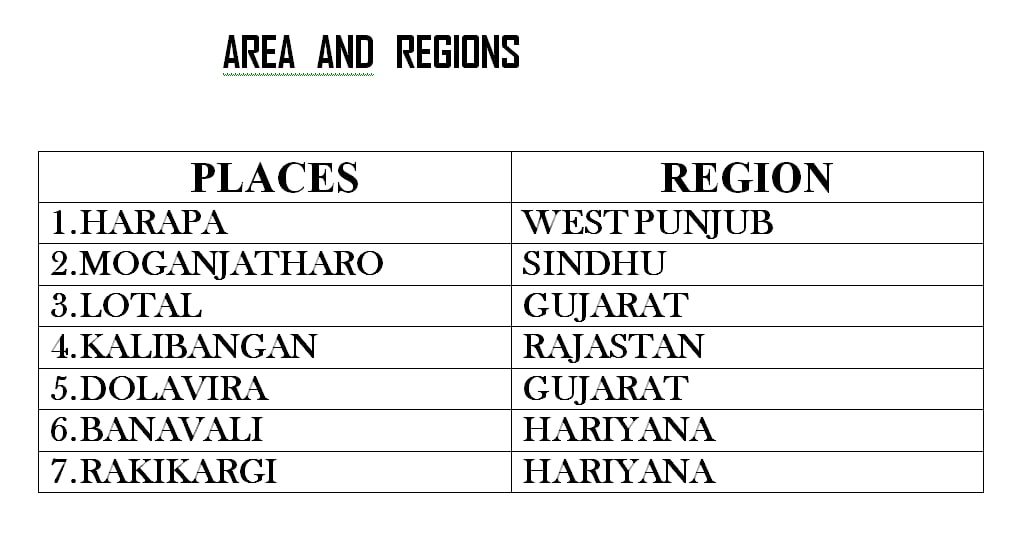
The civilisation extended from Pakistan's Balochistan in the west to India's western Uttar Pradesh in the east, from northeastern Afghanistan in the north to India's Gujarat state in the south.The largest number of sites are in Gujarat, Haryana, Punjab, Rajasthan, Uttar Pradesh, Jammu and Kashmir states in India,and Sindh, Punjab, and Balochistan provinces in Pakistan.Coastal settlements extended from Sutkagan Dor in Western Baluchistan to Lothal in Gujarat. An Indus Valley site has been found on the Oxus River at Shortugai in northern Afghanistan, in the Gomal River valley in northwestern Pakistan, at Manda, Jammu on the Beas River near Jammu,India, and at Alamgirpur on the Hindon River, only 28 km (17 mi) from Delhi.The southernmost site of the Indus Valley Civilisation is Daimabad in Maharashtra. Indus Valley sites have been found most often on rivers, but also on the ancient seacoast, for example, Balakot (Kot Bala),and on islands, for example, Dholavira.
AUTHORITY AND GOVERNANCE
Archaeological records provide no immediate answers for a centre of power or for depictions of people in power in Harappan society. But, there are indications of complex decisions being taken and implemented. For instance, the majority of the cities were constructed in a highly uniform and well-planned grid pattern, suggesting they were planned by a central authority; extraordinary uniformity of Harappan artefacts as evident in pottery, seals, weights and bricks; presence of public facilities and monumental architecture; heterogeneity in the mortuary symbolism and in grave goods (items included in burials).[citation needed]
These are some major theories:
There was a single state, given the similarity in artefacts, the evidence for planned settlements, the standardised ratio of brick size, and the establishment of settlements near sources of raw material.
There was no single ruler but several cities like Mohenjo-daro had a separate ruler, Harappa another, and so forth.
Society in the Indus Valley Civilisation was egalitarian.
Mehrgarh is a Neolithic (7000 BCE to c. 2500 BCE) mountain site in the Balochistan province of Pakistan, which gave new insights on the emergence of the Indus Valley Civilisation. Mehrgarh is one of the earliest sites with evidence of farming and herding in South Asia.Mehrgarh was influenced by the Near Eastern Neolithic,with similarities between "domesticated wheat varieties, early phases of farming, pottery, other archaeological artefacts, some domesticated plants and herd animals."
About the Creator
Enjoyed the story? Support the Creator.
Subscribe for free to receive all their stories in your feed.
Comments
There are no comments for this story
Be the first to respond and start the conversation.