
Indian Art and Crafts: Uncover the Rich Cultural Heritage
Exploring Indian art and crafts reveals a world of traditions and techniques. These have been passed down for thousands of years. Traditional Indian art has grown, shaped by different cultures and traditions. From detailed textiles to beautiful sculptures, there’s something for every art lover.

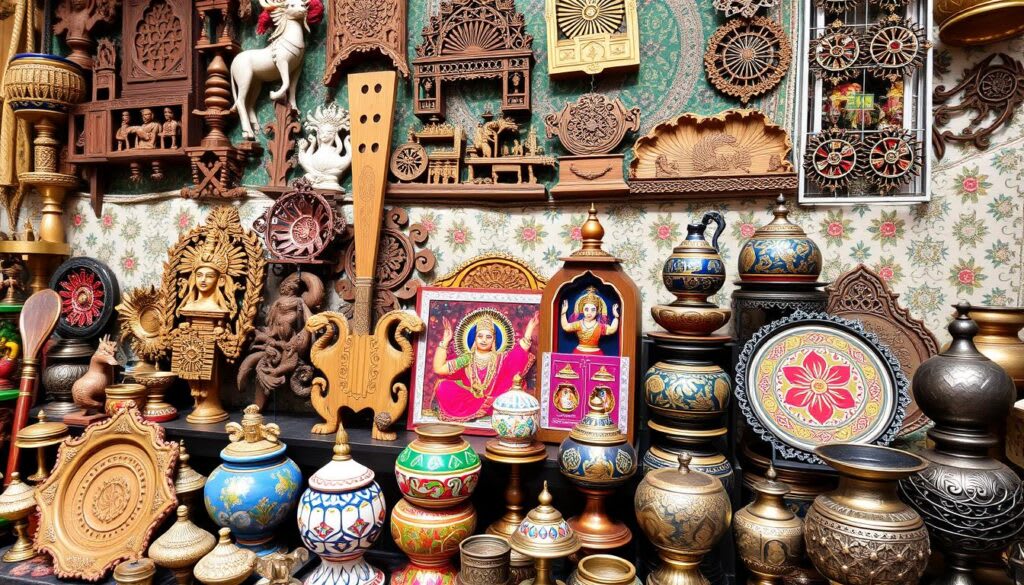
Indian art and crafts mix old and new styles in a unique way. This shows the country’s rich cultural heritage. Each region in India brings its own special touch to art and crafts.
Whether you like traditional or modern styles, Indian art and crafts have something for you.
Key Takeaways
Indian art and crafts have a rich cultural heritage spanning thousands of years.
Traditional indian art has evolved over time, influenced by various cultures and traditions.
Indian art and crafts offer a unique blend of traditional and contemporary styles.
The diversity of indian art and crafts reflects the country’s rich cultural heritage.
Each region in India offers its own distinct flavor and flair in terms of art and crafts.
Indian art and crafts have something to offer for every art enthusiast, from intricately detailed textiles to ornate sculptures.
The Evolution of Indian Art and Crafts Through Centuries
Exploring Indian art and crafts reveals a rich heritage. You’ll see handmade indian crafts with detailed patterns and indigenous indian art with bright colors. Each piece shares a story of India’s history and its diverse culture.
Indian art and crafts have a long history, with each era adding its own touch. You can learn about:
Ancient civilizations, like the Indus Valley Civilization, which started India’s artistic traditions
Cultural exchanges with other countries, which brought new techniques and styles to Indian art and crafts
The importance of indigenous indian art in keeping traditional practices alive
Today, Indian art and crafts mix old and new styles. This creates unique and creative pieces that show India’s innovative spirit. It’s important to keep handmade indian crafts and indigenous indian art alive. This way, India’s culture can be shared with future generations.
Regional Diversity in Indian Artistic Expression
Exploring Indian art reveals a world full of cultural treasures. You’ll find a wide range of cultural indian artifacts and authentic indian crafts. Each region in India has its own special style and tradition.
For example, Rajasthan is known for its detailed handicrafts. Gujarat is famous for its colorful textiles. Every region brings something unique to the table.
Some notable art forms include:
Rajasthani miniature paintings, known for their detailed work and bright colors
Gujarati embroidery, famous for its complex stitches and lively patterns
Bengali pottery, recognized for its distinct shapes and natural colors
These pieces are not just beautiful. They also hold deep cultural and historical value.
By keeping these art forms alive, we protect India’s rich cultural heritage. Whether you love art or just want to learn about India’s culture, these artifacts are truly significant.
Traditional Techniques and Materials in Indian Craftsmanship
Exploring Indian craftsmanship reveals the importance of traditional methods and materials. These elements are key in making contemporary indian art unique and meaningful. Indigenous materials like wood, stone, and fabric bring authenticity to each piece.
In artisanal indian creations, old crafting methods are used today. These methods, passed down through generations, need skill and patience. Techniques include weaving, pottery, and metalwork.
Indigenous Materials and Their Significance
Indigenous materials are vital in Indian craftsmanship. They enhance a piece’s beauty and share cultural stories. Common materials include:
Wood
Stone
Fabric
Clay
Time-Honored Crafting Methods
Indian craftsmanship relies on old crafting methods. These methods, passed down through generations, require skill and patience. Traditional methods include:
Weaving
Pottery
Metalwork
contemporary indian art
Tools and Technologies in Traditional Art
In traditional Indian art, tools and technologies are key. They help create unique and detailed pieces. Traditional tools include:
Tool Description
Chisel A handheld tool used for carving and shaping materials
Hammer A tool used for shaping and molding materials
Loom A device used for weaving and creating fabric
Symbolism and Meaning in Indian Art and Crafts
Exploring Indian art and crafts reveals a world full of symbolism and meaning. Unique handicrafts, like detailed textiles and pottery, are filled with tradition and culture. They use colors, shapes, and motifs that carry deep meanings.
The lotus flower is often seen in Indian art, symbolizing spiritual growth and enlightenment. Red and gold colors in textiles and pottery mean prosperity and good luck. These symbols make each piece of art unique and meaningful.
Some examples of unique Indian handicrafts and their meanings include:
Pottery from Rajasthan, known for its detailed designs and symbolic motifs
Textiles from Gujarat, famous for their bright colors and symbolic patterns
Wood carvings from Kerala, known for their complex designs and mythological themes
unique indian handicrafts
Understanding the symbolism in Indian art and crafts helps us see their beauty and significance. Whether you love art or collect Indian crafts, exploring these unique handicrafts is a journey of discovery and wonder.
Handicraft Symbolic Meaning
Pottery Spiritual growth and enlightenment
Textiles Prosperity and good fortune
Wood carvings Mythological themes and stories
Contemporary Renaissance of Traditional Indian Artforms
Traditional Indian art is seeing a big comeback. Many artists today mix old styles with new materials and themes. This creates a fresh, exciting style that’s catching eyes worldwide. You can see this mix in many modern art pieces, which often include handmade crafts and traditional designs.
Contemporary Indian artists are breaking new ground. They’re using old crafts like embroidery and woodcarving in new ways. This makes their work both stunning and thought-provoking. It’s making traditional Indian art feel fresh and reaching more people.
traditional indian art
Modern Interpretations of Classical Styles
Modern takes on old styles often use bold colors and new materials. They also bring in today’s themes and ideas. This makes traditional Indian art more inviting to everyone. You can see this beauty in museums and galleries, where contemporary Indian art is showcased.
Innovation in Traditional Crafts
There’s also a big push for new in traditional crafts. Artists are trying out digital printing and laser cutting. This brings a modern twist to old crafts. It keeps traditional Indian art alive and introduces it to more people.
Economic Impact and Artisan Communities
Exploring Indian art and crafts shows us how important it is to artisan communities. Their way of life depends on keeping indigenous indian art and cultural indian artifacts alive.
The trade of Indian art and crafts is key to supporting these communities. By valuing indigenous indian art and cultural indian artifacts, the government and others can help these communities thrive.
Livelihood and Sustainability
Several factors help artisan communities survive and grow. These include:
Access to markets and trade opportunities
Preserving traditional techniques and materials
Support from government and non-governmental organizations
Government Support and Initiatives
The government has launched many efforts to aid artisan communities. These efforts include training, resources, and platforms for artisans to display their work.
Initiative Objective
Training and Resource Programs Provide artisans with skills and resources to improve their craft
Market Access Initiatives Connect artisans with markets and trade opportunities
Cultural Preservation Programs Promote and preserve traditional techniques and materials
Preservation Challenges and Conservation Efforts
Exploring Indian art and crafts makes you think about how to keep them safe. Authentic indian crafts and contemporary indian art are key to India’s culture and economy. They also shape the country’s identity.
Some big challenges in preserving these treasures include:
Lack of funding and resources
Insufficient infrastructure for conservation and storage
Climate change and environmental factors
But, there are efforts to save and celebrate Indian art and crafts. Museums and galleries work hard to show off authentic indian crafts and contemporary indian art. They also help artisans and artists grow.
Supporting these efforts helps keep Indian art and crafts alive. You’ll be helping to preserve India’s rich cultural heritage.
Conservation Efforts Benefits
Preservation of authentic indian crafts Protects cultural heritage, supports artisans
Promotion of contemporary indian art Encourages innovation, supports artists
The Future of Indian Artistic Heritage
Exploring Indian art and crafts makes you think about its future. Digital platforms and modern tech open new doors. Now, artisans can share their work with people all over the world.
Things like detailed textiles and fancy jewelry can be sold online. This lets artisans reach more customers than ever before.
Digital Integration and Modern Platforms
Digital tools are big for Indian art and crafts. Online shops and social media help artisans show their work. They can tell their stories and find new customers.
This has made more people see Indian crafts. It also gives artisans a chance to earn money.
International Collaboration Opportunities
Working with artists from other countries is exciting. It lets Indian creators learn and share. They can make new, unique crafts that mix different cultures.
Thinking about Indian art’s future is inspiring. With support, Indian crafts will keep growing. They will continue to amaze people everywhere.
Conclusion: Embracing the Timeless Legacy of Indian Craftsmanship
Exploring Indian art and crafts shows us a rich legacy. It shows the strength and creativity of the Indian people. From old traditional art to new styles, Indian craftsmanship has lasted through time.
This journey highlights the importance of keeping Indian art alive. Each piece, each skill, and each product shows a culture that has grown strong. By celebrating this, we honor the artists and keep Indian creativity alive for future generations.
Let Indian art and crafts spark your curiosity. Explore, discover, and dive into the endless creativity of this nation. May your journey be filled with appreciation, understanding, and respect for Indian craftsmanship’s timeless wonders.
FAQ
What is the rich cultural heritage of Indian art and crafts?
Indian art and crafts have a long history, influenced by many cultures. They show the country’s rich cultural heritage through various artistic expressions.
How have Indian art and crafts evolved over the centuries?
Indian art and crafts have changed a lot over time. They started with ancient origins and have been shaped by different cultures. Today, they blend traditional and modern styles, showing the creativity of Indian artists.
What is the regional diversity in Indian artistic expression?
India’s diverse geography is seen in its unique crafts and artifacts. Each region, like Rajasthan and Gujarat, has its own style. These styles are key to India’s cultural heritage.
What are the traditional techniques and materials used in Indian craftsmanship?
Indian crafts use local materials and old techniques passed down through generations. These methods are important for the beauty and value of Indian art today.
What is the symbolism and meaning behind Indian art and crafts?
Indian art and crafts carry deep meanings and symbols. Each piece reflects the traditions and beliefs of its region. They use patterns, motifs, colors, and shapes to tell stories.
How is the traditional Indian artforms experiencing a contemporary renaissance?
Traditional Indian art is seeing a new wave of creativity. Artists are mixing old styles with new ideas. This has led to exciting, globally recognized Indian art and crafts.
What is the economic impact of Indian art and crafts on artisan communities?
Indian art and crafts are vital for artisans’ livelihoods. They provide economic opportunities and help preserve traditional art. The market and government support are key to their growth.
What are the preservation challenges and conservation efforts for Indian art and crafts?
Keeping Indian art and crafts authentic is a big challenge. Threats like damage and loss are real. Museums and galleries play a big role in protecting this heritage.
What is the future of Indian artistic heritage?
The future of Indian art is promising but faces challenges. Digital platforms and education can help preserve traditional crafts. But, it’s important to keep celebrating and valuing Indian art and crafts.
About the Creator
Enjoyed the story? Support the Creator.
Subscribe for free to receive all their stories in your feed.
Comments
There are no comments for this story
Be the first to respond and start the conversation.