
Incorporating Blockchain Technology in Education: Indian International Schools Lead the Way
Incorporating Blockchain Technology in Education: Indian International Schools Lead the Way
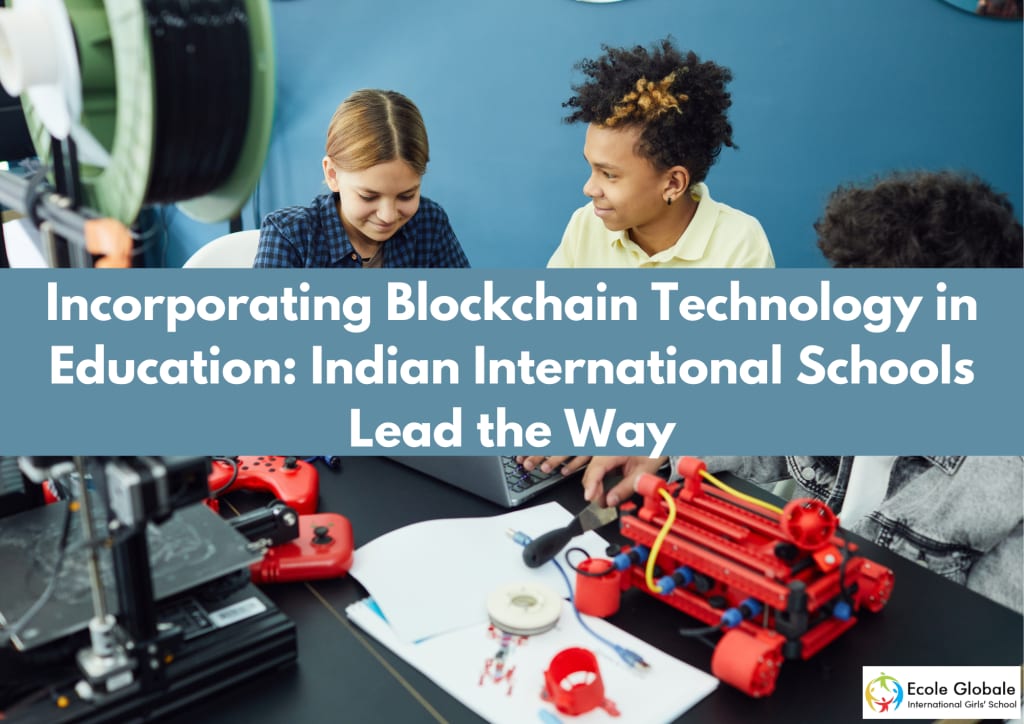
Imagine a world where students' academic records are tamper-proof, instantly accessible, and verified within seconds.
This futuristic scenario is already a reality as international schools in India lead the charge in adopting blockchain technology in education.
With its potential to bring transparency, security, and efficiency to academic processes, blockchain is reshaping how schools manage student data, credentials, and certifications.
The growing influence of blockchain in the education sector is undeniable. By prioritizing trust, security, and decentralization, international schools in India are ensuring students gain a competitive edge in the global academic landscape.
What is Blockchain Technology in Education?
Before we delve into how international schools are integrating blockchain, it’s essential to understand what blockchain is.
Blockchain is a decentralized, digital ledger that records information securely and transparently. Unlike traditional systems where data is stored on a single server, blockchain stores it across multiple nodes.
This decentralized approach makes it nearly impossible for data to be altered or hacked.
In the context of education, blockchain offers a range of applications:
Secure Student Records: Store student academic records, attendance, and certifications securely and permanently.
Tamper-Proof Certificates: Eliminate the risk of forged diplomas and degrees.
Decentralized Credential Verification: Allow employers and higher education institutions to instantly verify student credentials.
With these benefits, it’s no surprise that international schools in India are leading the adoption of blockchain technology.
Why International Schools in India Are Embracing Blockchain
International schools are known for their forward-thinking approach, global curricula, and emphasis on holistic development.
1. Ensuring Data Security and Privacy
Student data is sensitive, and protecting it from breaches is a priority. Traditional databases are prone to hacking and data leaks, but blockchain offers unparalleled security.
Since blockchain encrypts data and stores it in a decentralized network, student records become tamper-proof and secure.
When parents enroll their children in international schools in India, they want assurance that their child's data is safe.
Blockchain provides peace of mind, ensuring that personal details, exam results, and health records are protected from unauthorized access.
2. Verifiable Student Credentials
In a globalized world, students often apply to universities abroad. Traditionally, verifying academic records is a tedious process. However, with blockchain, students can provide instant, verifiable proof of their credentials.
3. Combatting Certificate Fraud
Forgery of certificates and diplomas is a serious issue in education. Blockchain eliminates this problem.
By issuing blockchain-verified certificates, international schools in India ensure that their students’ academic achievements are authentic and verifiable by universities, employers, and other institutions.
This innovation is particularly beneficial for students applying to universities abroad, as it increases their credibility.
4. Automating Payments and Scholarships
Managing fee payments, scholarships, and refunds can be a complicated process for schools and parents. Blockchain streamlines this process using "smart contracts."
This automation reduces administrative work and ensures transparency in financial dealings.
5. Streamlined Student Transfers
When students transfer from one school to another, verifying their records is often a time-consuming process. Blockchain simplifies this by making academic records portable and easily verifiable.
When students transfer from one international school in India to another, the new school can access the student’s academic history in minutes. This seamless transfer process benefits parents and students, ensuring continuity in education.
6. Empowering Lifelong Learning
Blockchain supports lifelong learning by enabling students to accumulate a digital portfolio of skills, courses, and certifications over time. This "digital resume" can be used throughout their lives, whether they are applying for college, internships, or jobs.
How Indian International Schools Are Leading the Way
Several international schools in India are early adopters of blockchain. From issuing blockchain-based certificates to facilitating fee payments through smart contracts, these schools are at the forefront of educational transformation.
Here’s how they are doing it:
Digital Certificates: Schools like The International School Bangalore (TISB) and Indus International School have begun issuing digital diplomas and certificates.
Smart Fee Payments: Some schools are experimenting with smart contracts to streamline payments for tuition, fees, and scholarships.
Blockchain-Based Attendance Systems: A few schools are exploring blockchain-based attendance systems to track student attendance securely.
Partnerships with EdTech Companies: Schools are collaborating with blockchain-based EdTech companies to develop custom blockchain solutions for education.
Benefits of Blockchain Technology for Students and Parents
For Students
Faster Credential Verification: Students can provide verified credentials to universities and employers instantly.
Global Recognition: Blockchain-based certificates are accepted globally, giving students a competitive advantage.
Ownership of Learning Records: Students have lifelong access to their learning portfolios, even after graduation.
For Parents
Data Security: Parents can be confident that their child's personal data and academic records are secure.
Transparency in Payments: Fee payments and scholarships are transparent, with fewer administrative delays.
Streamlined Transfers: If parents transfer their child to a new school, blockchain makes it easier to verify past academic records.
Challenges of Implementing Blockchain in Education
While blockchain offers many benefits, it also comes with challenges:
High Implementation Costs: Setting up a blockchain system requires significant investment.
Training for Staff: Teachers and administrators must be trained to use blockchain tools effectively.
Regulatory Compliance: Schools must comply with data privacy regulations like GDPR and India’s Data Protection Act.
Despite these challenges, international schools in India are leading the charge, ensuring students receive a future-proof education.
Future of Blockchain in Education
The future of blockchain in education is bright. As more international schools adopt blockchain, students will benefit from secure credentials, transparent payments, and portable learning portfolios.
Conclusion
Blockchain technology is more than a buzzword—it’s a game-changer for education. International schools in India are taking the lead, embracing blockchain to create a secure, transparent, and efficient education system.
For parents and students, this shift means better security, faster university applications, and access to lifelong learning records. As blockchain technology continues to evolve, its impact on education will only grow stronger.
About the Creator
Enjoyed the story? Support the Creator.
Subscribe for free to receive all their stories in your feed.
Comments
There are no comments for this story
Be the first to respond and start the conversation.