
Impact of Artificial Intelligence
"The Future is Here: Unveiling the Revolutionary Impact of Artificial Intelligence"
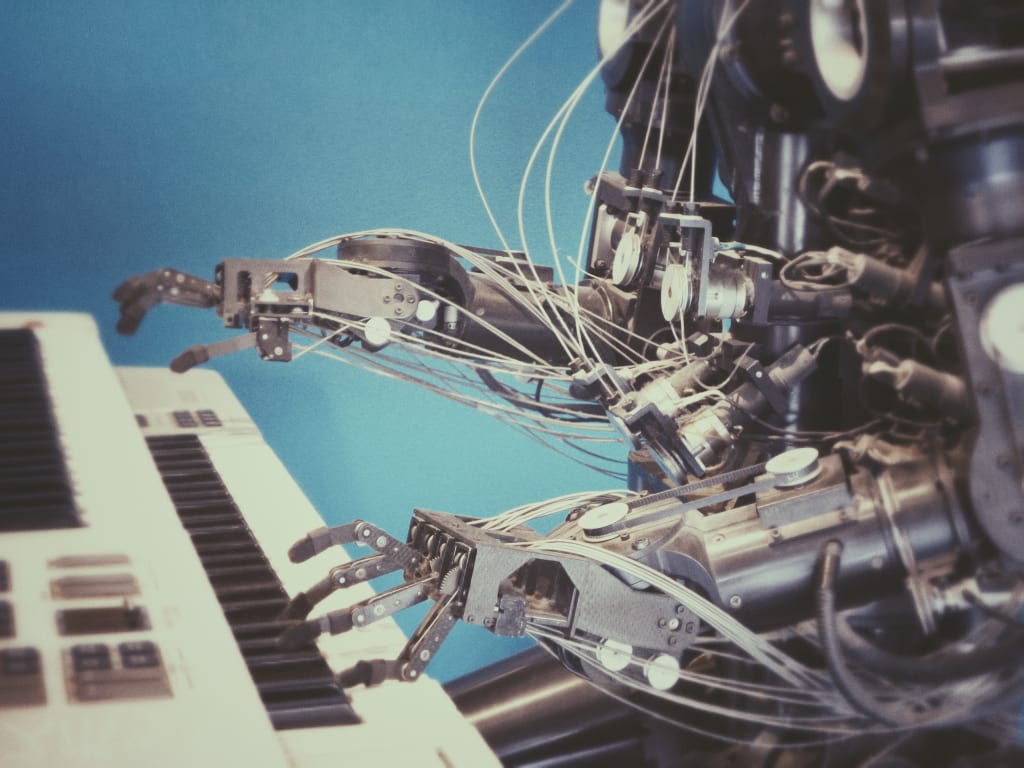
Artificial Intelligence (AI) has rapidly emerged as a transformative technology with the potential to revolutionize various industries. In this article, we will explore the future of AI and its applications in healthcare, transportation, finance, and education. By harnessing the power of AI, these sectors can enhance efficiency, improve decision-making, and provide innovative solutions to complex challenges. However, alongside the benefits, we must also consider the ethical implications and ensure responsible deployment of AI technologies. In this article, we will explore the future of AI and its applications in healthcare, transportation, finance, and education. By harnessing the power of AI, these sectors can enhance efficiency, improve decision-making, and provide innovative solutions to complex challenges. However, alongside the benefits, we must also consider the ethical implications and ensure responsible deployment of AI technologies. Artificial Intelligence (AI) is also at the forefront of technological innovation, reshaping industries and transforming the way we live and work. As AI continues to advance, its potential applications in various fields are expanding rapidly. In this essay, we will explore the future of AI and its impact on society. We will delve into the potential applications of AI in healthcare, transportation, finance, and education. By understanding the possibilities and challenges that lie ahead, we can prepare for a future where AI plays a central role in transforming industries, improving efficiency, and augmenting human capabilities.
AI is poised to revolutionize healthcare by augmenting diagnostic capabilities, improving treatment outcomes, and transforming patient care. Machine learning algorithms can analyze vast amounts of medical data to detect patterns and predict diseases with greater accuracy. AI-powered robotic systems can assist surgeons in performing complex procedures with precision. Telemedicine platforms can leverage AI to provide personalized healthcare remotely. Moreover, AI can enable early detection of diseases, drug discovery, and personalized medicine. AI is also poised to revolutionize healthcare by augmenting diagnostic capabilities, improving treatment outcomes, and transforming patient care. Machine learning algorithms can analyze vast amounts of medical data to detect patterns and predict diseases with greater accuracy. AI-powered robotic systems can assist surgeons in performing complex procedures with precision. Telemedicine platforms can leverage AI to provide personalized healthcare remotely. Moreover, AI can enable early detection of diseases, drug discovery, and personalized medicine, leading to more efficient healthcare delivery and improved patient outcomes. AI also has the potential to revolutionize the healthcare industry, empowering medical professionals and improving patient outcomes. Machine learning algorithms can analyze vast amounts of medical data, aiding in early disease detection and diagnosis. AI-powered systems can assist in developing personalized treatment plans and predicting patient responses to therapies. Robotics and automation driven by AI can enhance surgical precision, reducing human error and improving recovery times. Moreover, AI can support administrative tasks, allowing healthcare professionals to focus more on patient care. However, ethical considerations surrounding data privacy, algorithmic biases, and the need for human oversight must be addressed for responsible and equitable AI deployment in healthcare.
AI has significant potential to revolutionize transportation by enhancing safety, efficiency, and sustainability. Autonomous vehicles powered by AI can reduce traffic congestion, optimize routes, and minimize accidents. AI algorithms can analyze real-time traffic data to improve traffic management and enable predictive maintenance. Additionally, AI can transform public transportation systems, making them more accessible and efficient. However, challenges such as regulations, ethical considerations, and public acceptance need to be addressed for the successful integration of AI in transportation. The transportation sector also stands to benefit significantly from AI advancements, making travel safer, more efficient, and sustainable. Autonomous vehicles powered by AI can revolutionize transportation, reducing accidents and congestion while optimizing traffic flow. AI algorithms can analyze real-time traffic data to predict and manage traffic patterns, enhancing route optimization and reducing travel times. Additionally, AI can transform public transportation systems, providing personalized experiences, improving scheduling, and optimizing energy consumption. However, regulatory frameworks, cybersecurity concerns, and public acceptance need to be addressed for the widespread adoption of AI in transportation.
The financial industry can benefit greatly from AI technologies, enabling faster and more accurate decision-making, fraud detection, risk assessment, and customer service. AI-powered chatbots and virtual assistants can provide personalized financial advice and assist with routine banking tasks. Machine learning algorithms can analyze financial data to identify market trends, predict stock prices, and optimize investment portfolios. AI can also enhance cybersecurity measures, detecting and preventing fraudulent activities. However, the ethical implications of AI-driven automation in finance, such as job displacement, need to be carefully managed. As AI reshaping the financial industry, revolutionizing decision-making processes, risk assessment, and customer experiences. Machine learning algorithms can analyze vast amounts of financial data, enabling more accurate predictions of market trends and optimizing investment portfolios. AI-powered chatbots and virtual assistants can provide personalized financial advice and support to customers. Furthermore, AI can enhance fraud detection, cybersecurity, and regulatory compliance, safeguarding financial transactions. However, the ethical implications of AI-driven automation in finance, including job displacement and algorithmic biases, must be carefully managed to ensure fairness and inclusivity in the financial system.
In education, AI holds the potential to revolutionize learning experiences, personalize education, and improve student outcomes. Intelligent tutoring systems can adapt to individual student needs, providing personalized instruction and feedback. AI can also analyze student performance data to identify areas for improvement and tailor educational content accordingly. Moreover, AI-powered tools can automate administrative tasks, freeing up time for teachers to focus on instruction. However, concerns regarding data privacy, bias in algorithms, and the need for human interaction in education should be carefully considered. AI also holds immense promise for transforming learning experiences, personalizing education, and improving student outcomes. Intelligent tutoring systems powered by AI can adapt to individual student needs, providing personalized instruction, feedback, and adaptive learning paths. AI algorithms can analyze student performance data, identifying areas for improvement and tailoring educational content accordingly. AI-powered tools can automate administrative tasks, freeing up time for teachers to focus on instruction and student support. However, considerations surrounding data privacy, algorithmic biases, and the balance between technology and human interaction in education need to be addressed for responsible AI integration in classrooms.
The future of Artificial Intelligence is bright, with vast potential for transforming industries and enhancing human capabilities. From healthcare to transportation, finance, and education, AI is set to revolutionize various sectors. By harnessing AI technologies responsibly, we can improve decision-making, enhance efficiency, and provide innovative solutions to complex challenges. However, it is crucial to address ethical considerations surrounding data privacy, algorithmic biases, and human oversight. With a balanced approach, we can embrace the transformative power of AI and shape a future where it works in harmony with humanity, benefiting society as a whole and paving the way for a new era of innovation and progress.
So, it can be concluded artificial Intelligence has the potential and ability to reshape various sectors, including healthcare, transportation, finance, and education. By leveraging AI technologies, these industries can enhance efficiency, improve decision-making, and provide innovative solutions to complex challenges. However, to ensure a responsible and ethical implementation of AI, considerations such as data privacy, algorithmic bias, and the impact on employment must be addressed. It is crucial to strike a balance between technological advancements and human oversight to harness the full potential of AI for the betterment of society.
About the Creator
Enjoyed the story? Support the Creator.
Subscribe for free to receive all their stories in your feed.
Comments
There are no comments for this story
Be the first to respond and start the conversation.