
I Tried Waking Up at 5 AM for 30 Days—Here’s What Actually Changed in My Life
A 30-day experiment in discipline, sleep, and productivity that revealed the real truth behind the 5 AM morning routine trend

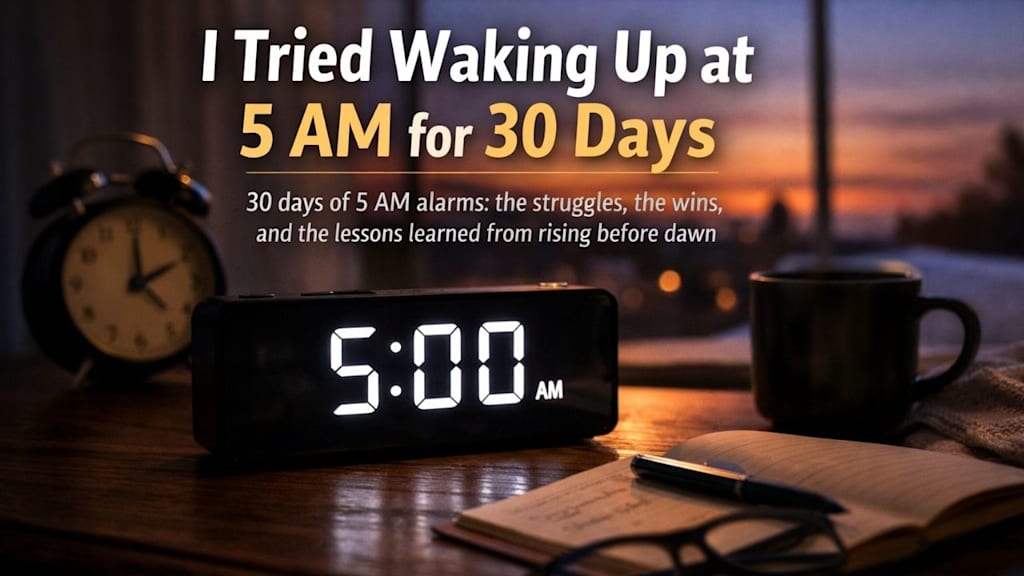
Waking up at 5 AM has long been promoted as the “ultimate habit” of successful people. From CEOs to athletes, the idea of starting the day before the world wakes up is often linked to discipline, productivity, and mental clarity. I always wondered if it was just hype or if it actually worked in real life. So, I decided to try it myself for 30 straight days—no excuses, no skipping weekends.
What followed was not a perfect transformation story. Instead, it was a mix of struggle, adjustment, unexpected benefits, and a few surprising truths about productivity and human behavior.
The First Week Was Pure Chaos
The hardest part wasn’t waking up early—it was going to bed early. My normal sleep schedule was completely against the plan. I used to sleep around midnight or later, so suddenly forcing myself to wake up at 5 AM meant I was running on less sleep.
The alarm at 5 AM felt brutal. Every morning, I had the same internal battle: “Just five more minutes.” But I stuck to it because I wanted to fully commit to the challenge.
During the first week, I felt tired most of the day. My focus was weak, and I relied heavily on coffee. Instead of feeling productive, I often felt like I was just surviving the day.
Week Two: The Body Starts Adapting
By the second week, something interesting happened—my body started adjusting. Waking up at 5 AM didn’t feel as painful. I still wasn’t jumping out of bed excited, but the resistance decreased.
This is when I noticed my first real benefit: quiet time. From 5 AM to around 7 AM, the world was completely silent. No messages, no distractions, no noise. That time became mine alone.
I started using those early hours for reading, planning my day, and doing focused work. Even small tasks felt easier because there were no interruptions.
Productivity Slowly Improved
By the third week, my productivity had improved noticeably. I was getting important tasks done before most people even started their day. This gave me a psychological advantage—I felt ahead.
However, it wasn’t perfect. I also noticed that my energy levels still depended heavily on sleep quality. On nights when I slept late, the 5 AM wake-up felt like torture again. This taught me an important lesson: waking up early doesn’t fix bad sleep habits.
Mental Clarity and Emotional Changes
One of the most surprising changes was mental clarity. Early mornings felt calmer, and I experienced less stress compared to my usual rushed mornings.
I also became more mindful. Instead of immediately jumping into notifications or social media, I had time to think clearly before the day began. This improved my mood throughout the day.
But there was a downside too—I sometimes felt socially disconnected. Going to bed early meant less evening time with friends or entertainment. I had to sacrifice some social habits to maintain the routine.
The Final Week: It Became a Habit
By the last week, waking up at 5 AM had become routine. My body had adjusted, and it no longer felt unnatural. The biggest change wasn’t just waking up early—it was how I used my time.
I became more intentional with my mornings. Even simple routines like making coffee or planning my day felt more structured and meaningful.
However, I also realized something important: 5 AM is not magical by itself. The real benefit came from consistency, discipline, and reducing distractions—not the specific time on the clock.
What I Learned After 30 Days
After completing the challenge, I didn’t become a “superhuman productivity machine,” but I did gain valuable insights:
• Sleep quality matters more than wake-up time
• Early mornings are powerful only if used intentionally
• Discipline builds slowly, not overnight
• Consistency is more important than intensity
• Lifestyle balance is necessary to sustain habits
Final Thoughts
Waking up at 5 AM for 30 days changed my perspective more than my personality. It showed me that success habits are not about extreme routines but about sustainable systems.
Would I continue waking up at 5 AM forever? Not necessarily. But I would definitely keep early mornings as a tool when I need focus, clarity, and uninterrupted time.
In the end, this experiment taught me something simple but powerful: it’s not about waking up early—it’s about what you do with the time you get.
About the Creator
Enjoyed the story? Support the Creator.
Subscribe for free to receive all their stories in your feed.
Comments
There are no comments for this story
Be the first to respond and start the conversation.