
I Spent a Week Looking for Low Competition KDP Niches
Most niche lists led nowhere. The Amazon data told a different story
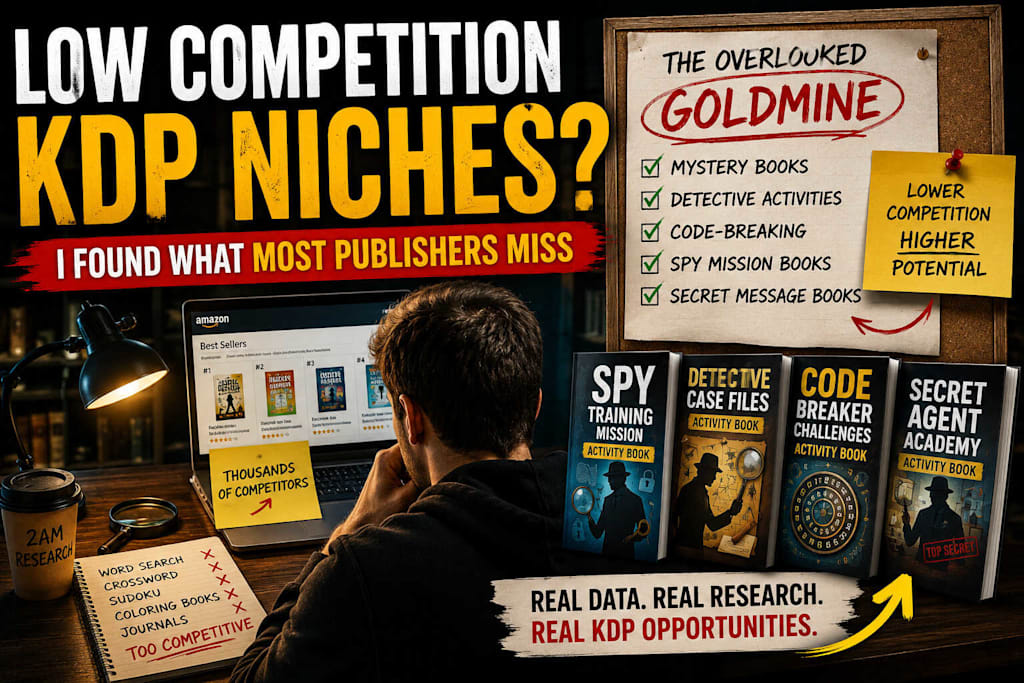
The clock said 1:47 AM. Publisher Rocket sat open on one tab. Amazon search results sat open on another. I was looking for low competition KDP niches. I had been doing this for three nights straight. Every article I found pointed to the same categories. Journals. Planners. Word searches. Crosswords. Sudoku. Coloring books. I kept clicking through. Each blog promised "best low competition KDP niches" and then listed the exact same ten items. I started wondering if all these writers copied the same Google Doc.
My coffee went cold. I didn't notice. I just kept scrolling.
YouTube wasn't better. Some guy with a ring light told me to publish gratitude journals. Another guy said low content planners were still wide open. A third video recommended maze books for toddlers. I checked Amazon. The top results had ten thousand reviews. The twentieth result had two thousand. That didn't look low competition to me. That looked like a bloodbath.
This is the problem with KDP niche research in 2024. The advice repeats itself until the niche dies. Someone writes a blog post. Twenty people make YouTube videos about that blog post. Five hundred new publishers upload books to that category. Within six months, a so-called hidden gem turns into a parking lot. I kept hitting this wall. Every Amazon KDP niche I investigated already had hundreds of new releases that month. The barrier to entry wasn't knowledge. The barrier was that everyone had the same knowledge.
I searched "low competition KDP niches" on Google. Page one gave me the same five articles I had already read. Page two gave me Medium posts that sounded like they were written by the same AI. Page three had a Reddit thread from 2021 where someone asked if coloring books were still viable. The top reply said "maybe if you find a subniche." That reply had three hundred upvotes. Three years later, that advice was still circulating as fresh wisdom.
I tried different search terms. "KDP niche ideas." Same lists. "KDP opportunities." Same lists with different adjectives. "Low competition publishing niches." Someone had written a thirty-minute read that said absolutely nothing new. They used phrases like "the market is always evolving" and "find your unique angle." I wanted to throw my laptop.
I checked my phone. My friend had texted me six hours ago asking if I wanted to grab food. I never replied. I was too busy reading the same list of dead niches for the hundredth time.
I closed the laptop around three. Went to the kitchen. Stood in front of the fridge for five minutes. Forgot what I wanted. Walked back empty-handed. Sat down and opened the laptop again.
The Rabbit Hole
Night four. I changed my approach. Instead of reading blogs about KDP opportunities, I started clicking through actual Amazon categories. I went deep. Not the front page. The sub-sub-sub categories. I looked at bestseller rankings. I read reviews. I counted competitors. I studied how categories were structured.
I started with puzzle books. I clicked Children's Books. Then Activities, Crafts & Games. Then Puzzles. The page loaded with thousands of results. I sorted by bestseller. The top book had twelve thousand reviews. The tenth book had four thousand. I kept scrolling. The fiftieth book had nine hundred reviews and a BSR around eight thousand. That meant it was selling dozens of copies a day. But it needed nine hundred reviews to get there. Nine hundred reviews takes months or years unless you have a massive marketing budget. That isn't low competition. That is a fortress.
I checked word searches specifically. I typed "word search for kids" into Amazon. The search results showed me a wall of books with nearly identical covers. Bright colors. Big letters. Cartoon animals. The top twenty results were all published by established imprints or KDP publishers who had been at it for years. The new releases on page three had two reviews. They were buried. I clicked into one. Someone had published it two weeks ago. It had one review that said "good." That was the whole review. Just "good." I felt bad for the publisher.
I spent an hour in coloring books. The numbers were worse. A coloring book ranked at fifteen thousand BSR still had eight hundred reviews. The twentieth page of results showed books published last week. The category structure was deep but packed. Customers bought one coloring book and moved on. Reviews said "fun pictures" or "my kid liked it." Nothing indicated they bought five more from the same publisher.
I checked journals. Don't even get me started. The low competition publishing niches everyone recommends online are only low competition in the imagination of the person writing the listicle. I searched "guided journal for anxiety." Two thousand results. I searched "one line a day journal." Five thousand results. Every variation I could think of had been flooded. The KDP niche research community had strip-mined these categories.
I tried mazes. Same thing. I tried dot-to-dot books. Same thing. I tried "activity books for seniors." Packed. I tried "large print puzzles." Packed. Every KDP niche ideas article I had ever read pointed to categories that were already full of people who had read the same article six months earlier.
I tried thinking outside the box. I searched for "trace and color" books. Packed. I searched for "learn to draw" books for kids. Packed. I searched for "handwriting practice." Absolutely packed. The KDP publishing space had become a game of musical chairs where everyone already sat down.
I started feeling like I was watching the same movie on repeat. Click category. See saturation. Close tab. Open next category. See saturation. Close tab. My eyes hurt. I got up to piss. Stared at myself in the bathroom mirror. I looked like I had been awake for three days. I had been.
Then I clicked somewhere I didn't mean to.
Something Weird in the Categories
I was in children's activity books. I kept clicking subcategories. I wasn't even looking for anything specific anymore. I was just wandering. I hit a subcategory I hadn't noticed before. Spy stuff. Detective training. Secret agent missions. Code-breaking for kids. I stopped. The books here looked different. The covers weren't the generic KDP template look I had gotten used to seeing. Some had fifty reviews. Some had two hundred. Their BSR numbers sat in a range that didn't make sense compared to their review counts.
In traditional puzzle categories, a book needs a thousand reviews to crack a decent rank. These mystery activity books had forty reviews and were sitting at ranks that suggested actual sales. I clicked into one. The reviews were longer. Parents wrote paragraphs. "My nine-year-old finished this in two days and asked for the next one." "We bought three of these for a road trip. The codes actually took them time to crack." "My daughter hid the book from her brother because she wanted to solve everything herself."
I sat back. This felt off. Not off in a bad way. Off in the way that makes you lean closer.
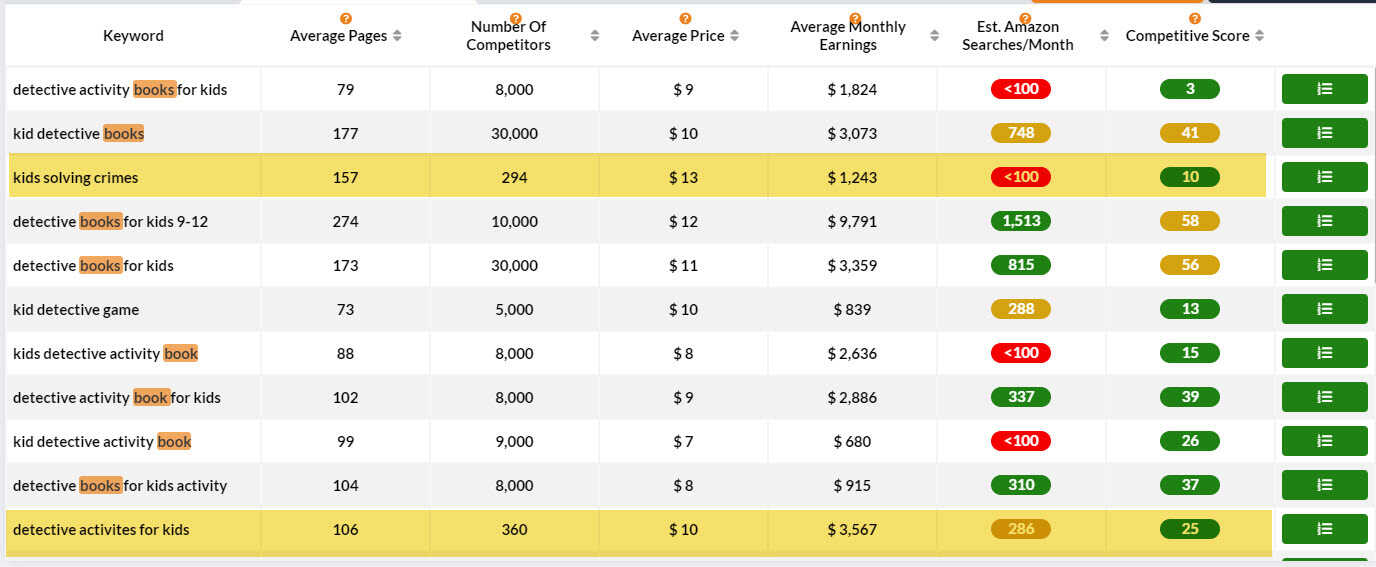
I started digging sideways. Detective activity books. Spy activity books. Code-breaking books. Secret message books. The categories weren't empty. But they weren't stuffed either. The competition looked thin compared to the demand I was seeing in the reviews. Readers in these spaces acted differently. They talked about repeat purchases. They mentioned series. They begged for harder puzzles.
I pulled up a notebook. I started writing down BSR numbers by hand. I don't know why I did it by hand. I guess I wanted to feel like I was actually doing research instead of just clicking. The detective book with sixty reviews had a BSR of eighteen thousand. The spy training book with ninety reviews sat at twelve thousand. In comparison, a word search book with ninety reviews was sitting at eighty thousand BSR. That gap was massive. That meant the spy book was selling way more copies per day relative to its review count.
I found a code-breaking book with only twenty-two reviews. BSR was thirty-four thousand. That shouldn't happen. In any normal category, twenty-two reviews means you are invisible. Here, it meant the book was moving units. I checked the publication date. Four months old. Not a launch spike. Just steady sales against weak competition.
I found another one. Secret agent training manual for kids. One hundred twelve reviews. BSR at nine thousand. That rank puts it in the top one percent of all books on Amazon. With one hundred twelve reviews. In coloring books, you need a thousand reviews to touch that rank. I wrote the numbers down twice to make sure I wasn't seeing things.
I found a detective book where the kid had to solve clues to find a missing painting. Forty-one reviews. BSR of twenty-two thousand. The publisher had two other books in the series. Both had similar numbers. A tiny catalog was pulling real sales.
I went to get water. My neighbor's dog started barking at one in the morning. I barely heard it. I was too busy comparing numbers.
Why These Feel Different
I spent the next two nights mapping this out. I made a spreadsheet. I hate spreadsheets. But I needed to see if I was imagining things.
Traditional puzzle publishing follows a pattern. A customer buys a sudoku book. They finish it. They buy another sudoku book from whoever shows up first in search. Brand loyalty barely exists. The books are commodities. One ninety-nine cent word search book replaces another. The customer doesn't care who published it. They just want more word searches.
These mystery and detective books showed different behavior. Parents mentioned buying the whole series. Kids treated the books like games rather than homework. The activity had a narrative wrapper. You weren't just solving a puzzle. You were decoding a secret message to find the spy's hideout. That small shift changed how kids engaged. When a child finishes a code-breaking book and asks for volume two, the parent doesn't shop around for a cheaper alternative. They buy volume two.
I checked the publisher names. Some were established brands. Others looked like independents. The independents had found a pocket where they could compete without buying ten thousand dollars in ads. Their review counts stayed modest but their sales ranks held steady. That combination matters in KDP niche research. High reviews with low rank means a book is coasting on past success. Low reviews with decent rank means a book is selling now against thin competition.
The categories themselves were structured loosely. Amazon's taxonomy for these books wasn't tight. Some spy books sat in children's puzzles. Others sat in activity books. A few were in education. That scatter meant customers found these books through browsing rather than targeted keyword warfare. For someone doing Amazon KDP niche hunting, messy category structure sometimes means opportunity. It means the space hasn't been optimized to death by every KDP course on the market.
I started reading the negative reviews too. In traditional puzzle books, bad reviews say "too easy" or "pictures were blurry." In these mystery books, bad reviews said "we wanted more missions" or "the codes were too simple for my ten-year-old." Even the complaints assumed there would be more books. They treated the product like an ongoing series. That mindset is gold for a publisher.
I found a review on a detective book that said "my son wants to be a spy now and keeps asking when the next book comes out." You don't see that in journal reviews. You don't see it in coloring book reviews. That emotional hook creates a different kind of buyer.
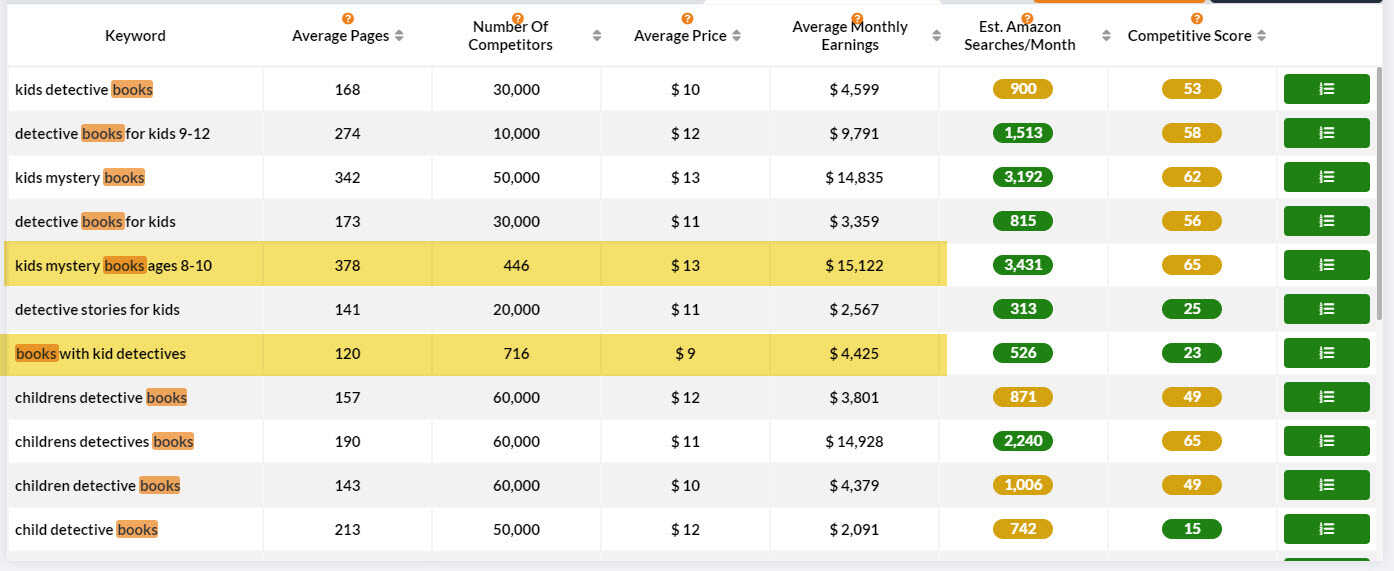
I checked the also-bought sections. In word search books, also-boughts were other random puzzle books from random publishers. In these spy books, also-boughts were volume two, volume three, and companion books from the same publisher. The read-through rate was visible right there in the data.
I looked at the search terms. Parents weren't typing "puzzle book." They were typing "spy activities for kids" or "detective games for 8 year old." Those are specific intents. Specific intent means less price sensitivity. Less comparison shopping. More impulse buying.
I rubbed my eyes. Four in the morning again. But I wasn't frustrated anymore. I was suspicious.
Watching the Numbers Closer
I started looking at how these books were made. Not the content. The format. Traditional KDP publishing tools spit out word searches, crosswords, sudoku grids, and mazes. You can generate ten thousand of those in an afternoon. The software is everywhere. The templates are everywhere. That abundance creates the saturation I kept seeing.
But mystery books need something else. They need a story thread. A code-breaking book needs multiple cipher types. A detective activity book needs clues that build. Spy training books need mission structures. You can't just dump fifty random puzzles into a PDF and call it a day. The format requires more thinking.
I went looking for how publishers built these. Most KDP niche ideas articles never talk about production. They just tell you what to publish. I wanted to see if the barrier was technical or creative.
I found the usual puzzle generators. They all did the same four formats. Word search. Crossword. Sudoku. Maze. None of them touched spy themes. None of them generated code-breaking activities. While researching how publishers create mystery and code-breaking activity books, one of the resources I came across was because it focused on spy and detective-style puzzle publishing rather than traditional puzzle categories. I didn't buy anything. I just noticed it because it was the only thing I found that wasn't another word search tutorial.
That gap stuck with me. The tool gap. Everyone has tools for the crowded niches. Fewer people have tools or templates for the uncrowded ones. That friction keeps the crowd out.
I looked at the interiors of these mystery books using Amazon's look inside feature. The detective books had fingerprint analysis pages. The spy books had disguise design worksheets. The code-breaking books had cipher wheels and blank grids for kids to write their own codes. These weren't complex layouts. But they weren't auto-generated either. Someone had to design each page with intention.
I compared that to a word search book. One hundred grids. A list of words on each page. Generated in bulk. Uploaded in bulk. Competing with ten thousand identical books. The difference in production effort explained the difference in competition.
I found a spy book that had twenty different activity types. Decode the message. Design your badge. Map the escape route. Identify the suspect. Write your own secret letter. Each page connected to a larger story about recovering stolen jewels. That took planning. That took time. Most KDP publishers won't invest that time. They want upload-and-forget.
I found another book that taught kids actual Morse code. Then gave them blank pages to send messages to each other. The reviews said "my kids now write notes in code that I can't read." That's engagement. That's not a commodity. That's a book that becomes part of the family routine.
I got up to stretch. My back cracked. I hadn't moved in four hours.
The Crowd Moves Fast
I kept thinking about why some KDP opportunities die so fast. The answer isn't complicated. Low barrier plus loud advice equals instant crowd. When a YouTuber says "coloring books are back," ten thousand people upload coloring books. When a blogger says "planners are low competition," the planner category floods within a month. The best low competition KDP niches aren't the ones people write articles about. They're the ones people haven't written articles about yet.
Mystery and spy books have a natural defense. They take more work. You need to design a cipher. You need to write a mini story. You need to connect puzzles to a theme. The lazy publisher skips it. The lazy publisher uploads another generic word search book and wonders why it doesn't sell.
I watched the new releases in the detective category for a week. Books appeared. But not fifty a day. Maybe five a week. In coloring books, fifty new books show up before lunch. That difference matters. Amazon's algorithm gives new books a chance when the category doesn't drown them immediately.
I tracked one new spy book. Someone published it on a Tuesday. By Friday it had a sales rank. Not amazing. But visible. A new word search book published the same day was already buried on page eight by Thursday. The category velocity was completely different.
I also noticed the customer base. Parents buying spy books for summer break. Teachers buying detective activities for classroom stations. Grandparents buying code-breaking books for visits. These buyers weren't price shopping. They were browsing. Browsing customers don't compare twenty identical listings. They pick the one that looks like what their kid wants.
I checked the pricing too. The mystery books sold at higher prices. Word search books race to the bottom. Two ninety-nine. One ninety-nine. Sometimes ninety-nine cents. The spy books sat at five ninety-nine or six ninety-nine. Parents paid it without complaint in the reviews. "Worth it because it kept him busy for three days." You don't see that sentence in word search reviews.
I looked at the seasonal patterns. Spy books spiked before summer vacation. Detective books moved in December. Code-breaking books sold steady year-round but jumped before school breaks. That predictability helps if you are planning releases. Traditional puzzle books sell flat. No spikes. No seasonality. Just a slow grind against ten thousand competitors.
I checked the advertising load. In saturated categories, every book has a sponsored product badge. The first page of results is half ads. In these mystery categories, sponsored ads showed up less. That meant publishers weren't bidding each other into bankruptcy. Organic visibility still mattered.
I went to the store for more coffee. Stood in the aisle staring at instant coffee for ten minutes. Couldn't decide between two brands that looked identical. Walked out with nothing. Came home and kept researching.
No Answers Yet
I don't know if mystery activity books will stay overlooked. I don't know if spy publishing will blow up next year. I have no guarantees. I don't even have a book published in these categories yet. I'm just watching.
What I do know is this. The KDP niche ideas that get repeated online are usually dead before the article goes live. The categories that stay hidden stay hidden because they require effort the crowd won't put in. Code-breaking books need ciphers. Detective books need clues that make sense. Spy missions need structure. That work scares people off.
I also know that repeat buyers change the math. A niche where customers buy three books beats a niche where they buy one. Even if the one-time niche has bigger search volume, the repeat niche builds a shelf. Over a year, three books per customer adds up. The lifetime value of a reader in these categories looks completely different from someone buying a single coloring book.
I'm still checking the numbers. Still reading reviews at two in the morning. Still comparing BSR data that probably means nothing. The low competition KDP niches everyone asks about might not exist where the blogs say they exist. Those might exist in the categories where the work is harder and the tools are scarcer.
I looked outside. The sun was coming up. I had been clicking through Amazon for six hours. My neck hurt. My vision was blurry. I closed the laptop and sat in the dark for a minute.
I'll keep watching. Maybe I'll publish something. Maybe I won't. But I'm done scrolling through the same lists everyone else reads. The answers aren't there. They never were.
About the Creator
Brooks Ghost Max
I'm just a running shoe geek with a serious addiction to foam. My current obsession? The Brooks Ghost Max. I spend my days analyzing stack heights and heel drops to help you decide if that $150 price tag is actually worth it.
Enjoyed the story? Support the Creator.
Subscribe for free to receive all their stories in your feed.
Comments
There are no comments for this story
Be the first to respond and start the conversation.