
How to Teach the Alphabet to a 4 Year Old Without Flashcards (What Finally Worked for Us)
Simple everyday activities that helped my 4-year-old recognize letters naturally without turning learning into another chore.

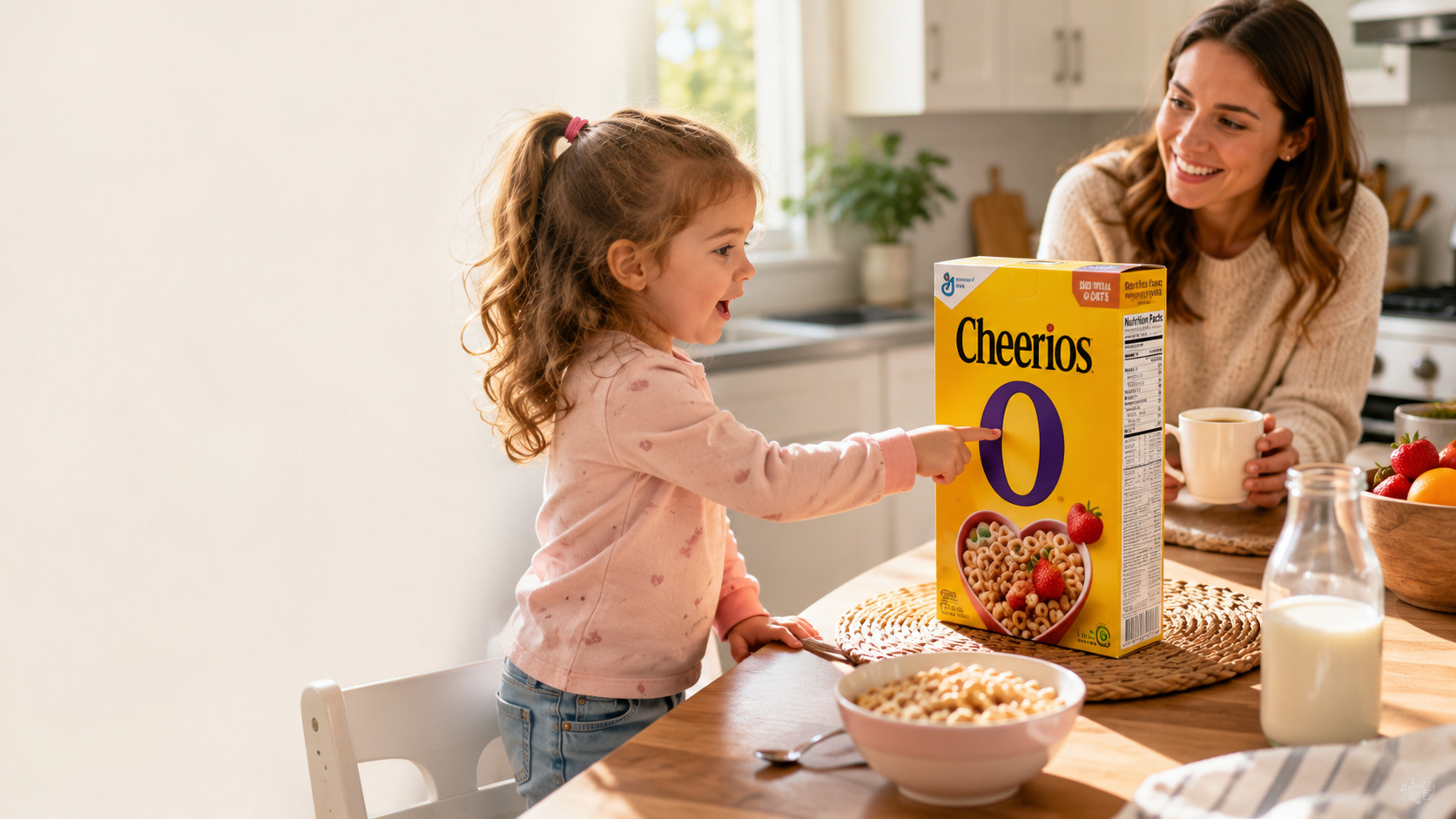
My daughter pointed at the cereal box one morning and said "O." She was four. I didn't teach her that. She just saw it. The big Cheerios logo on the kitchen table. She didn't know what sound O made. She didn't know it was a letter. She just pointed and said the name like she'd seen it somewhere before. That was the first time I realized she was actually paying attention to letters. Not because I sat her down with flashcards. Because the letter was right there on something she cared about.
Before that, I tried the flashcard thing. Bought a pack from the dollar store. ABCs with pictures. Sat on the couch with her after dinner. Held up the cards. She looked at me. Then she looked at the wall. Then she asked if she could go play with her blocks. I tried again the next day. Same result. The third day she took the cards and pretended they were tickets for a train. She was done. I was frustrated. I thought maybe she wasn't ready. Maybe other kids were already reading and mine couldn't sit through five minutes of flashcards.
The thing I didn't get was that flashcards have no context for a four-year-old. They're just shapes on paper. No sound. No movement. No reason to care. A four-year-old doesn't give a damn about memorizing abstract symbols. They want to touch stuff. Move around. Make noise. Flashcards are static. You sit. You stare. You repeat. For a four-year-old, it's basically a timeout with letters on it.
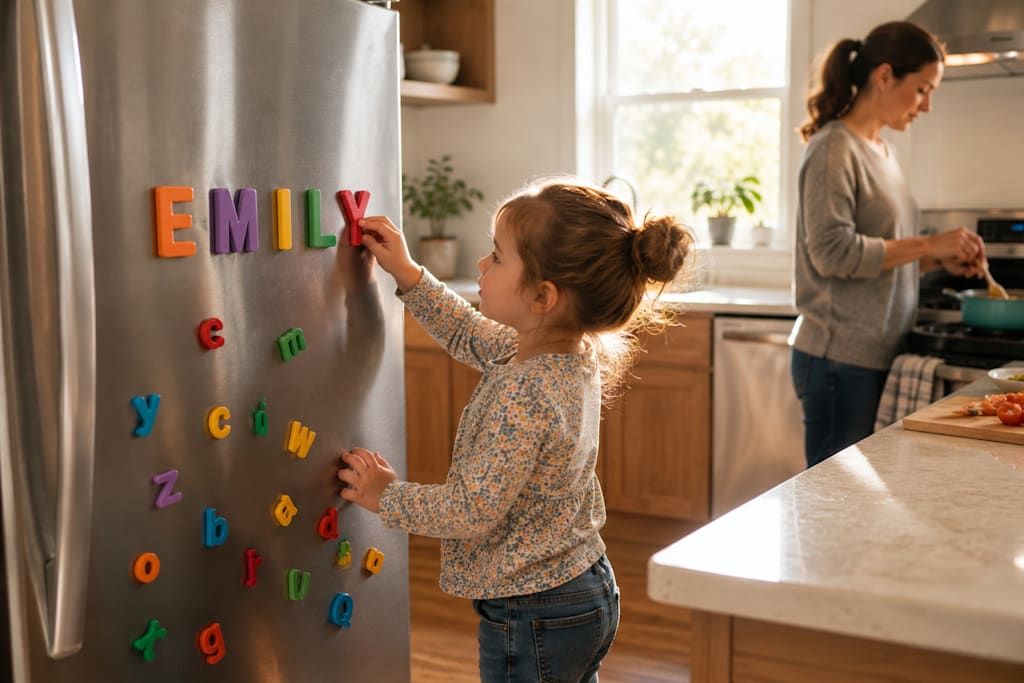
Everything changed when I stopped trying to teach her and just started noticing what she already noticed. The refrigerator magnets she'd been playing with since she was two. She'd stick them on the fridge, take them off, stick them back. Then one day she held up the M and said "Mama." She figured that out herself. The letter M was on the magnet. Mama started with M. She made the connection without me saying a word.
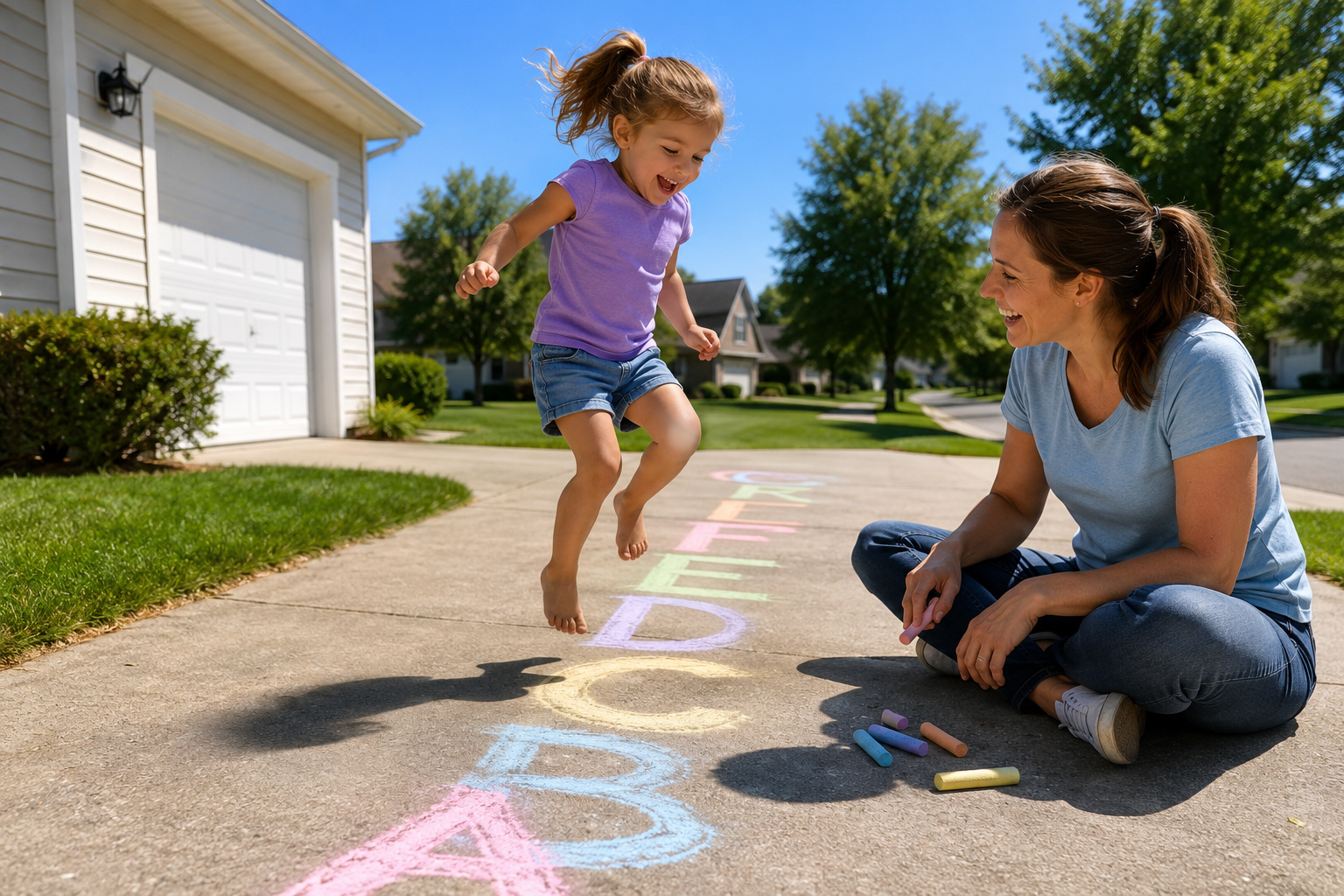
We started writing with chalk on the driveway. Big messy letters. She'd trace them with her fingers. Walk along the lines. Sometimes she'd draw her own versions. They looked like squiggles. I didn't correct her. She was four. The squiggles were her trying to make the shape. That was enough. We'd do it for maybe ten minutes. Then she'd run off to chase the dog. I'd leave the chalk there. Next day she'd come back to it on her own.
Bath letters were another thing. Foam letters that stuck to the tub wall. She'd stick them up. I'd say the name casually. Not a quiz. Just talking. "That's a B." She'd stick it somewhere else. Sometimes she'd repeat it. Sometimes she wouldn't. The water was warm. She was relaxed. There was no pressure. Letters became part of the bath routine, not a lesson.
Grocery shopping became a game without me planning it. She'd point at signs. Stop. Exit. The big letters on the cereal aisle. She'd spot the letter from her name on a product label. I'd say "Yeah, that's an E. Like your name." She'd smile. We kept walking. No worksheets. No planned activity. Just a kid noticing letters in a place she already went to.
I started to understand why this worked. Four-year-olds learn through their bodies. When she traced chalk letters with her finger, she felt the shape. When she moved bath letters around, she handled the form. When she spotted letters on street signs from her car seat, she connected symbols to real things in her world. The learning happened because she was moving, touching, hearing, exploring. Not because she was sitting still repeating after an adult.
Their attention spans are short. Brutally short. A four-year-old can focus on something interesting for maybe five to ten minutes. Then they're done. That's not failure. That's biology. When I tried thirty-minute flashcard sessions, I was fighting her brain. When I let her do five minutes of chalk letters and then run off, I was working with it. She came back because she wanted to. Not because I made her.
The letters she remembered first were the ones that meant something to her. The E in her name. The M for Mama. The first letter of her best friend's name. The B on her favorite truck. She didn't learn letters in alphabetical order. She learned them in order of personal importance. That's normal. That's how memory works at four. Meaningful sticks. Random doesn't.
I didn't separate letter names from letter sounds. She heard me say "that's a B" when she held up the bath letter. She heard me say "buh-buh-ball" when we talked about her toy. Both happened naturally. She started to figure out that letters had names and sounds. Not because I explained it. Because she heard it enough times in real moments.
I made a lot of mistakes before I figured this out. I bought workbooks. She scribbled in them for two minutes and got bored. I tried longer sessions thinking more time meant more learning. It meant more resistance. I quizzed her. "What letter is this?" She'd freeze. Get quiet. I could see the pressure on her face. She was four. She shouldn't have pressure about letters. I compared her to a friend's kid who supposedly knew all the letters at three. That comparison made me push harder. Made her enjoy it less. I corrected her when she called a W an M. She stopped trying for a week.
The biggest mistake was trying to teach the whole alphabet too fast. I had this idea that she needed to know all twenty-six letters before kindergarten. So I rushed. She sensed the rush. She pulled back. When I slowed down and focused on just a few letters at a time, the ones that mattered to her, she actually started retaining them. Quality over quantity. Sounds obvious. Wasn't obvious to me when I was panicking about school readiness.
Short sessions won. Every time. Five minutes of playdough letters while I made dinner. Ten minutes of pointing out letters on a walk to the park. Three minutes of sticking magnets on the fridge while I unloaded groceries. These tiny moments added up. They didn't feel like school. They felt like life. She didn't resist because there was nothing to resist. Just a parent and a kid noticing stuff together.
While trying to understand how structured phonics lessons are usually organized, I spent some time reading through different approaches to early reading curriculum. I wanted to know what came after the playful stage. What did actual lesson sequencing look like? How did phonics progression work when it was more formal? I found a breakdown of how structured phonics builds from letter sounds to blending to early words. It was useful to see the roadmap. Not because I planned to switch to worksheets.
Because I wanted to know what the path looked like if she ever needed more structure. The information helped me relax. I could see that play wasn't delaying her. It was building the foundation that structured teaching would eventually sit on top of. I came across this while looking into how phonics curriculum is typically laid out:
That was the thing I had to learn. Playful learning isn't the warm-up act. It's the main event for a four-year-old. The letters she traced in chalk. The magnets she stuck on the fridge. The signs she pointed out at the grocery store. That was real learning. It looked like play because it was play. But her brain was working. Making connections. Building recognition. Developing the awareness that symbols carry meaning.
Not every child needs the same thing. Some kids might do fine with a more structured program earlier. Some parents might want that. I looked at different perspectives on whether structured early reading programs fit every child. I read some honest evaluations of strengths and limitations. Parents talked about what worked for their kids and what didn't. Some saw great results. Others said their child wasn't ready and the program sat unused.
The reviews helped me see that there's no universal answer. What mattered was knowing my own kid. She learned through movement and play. Pushing structure on her before she was ready would have backfired. For some kids, structure clicks early. For mine, it would have been a fight. I found some of those parent evaluations here:
The confidence piece mattered more than I expected. When she got something right, I kept it light. "Yeah, that's a T." No big celebration. No sticker chart. When she got it wrong, I didn't correct her. I just said the right thing casually. She'd try again later. The goal wasn't perfection. It was keeping her curious. Keeping her willing to try. A four-year-old who feels good about trying will learn more than a four-year-old who memorized letters under pressure and now hates the whole thing.
I quit while she was still having fun. Every time. If we were doing chalk letters and she said she was done, we were done. Even if she'd only done two letters. Even if I wanted to do more. Leaving her wanting more turned out to be the best strategy. She'd come back to it. She always came back. Because it was never a chore. It was just something we did sometimes. Like singing in the car or looking at clouds.
She's five now. She knows her letters. Not because of a program. Not because of flashcards. Because of cereal boxes and bath foam and sidewalk chalk. Because I stopped trying to teach her and started paying attention to what she was already learning. The alphabet didn't come from a lesson. It came from living. From pointing at a stop sign and saying "S. Like your snake toy." From writing her name in the dirt with a stick. From noticing the big red K on the Kellogg's box and saying "that's in my name too."
If you're trying to figure out how to teach the alphabet to a 4 year old, here's what I'd tell you. Your kid is already learning. They just need you to notice. Put the flashcards away. Get some magnets. Some chalk. Some bath letters. Point out signs. Say the names when it comes up naturally. Let them move. Let them quit while they're still having fun. Don't worry about the whole alphabet. Worry about the letters that matter to them. Their name. Their favorite things. The rest comes. It really does. You don't need to be a teacher. You just need to be there, paying attention, while they figure it out in their own time.
About the Creator
Understandshe
I write about healing, self-growth, and the messy but beautiful journey of becoming. Honest lessons, real stories, and gentle insights you’ll also find on UnderstandShe.
Enjoyed the story? Support the Creator.
Subscribe for free to receive all their stories in your feed.
Comments
There are no comments for this story
Be the first to respond and start the conversation.