
How to Teach Letter Sounds at Home for Kids: What Finally Worked After I Stopped Teaching the Alphabet Wrong
I Thought Singing the ABC Song Meant My Child Was Ready to Read

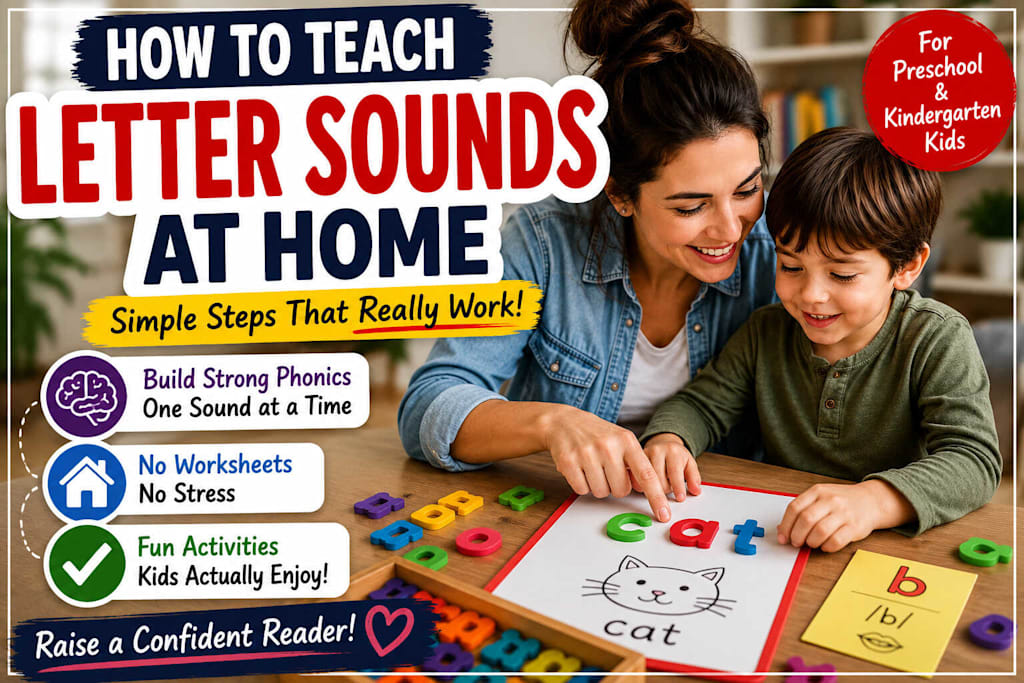
My kid knew the alphabet song by heart. Sang it in the car. Sang it in the bath. Thought we were golden. Then I pointed at a letter in a book and asked what sound it made. Blank stare. Nothing. That was the first time I realized knowing the song and knowing the sounds are two completely different animals. I felt stupid for not seeing it sooner. Every parent thinks their kid is ahead until something small smacks them in the face.
Why Letter Names Don't Teach Kids to Read
This took me forever to figure out. My daughter would see the letter B and say "bee." Great. But when she tried to read the word "bat," she said "bee-at." Makes sense if you think about it. We spent months teaching her the names. The sounds got zero attention. Most kids learn the names first because that's what we default to. We say "that's the letter A" not "that's the sound aaaa."
Teachers have been saying this for years but it doesn't click until you watch your own kid struggle to sound out a three-letter word using letter names. The name doesn't help them blend. The sound does. Pure sounds. Not "buh" with an extra uh on the end. Just the clean sound. B. T. M. Sounds weird at first. Feels incomplete. But that's the whole point.
The Biggest Mistakes I Made Teaching Letter Sounds at Home
I tried to teach five sounds in one sitting. Thought more is better. She remembered none of them the next day. I also turned every moment into a test. Pointed at a magnet on the fridge and waited like a game show host. She got it wrong. I corrected her immediately. Her face dropped. I kept doing this for a week before I noticed she stopped looking at the letters altogether. She was avoiding me.
Another mistake: I compared her to the neighbor's kid who supposedly knew all his sounds at three. Made me push harder. Made her shut down faster. Long lessons were another disaster. Twenty minutes felt like torture for both of us. By minute eight she was picking her nose and staring at the ceiling. I was getting mad at a four-year-old for being a four-year-old. Worksheets made her cry. I thought sitting still meant she was learning. She was just enduring.
Why Short Daily Practice Works Better Than Long Lessons
I switched to five minutes. Sometimes three. Sounds ridiculous. But her brain actually held onto stuff when I stopped drowning it. Kids that age don't have the wiring for long focus sessions. They learn in bursts. A letter sound during breakfast. Another one in the car. One at bedtime. Three minutes here. Two minutes there. The total daily time added up to maybe ten or fifteen minutes, scattered across the day. She started remembering. Not because she's a genius. Because I stopped overwhelming her. Consistency beat intensity every single time. Five minutes every day crushed my old routine of thirty minutes once a week.
Should You Teach Lowercase Letters Before Uppercase?
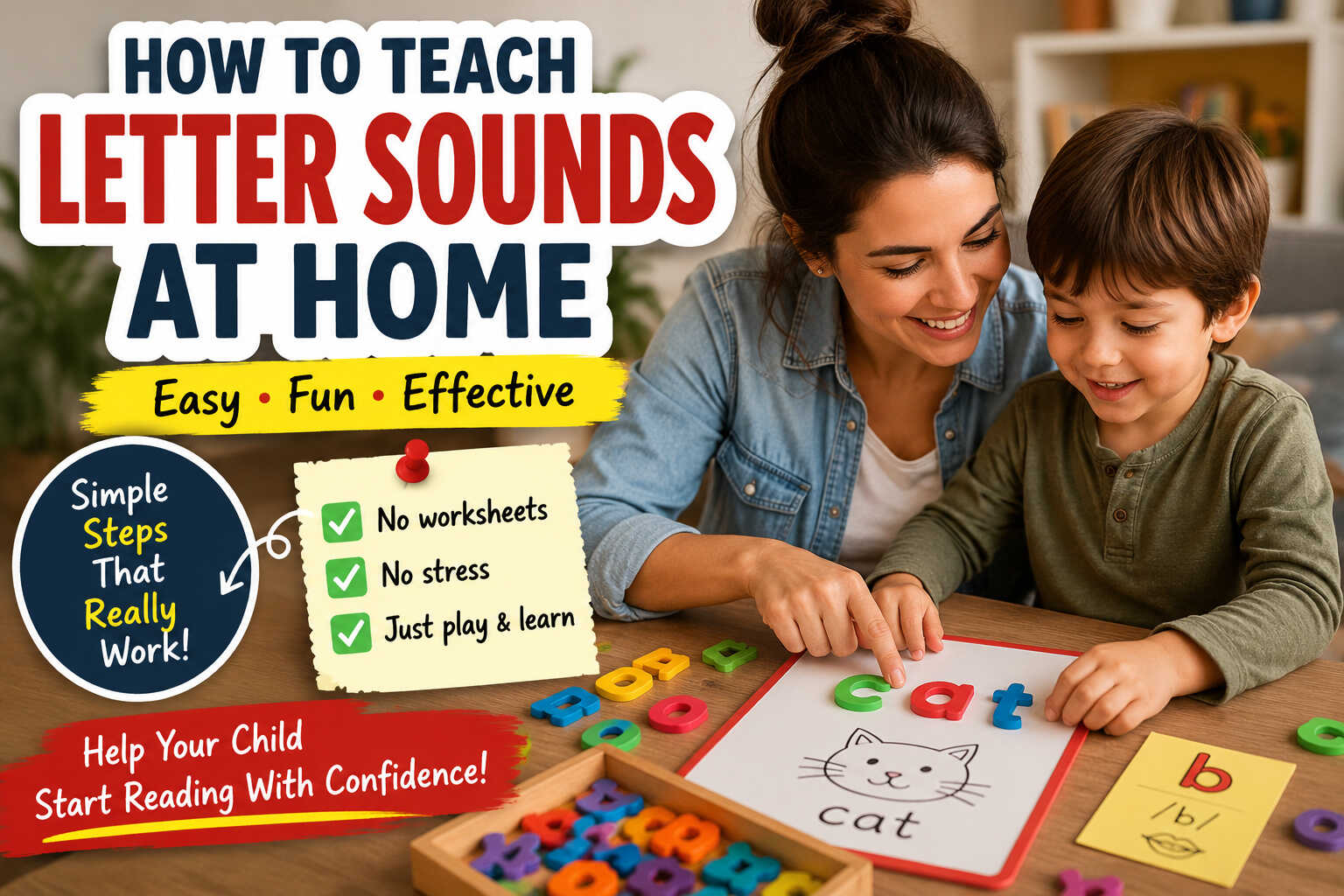
This one felt backwards to me. We grew up with capital letters everywhere. Books start sentences with capitals. Names use capitals. But most of what kids actually read is lowercase. The word "the" appears a thousand times before they ever need to read "The" at the start of a sentence. I started with lowercase magnetic letters on the fridge. She saw them more often. They looked like what she would actually encounter in beginner books. Uppercase can wait. It really can. They pick it up later almost by accident once the lowercase sounds stick.
The Best Order to Teach Letter Sounds for Early Reading
I didn't go A to Z. That order is for the song, not for learning. I started with sounds she could already make with her mouth. S. M. T. A. P. These show up constantly in simple words. Sat. Mat. Pat. Tap. Map. She could blend those almost immediately because the sounds were familiar and the words were real. I saved the tricky ones for later. Q. X. The vowels that change sounds depending on the word. Those come after the kid has some confidence built up. Nobody told me this. I figured it out after watching her brain shut down on letter F but light up on letter S.
Why Movement Helps Children Remember Letter Sounds
I thought the dancing and jumping stuff was preschool fluff. Then I tried it. We said the sound for J while jumping. Said the sound for S while slithering on the floor like a snake. She remembered those sounds days later. Something about getting the whole body involved locks it in differently. I read later that it has to do with multiple parts of the brain firing at once. Don't care about the science. I
just know my kid remembered the sound for M after we marched around the kitchen saying "mmmm" while eating muffins. The bath letters helped too. Foam letters in the tub. She grabbed the B and made the sound without me asking. No pressure. Just play.
Easy Ways to Practice Letter Sounds During Everyday Activities
I stopped making it a thing. Letters were everywhere anyway. The cereal box at breakfast. The stop sign on the walk. Price tags at the store. I pointed at the S on the Skippy jar while making sandwiches. She said the sound. I didn't make a big deal out of it. Just kept going. Story time became sound time without her knowing.
I'd point at a word and say "what's the first sound you hear?" She'd listen. Sometimes get it. Sometimes not. No test. Just conversation. Car rides were gold. Bored in the back seat, she'd stare at billboards and store signs. I'd ask what sound she saw. She started spotting letters before I did.
What Real Progress With Letter Sounds Actually Looks Like
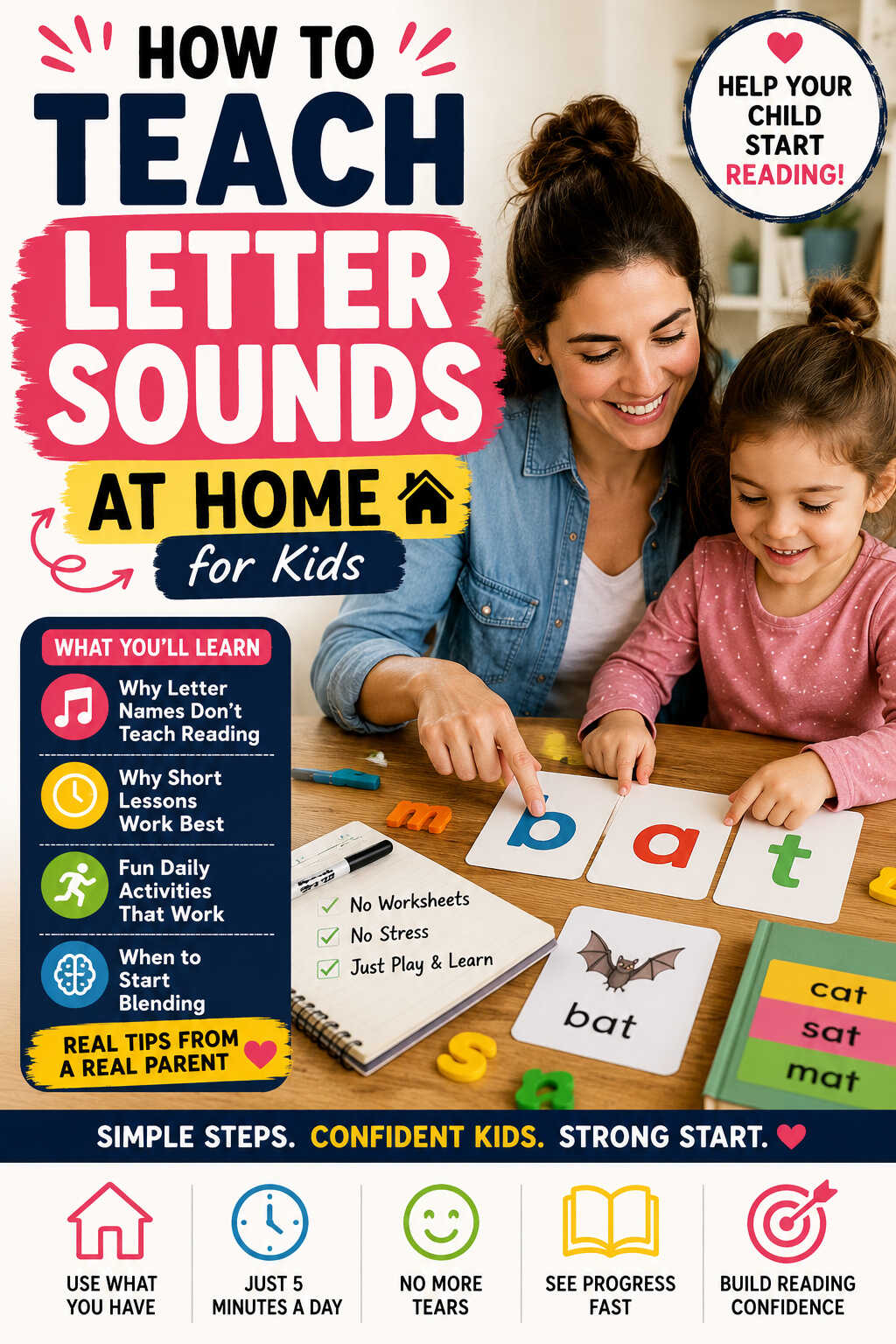
Some days she knew every sound I threw at her. Next day she forgot half of them. I thought I was failing. Thought she had some memory problem. Turns out that's completely normal. Kids learn in layers. They know something. Then they don't. Then they know it again but stronger. I stopped tracking day by day and started tracking month by month. After six weeks of nothing feeling like it stuck, she suddenly read her first word. Sat. Out of nowhere. In the car. Pointed at a sign and said it. I almost drove into a curb. That jump happens. It really does. You just have to outlast the flat weeks.
When Should Kids Start Blending Letter Sounds Into Words?
I tried blending too early. She knew a few sounds and I shoved them together expecting a word. She looked at me like I was speaking another language. Blending needs more than just knowing sounds. The kid needs to hear the sounds in their head and push them together without stopping. That's a separate skill.
I waited until she knew about eight sounds cold. Could say them without thinking. Then I started with simple three-letter words using only those sounds. Sat. Mat. Tap. She heard herself do it. The first time she blended a word out loud her eyes got huge. Like she hacked the system. Because in a way she did.
What Comes After Learning Letter Sounds?
Once she had most of the single sounds down, I hit a wall. I didn't know what came next. I knew blending was part of it, but I didn't understand the full path. How do you go from knowing sounds to actually reading books? What's the sequence? I started looking into how complete reading lessons are structured because I was tired of guessing. I wanted to see how phonics lesson organization actually works when you're teaching a kid to read from the ground up. I came across a breakdown of structured literacy progression at that helped me see the whole map instead of just the corner I was standing in. You can teach sounds forever, but without knowing what comes next, you stall out.
Comparing Different Reading Approaches Helped Me Teach Better
After seeing how one system organized its lessons, I got curious about what else was out there. Some programs drill sounds hard and fast. Others weave them into stories. Some use pictures with every letter. Others avoid pictures so the kid focuses only on the sound. I didn't agree with everything I read. Some of it felt too rigid. Some felt too loose. But comparing different teaching philosophies helped me figure out what I actually believed.
I wasn't looking for a product. I was looking for perspective. I spent some time researching how different structured approaches compare with one another and found a review of various teaching methods at that clarified what I wanted my own teaching to look like. Not a copy of someone else's method. Just a better understanding of the landscape so I could make my own calls.
You're Not Behind, And Neither Is Your Child
Your kid isn't broken. You're not failing. Progress isn't a straight line. It never is. Some kids pick up sounds in weeks. Others need months. Both are normal. The neighbor's kid who supposedly knew everything at three might have been drilled into submission. Might be miserable. You don't know. What you do know is your own kid and your own kitchen table. Five minutes a day matters more than you think. Learning through play counts. Learning in the car counts. Learning during breakfast counts. It all adds up. You don't need expensive materials. You need patience you didn't know you had.
Keep Going Because Small Steps Turn Into Reading
The first time your kid blends a word on their own, you'll understand why all of this mattered. Until then, it feels like shouting into a void. It isn't. The sounds are stacking up in their brain even when you can't see it. Trust the short lessons. Trust the play. Trust the mess. Trust the days where nothing seems to stick. They will stick. Eventually. And when they do, you'll realize you didn't just teach your kid to read. You taught yourself how to teach.
About the Creator
Understandshe
I write about healing, self-growth, and the messy but beautiful journey of becoming. Honest lessons, real stories, and gentle insights you’ll also find on UnderstandShe.
Enjoyed the story? Support the Creator.
Subscribe for free to receive all their stories in your feed.
Comments
There are no comments for this story
Be the first to respond and start the conversation.