
How to Start an Abacus?
an ancient calculating tool
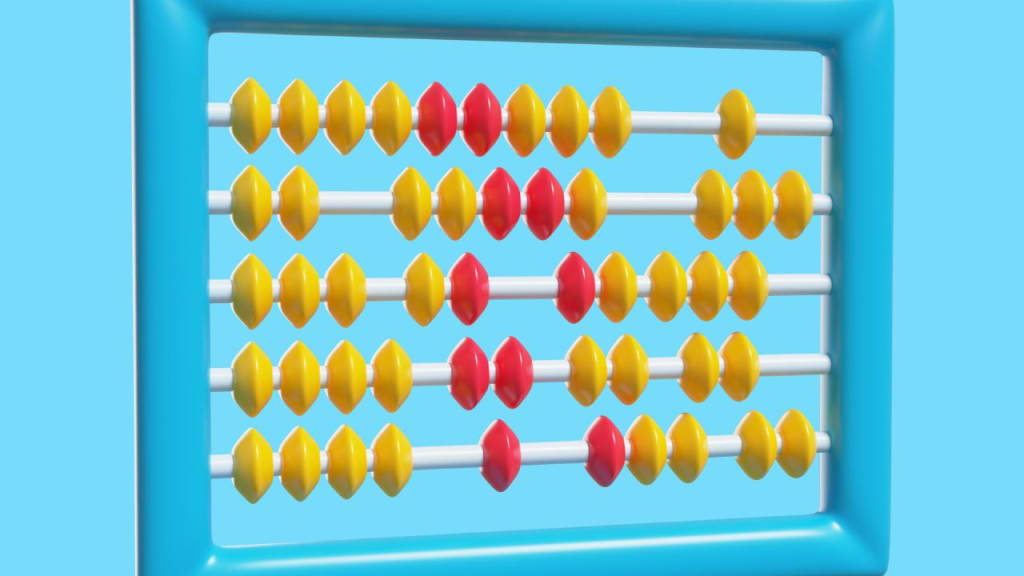
Learning the abacus, an ancient calculating tool, enhances mental math skills, focus, and cognitive agility.
Learning the abacus, an ancient calculating tool with roots tracing back over 2,000 years to Mesopotamian and Chinese civilizations, offers far more than historical curiosity—it serves as a dynamic catalyst for modern cognitive development. By engaging with the tactile, bead-based system, learners cultivate mental math skills through visualization and pattern recognition. As users manipulate beads physically or mentally, they internalize arithmetic operations, enabling them to perform complex calculations without relying on digital tools. This process strengthens the brain’s ability to process numbers spatially, transforming abstract equations into vivid mental imagery. Over time, practitioners develop “anarithmetic intuition,” allowing them to solve problems with remarkable speed and accuracy, even for large numbers or multi-step operations.
Equally significant is the abacus’s role in sharpening focus and discipline. The tool demands meticulous attention to detail, as each bead’s position corresponds to specific numerical values. Mastering it requires sustained concentration, training the mind to filter distractions and follow sequential processes methodically. This heightened focus often translates to improved academic performance, particularly in STEM fields, where structured problem-solving is essential. Studies suggest that abacus learners exhibit enhanced working memory and faster information-processing speeds, as the brain adapts to juggle multiple numerical inputs simultaneously.
Moreover, the abacus fosters cognitive agility by engaging both hemispheres of the brain. The left hemisphere handles logical processing, while the right hemisphere manages spatial and creative thinking, creating a synergistic mental workout. This bilateral stimulation enhances neuroplasticity, improving skills like critical thinking, creativity, and adaptability. For children, early exposure to the abacus can accelerate developmental milestones, including fine motor skills and hand-eye coordination. Adults, meanwhile, may experience delayed cognitive decline, as the mental rigor of abacus practice keeps neural pathways active.
Beyond math, the abacus cultivates transferable skills. Its rhythmic, repetitive motions promote mindfulness, reducing stress and boosting patience. Learners often report improved confidence in tackling challenges, whether academic, professional, or personal. In a tech-dominated era, the abacus stands as a timeless bridge between tradition and innovation, proving that ancient tools can still unlock modern cognitive potential. By merging cultural heritage with brain-training science, it equips individuals of all ages to navigate an increasingly complex world with clarity and resilience.
Start abacus online, here’s a structured approach to master the basics effectively:
1. Understand the Abacus Structure
Parts: A standard abacus (e.g., Japanese soroban) has a frame with vertical rods. Each rod has an upper bead (value = 5) and four lower beads (each = 1). A horizontal beam separates these sections.
Bead Values: Lower beads represent units (1–4), while the upper bead equals 5. For example, “7” is shown by moving the upper bead down and two lower beads up.
2. Learn Basic Techniques
Holding the Abacus: Use your non-dominant hand to stabilize the frame. Use your dominant hand’s thumb (lower beads) and index finger (upper beads) to move beads.
Number Representation: Practice setting numbers 1–9. Start with single digits (e.g., 3 = three lower beads) before progressing to multi-digit numbers (e.g., 25 = two rods with 2 and 5).
3. Use Online Resources
Free Tutorials:
YouTube: Channels like Learn Abacus At Home or Soroban Exam offer step-by-step lessons.
Websites: Try AbacusMaster for free guides or The Abacus Classroom for interactive tools.
Structured Courses: Platforms like Udemy or Coursera have beginner courses (e.g., “Abacus Basics in 60 Minutes”).
Apps: Download apps like Soroban Training (Android/iOS) for virtual practice.
4. Practice Daily
Start Simple: Begin with addition and subtraction. For example, 3 + 5 = 8 (upper bead + three lower beads).
Progress Gradually: Move to two-digit numbers (e.g., 12 + 34) and simple multiplication once comfortable.
Mental Visualization: After mastering bead movements, practice “imagining” the abacus to solve problems mentally.
5. Avoid Common Mistakes
Rushing: Focus on accuracy before speed.
Incorrect Bead Values: Double-check bead positions to avoid miscalculations.
Skipping Basics: Master number formation before advancing to complex operations.
6. Track Progress
Practice Journals: Log daily exercises and note areas for improvement.
Online Quizzes: Use websites like Abacus Quiz to test skills.
7. Join Online Communities
Forums: Engage with groups on Reddit (r/abacus) or Facebook for tips and support.
Workshops: Attend live webinars via platforms like Zoom for real-time feedback.
8. Stay Motivated
Set small goals (e.g., “Learn numbers 1–20 this week”).
Celebrate milestones to maintain enthusiasm.
Conclusion
Starting the abacus online is accessible with the right resources and consistency. By mastering its structure, practicing daily, and leveraging digital tools, beginners can build a strong foundation for mental math. Embrace the journey, and watch your skills grow!
About the Creator
Pallavi Thakur
An SEO Executive plays a critical role in enhancing a website's visibility, traffic, and performance on search engines like Google. Here's a structured breakdown of their key responsibilities and strategies for website improvement
Enjoyed the story? Support the Creator.
Subscribe for free to receive all their stories in your feed.
Comments
There are no comments for this story
Be the first to respond and start the conversation.