

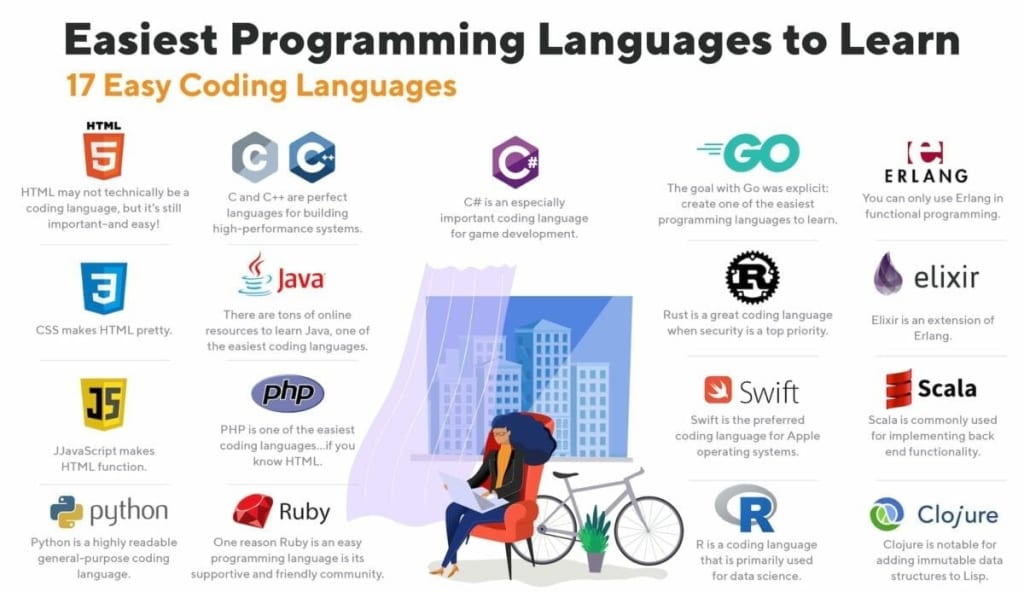
Choose a programming language: Decide which programming language you want to learn. There are many options available, such as Python, Java, JavaScript, and more. Research which language is best for your goals and interests.
Find resources: There are many online resources available to learn how to code, such as online courses, tutorials, and forums. You can also find books and video tutorials on the language you want to learn.
Practice: The key to learning to code is practice. Start with simple exercises and work your way up to more complex tasks. Practice writing code every day, even if it's just a few lines.
Join a community: Join a coding community or forum where you can ask questions, share your work, and get feedback from other coders. This can help you learn faster and stay motivated.
Build projects: Build your own projects to apply what you've learned. Start with small projects and work your way up to larger ones. This will help you develop your skills and show off your work to potential employers.
Remember, learning to code takes time and effort, but with persistence, you can become proficient in any programming language you choosen
Easy ways to learn coding
The ease of learning to code depends on the individual and the programming language they are trying to learn. Some programming languages, such as Python and JavaScript, are generally considered easier to learn than others, such as C++ or Assembly. However, even the "easier" languages can present challenges to beginners.
With that said, anyone can learn to code with enough time and effort, regardless of their background or experience. It's important to start with the basics and build a strong foundation of programming concepts and syntax. From there, it's a matter of practice and building up your skills over time.
One helpful tip for beginners is to focus on projects that interest them. If you're interested in building websites, start with HTML and CSS. If you're interested in data analysis, start with Python. This can help keep you motivated and engaged as you learn to code.
Types of coding
There are many different coding languages available for various purposes, and new ones are being developed all the time. Here are some of the most popular programming languages in use today:
JavaScript
Python
Java
C++
C#
PHP
Ruby
Swift
SQL
Go
The benifits for improving coding
Improved problem-solving skills: Coding involves breaking down complex problems into smaller, more manageable tasks. This can help improve your problem-solving skills and teach you how to approach problems in a structured, logical way.
Increased creativity: Coding allows you to create your own projects and bring your ideas to life. This can boost your creativity and give you a sense of accomplishment.
Career opportunities: Coding is a highly sought-after skill in many industries, such as software development, web development, data analysis, and more. Learning to code can open up many career opportunities and potentially lead to higher salaries.
Flexibility: Coding can be done from anywhere with an internet connection, making it a flexible career option. You can also work on your own projects or freelance on the side.
Improved analytical skills: Coding involves analyzing data and making decisions based on that data. This can help improve your analytical skills and teach you how to make data-driven decisions.
Continuous learning: Technology is constantly evolving, which means there's always something new to learn in the world of coding. This can keep you intellectually stimulated and up-to-date on the latest trends and technologies.
Overall, learning to code can bring many personal and professional benefits, and is a valuable skill to have in today's digital age.
Using coding, you can develop games in a variety of ways. Here are some general steps you can follow to develop a game using coding:
Choose a game engine: A game engine is a software framework that simplifies the game development process by providing pre-built libraries and tools for game developers. Some popular game engines include Unity, Unreal Engine, Godot, and more. Research which engine is best for the type of game you want to create.
Learn the programming language: Each game engine uses a specific programming language or languages, so it's important to learn the necessary languages. For example, Unity uses C#, while Unreal Engine uses C++. Learning the programming language will allow you to create gameplay mechanics, user interfaces, and more.
Plan your game: Before you start coding, plan out your game by creating a game design document. This will help you organize your ideas and create a roadmap for your game's development.
Build your game: Using the game engine and programming language, start building your game. This can involve creating game assets, programming gameplay mechanics, designing levels, and more.
Test and iterate: As you build your game, regularly test it to identify bugs and areas for improvement. Iteratively improve your game until it meets your desired level of quality.
Developing a game using coding can be a complex process, but with dedication and effort, anyone can learn to create games. Remember to start small and build up your skills over time.
About the Creator
K. Harish
iam a 3d artist
Enjoyed the story? Support the Creator.
Subscribe for free to receive all their stories in your feed.
Comments
There are no comments for this story
Be the first to respond and start the conversation.