
How to Choose the Right Micropipettes for Your Research Lab?
Which Micropipettes Are Best for Your Research Lab?
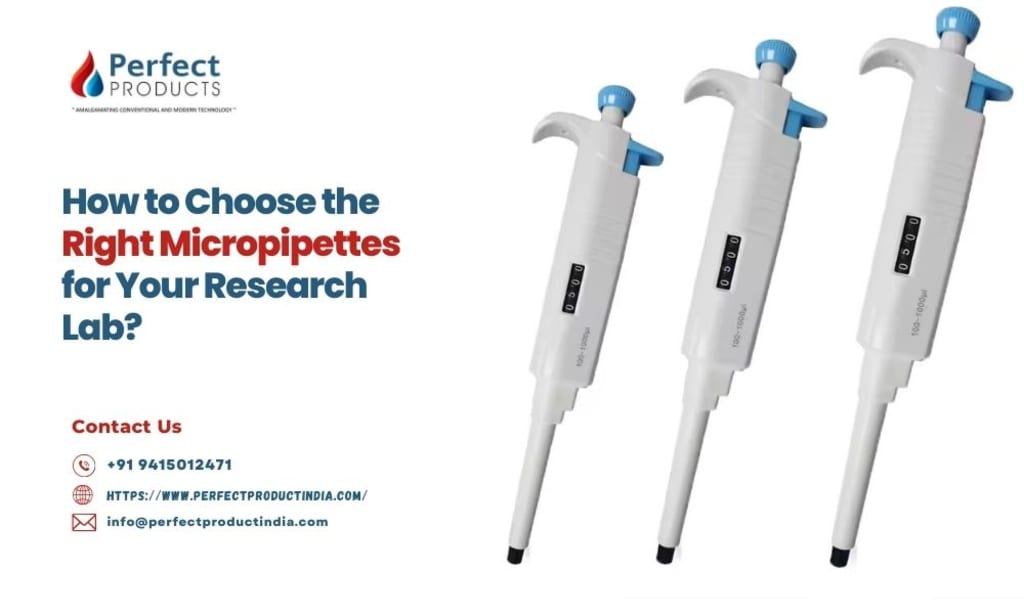
Which Micropipettes Are Best for Your Research Lab?
In any research lab, precision and accuracy are crucial, especially when working with small liquid volumes. A micropipette is an essential tool that allows researchers to measure and transfer liquids with high accuracy. Selecting the right micropipette for your lab can significantly impact the quality of your experiments and overall efficiency. With different types, volumes, and features available, making the right choice requires careful consideration.
Understanding Micropipettes and Their Importance
A micropipette is a laboratory instrument used to transfer minute amounts of liquid, typically in the range of microliters (µL). They are widely used in biological, chemical, and pharmaceutical research. The accuracy of a micropipette ensures that experiments are reproducible and reliable. Choosing the right micropipette depends on several factors, including volume range, precision requirements, and ergonomic design.
Types of Micropipettes
There are different types of micropipettes designed to suit various research needs. The two most common types are fixed-volume micropipettes and variable-volume micropipettes.
Fixed Volume Micropipettes: These micropipettes dispense a single, predetermined volume. They are ideal for repetitive tasks where the same volume is needed each time. Since they have fewer adjustable components, they tend to be more precise and durable.
Variable Volume Micropipettes: These allow users to adjust the volume within a specific range. They offer flexibility for labs that require different volumes for different experiments. Researchers can set the desired volume using a dial, making them convenient for a wide range of applications.
Another category includes single-channel micropipettes and multi-channel micropipettes.
Single-Channel Micropipettes: These are commonly used for general lab applications where only one sample needs to be pipetted at a time.
Multi-Channel Micropipettes: These are used in applications that require handling multiple samples simultaneously, such as in ELISA or PCR plate loading. They are efficient for high-throughput tasks, reducing both time and effort.
Factors to Consider When Choosing a Micropipette
Volume Range and Precision
The first factor to consider is the volume range required for your experiments. Micropipettes come in various volume capacities, such as 0.1–2 µL, 2–20 µL, 20–200 µL, and 100–1000 µL. Choosing a micropipette that matches your experimental needs ensures accuracy. Using a micropipette near its maximum or minimum capacity can affect precision, so selecting the right range is important.
Accuracy and Calibration
A high-quality micropipette should offer reliable accuracy. Manufacturers typically provide accuracy and precision specifications, and it is essential to check these values before purchasing. Regular calibration is necessary to maintain performance. Some models come with calibration adjustment options, allowing researchers to fine-tune the device as needed.
Ergonomic Design and Comfort
Since micropipettes are used frequently in research labs, comfort is a significant factor. An ergonomically designed micropipette reduces strain on the hands and wrists, preventing repetitive strain injuries (RSIs). Lightweight micropipettes with soft plunger action and comfortable grips improve user experience, especially during long experiments.
Tip Compatibility
Micropipettes require disposable tips, and choosing a micropipette compatible with standard or universal tips ensures convenience. Some manufacturers produce proprietary tips, which may limit choices and increase costs. It is advisable to check tip compatibility before purchasing a micropipette.
Durability and Build Quality
A good micropipette should be durable and resistant to chemical exposure. High-quality materials such as reinforced plastics and corrosion-resistant metals ensure longevity. Some micropipettes also feature autoclavable components, allowing for easy sterilization and preventing contamination.
Special Features
Modern micropipettes come with additional features that improve functionality and ease of use. Some advanced models have digital displays for volume setting, while others offer electronic pipetting to reduce manual effort. These features can enhance precision and efficiency, making them valuable for high-accuracy applications.
Maintaining Your Micropipette for Long-Term Use
After selecting the right micropipette, proper maintenance is essential to ensure its longevity and performance. Regular cleaning, proper storage, and periodic calibration help maintain accuracy. It is also important to use high-quality pipette tips and avoid excessive force when pipetting.
Autoclaving or using UV sterilization can help prevent contamination, especially in biological research. Storing micropipettes in a vertical stand prevents damage and keeps them clean when not in use.
Conclusion
Choosing the right micropipette for your research lab is crucial for obtaining precise and reproducible results. Factors such as volume range, accuracy, ergonomic design, and tip compatibility should be carefully considered. Whether you need a fixed or variable volume micropipette, selecting a high-quality instrument ensures efficiency and comfort in daily lab work.
At Perfect Product India, we provide a range of high-quality micropipettes designed to meet the needs of research professionals. Investing in the right micropipette improves accuracy and enhances laboratory performance, making it an essential tool for scientific success.
About the Creator
Enjoyed the story? Support the Creator.
Subscribe for free to receive all their stories in your feed.
Comments
There are no comments for this story
Be the first to respond and start the conversation.