
How to become Clever
How a Curious Teen Discovered That Cleverness Isn’t a Gift—It’s a Habit Anyone Can Build.
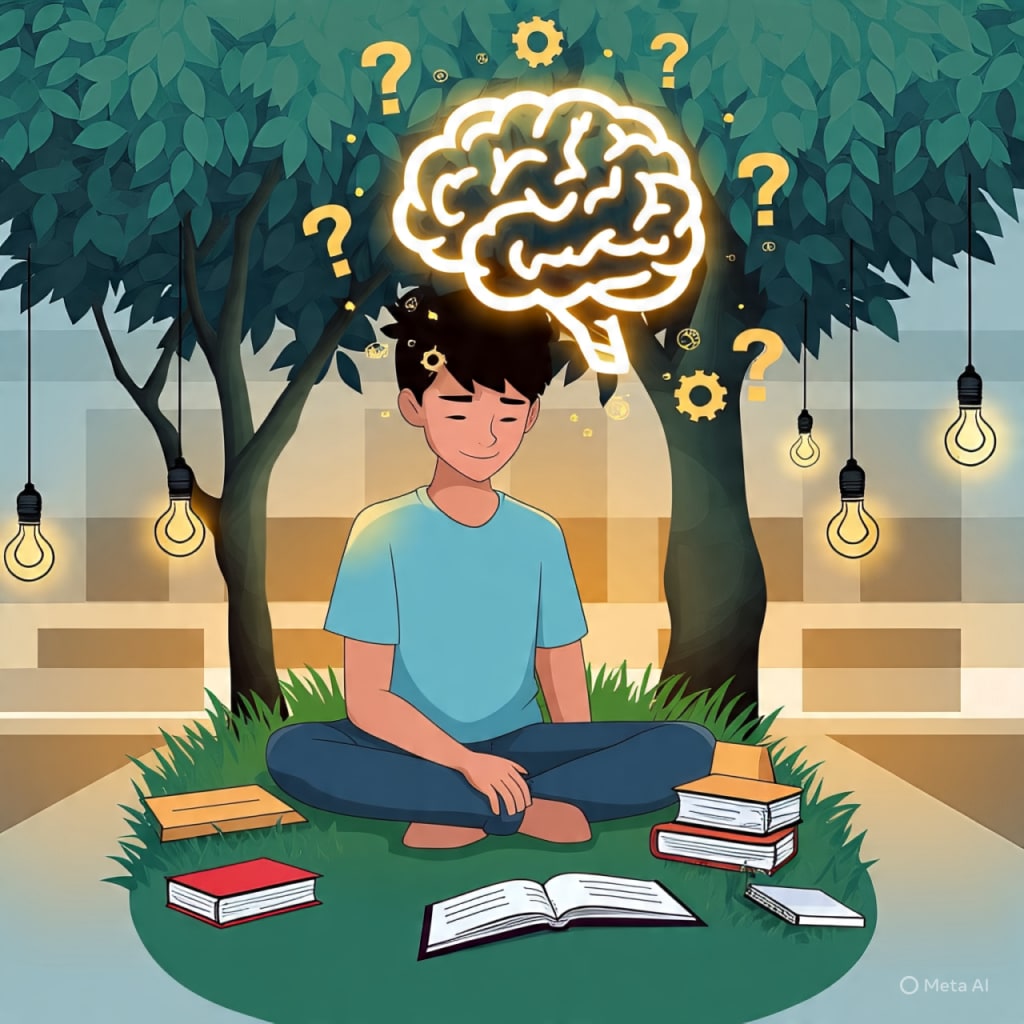
Rayan was a quiet sixteen-year-old living in a small town surrounded by mountains. He wasn’t the class topper, nor was he failing—just the kind of student who rarely drew attention. Most teachers barely remembered his name. But Rayan had a secret desire that lived deep inside him.
He didn’t want to be famous. He didn’t dream of being rich. He only wanted one thing: to become clever.
He admired clever people—the way they noticed things others didn’t, how they solved problems with ease, and how they always seemed one step ahead. To him, cleverness wasn’t about grades or popularityt was about the way a person thought.
A Rainy Day and a Dusty Book
It all began on a rainy afternoon. Rayan stayed late at school, waiting for the storm to pass. With nothing else to do, he wandered into the school library—a quiet place he had never paid much attention to.
There, on the last shelf, sat an old book titled “The Clever Mind.” The cover was worn, the pages yellowing. Something about it caught his eye.Curious, he opened it.
The book wasn’t about magic tricks or intelligence tests. Instead, it told stories of clever people—how they asked questions, observed the world, and turned failure into fuel. One quote stayed with him:
“Cleverness is not a gift. It is a skill developed through curiosity, patience, and reflection.”
That night, Rayan made a promise to himself. He was going to become clever—not to impress anyone, but to better understand the world and himself.
Asking the Right Questions
The first thing Rayan did was simple: he started asking questions. Not just in school, but everywhere. Why do birds fly in a V-formation? How does his phone really work? Why do people behave the way they do?
At first, his classmates rolled their eyes. “Why are you asking so many questions?” they teased.
But something shifted.
During science class, the teacher asked, “Why do we need sleep?” Most students sat quietly. Rayan raised his hand.
“Is it just to rest our body,” he asked, “or does the brain do something important while we’re asleep?”
The teacher smiled. “That’s a scientist’s question.”
That small moment mattered more to Rayan than any test score. Cleverness, he realized, started with curiosity.
Learning from Unexpected Teachers
Rayan began to see everyone around him as a teacher. He asked the janitor, Mr. Aslam, how he repaired old machines. He listened to his grandmother share how she raised ten children on a limited budget. He watched how his mother remembered long shopping lists using simple categories.
He started keeping a notebook—nothing fancy, just a place to collect clever things people did. From shortcuts in math to fixing a fan with an old charger wire, he started seeing cleverness not in books alone, but in everyday moments.
When Failure Becomes a Lesson
Inspired, Rayan started a small book club. He imagined rich discussions, creative ideas, and shared learning. But the first week, only two friends came. The second week—none.
He felt embarrassed. But he didn’t give up.
Instead of quitting, he asked, “Why didn’t it work?” That’s when he realized: he never asked people what kind of books they liked, or what time suited them.
So he adjusted. He made a poll, listened to his classmates, and changed the format. Slowly, his book club grew. Within a few months, it became one of the most active groups at school.
Failure, he learned, wasn’t a wall—it was a mirror. And cleverness grew when you looked honestly into it.
A New Habit: Read, Reflect, Repeat
Rayan returned to the library often. He set a new rule for himself: read 10 pages a day—no excuses. Whether it was history, psychology, or science fiction, he read to learn, not to memorize.
Each night, he wrote a short paragraph in his notebook about what he learned. And soon, he found something interesting: when he taught others what he learned, he remembered it better.
He began helping classmates who struggled. Not only did it help them elped him think in deeper, smarter ways.
l
The Clever Change
Months passed. Rayan still wasn’t top of the class in grades. But his teachers started asking him to help explain topics. His classmates began coming to him with their problems—not just academic ones, but real-life ones too.
The boy who was once ignored had now become a quiet leader—not because he shouted, but because he thought deeply.
One day, the same teacher who used to overlook him asked, “Rayan, what changed? You’ve become quite the thinker.”
Rayan smiled. “Nothing big. I just started asking ‘why’ a lot more—and I never stopped looking for answers.”
Final Thoughts: Cleverness is Built, Not Born
Rayan’s story isn’t filled with miracles. It’s filled with moments—small, consistent actions that added up. And that’s what cleverness is.
It’s not about showing off, memorizing facts, or being the loudest in the room. It’s about seeing, asking, failing, and growing.
So if you’ve ever wished you were clever, here’s the truth: You can be. Cleverness isn’t a talent—it’s a journey. One that begins when you choose curiosity over comfort.
And like Rayan, you can begin that journey today.
About the Creator
Enjoyed the story? Support the Creator.
Subscribe for free to receive all their stories in your feed.
Comments
There are no comments for this story
Be the first to respond and start the conversation.