
How Technology Is Revolutionizing Classroom Learning in 2025
Exploring the Innovative Tools and Trends Transforming Education for the Next Generation

A New Era of Education
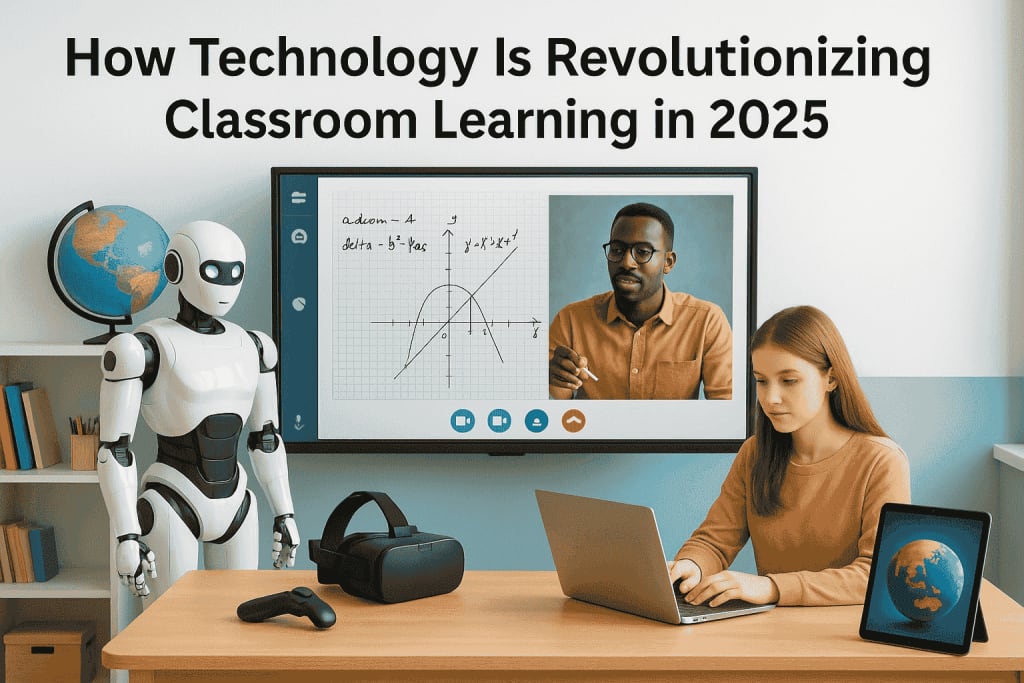
In 2025, the landscape of education has undergone a dramatic transformation. The integration of technology in classroom learning is no longer a luxury or a futuristic dream—it’s the norm. From artificial intelligence (AI) and virtual reality (VR) to cloud-based platforms and real-time data analytics, classrooms around the world are evolving into hubs of interactive, personalized, and immersive education. We now see schools embracing digital tools not only to enhance academic performance but also to foster critical thinking, collaboration, and creativity among students.
AI-Powered Personalization for Every Learner
Artificial Intelligence is at the heart of this educational revolution. In 2025, AI is enabling a tailored learning experience for every student. Adaptive learning platforms analyze individual performance in real time, adjusting difficulty levels, recommending resources, and offering instant feedback. This ensures that each learner progresses at their own pace.
Moreover, AI-driven tutors have become invaluable assistants in and out of the classroom. These virtual tutors provide 24/7 help, breaking down complex topics into digestible lessons, identifying learning gaps, and even supporting students with special needs through customized content and interactive features.
Immersive Learning with Virtual and Augmented Reality
One of the most groundbreaking changes in 2025 education is the widespread use of Virtual Reality (VR) and Augmented Reality (AR). These technologies have redefined the traditional approach to teaching and learning. Students can now:
- Explore the solar system in 3D
- Walk through ancient civilizations
- Conduct virtual chemistry experiments
- Dissect digital frogs without harm to living beings
By making abstract concepts tangible and visually engaging, VR and AR improve retention rates and student engagement dramatically. Teachers use these tools to build fully immersive lesson plans that transport students beyond the limitations of textbooks.
Cloud-Based Learning Platforms Enable Global Classrooms
In 2025, the classroom is no longer confined to four walls. Cloud-based educational platforms allow students and teachers to connect, collaborate, and share resources from anywhere in the world. Systems such as Google Classroom, Microsoft Teams for Education, and Canvas LMS have grown exponentially more advanced.
These platforms now support:
- Real-time assessments
- Interactive assignments
- Live discussion boards
- Multimedia-rich content delivery
Through the cloud, students participate in global classrooms, work on international group projects, and access a limitless library of educational resources. This fosters global citizenship, cross-cultural collaboration, and digital literacy.
Gamification Enhances Motivation and Performance
The concept of gamification—using game-like elements in non-game contexts—is revolutionizing how students engage with content. In 2025, educational gamification is no longer a gimmick; it’s a proven tool for boosting motivation, concentration, and performance.
Key features include:
- Point systems and leaderboards
- Achievement badges and certificates
- Interactive simulations and problem-solving quests
Platforms like Kahoot!, Quizizz, and Classcraft have evolved to deliver sophisticated, curriculum-aligned gamified experiences. These systems reward learning behavior, track progress, and offer real-time feedback, making learning fun, competitive, and productive.
Data-Driven Decision Making in the Classroom
Teachers in 2025 rely heavily on data analytics to make informed decisions. From student performance dashboards to behavioral analytics, educators have access to real-time insights that guide lesson planning and intervention strategies.
By analyzing data from quizzes, attendance logs, participation rates, and engagement metrics, teachers can:
- Identify at-risk students early
- Customize instruction for various learning styles
- Improve classroom management
- Evaluate the effectiveness of teaching methods
This data-centric approach is empowering educators to become more efficient and responsive, enhancing the overall quality of education.
AI and Natural Language Processing (NLP) for Language Learning
Natural Language Processing (NLP) tools powered by AI are playing a major role in language acquisition. In 2025, applications like Duolingo Max, Google's Read Along, and Babbel AI have revolutionized language learning.
These platforms offer:
- Conversational AI bots for speaking practice
- Grammar correction and writing enhancement
- Pronunciation analysis with real-time feedback
By combining speech recognition and semantic understanding, students can practice languages in real-world contexts, enhancing fluency and confidence at their own pace.
The Rise of EdTech Startups and Innovation
The EdTech startup ecosystem has boomed by 2025. Thousands of companies are now developing innovative tools to solve educational challenges. From AI teaching assistants to blockchain-based certification systems, these startups are bringing cutting-edge solutions to the forefront of modern education.
Notable trends include:
- Microlearning apps for bite-sized learning
- Subscription-based tutoring services
- STEM-focused coding platforms for kids
- Neurofeedback tools that optimize focus and memory
This explosion of innovation is democratizing access to high-quality education, especially in underprivileged and remote areas.
Cybersecurity and Digital Ethics in the Modern Classroom
As technology becomes more embedded in classrooms, the importance of cybersecurity and digital ethics has grown exponentially. In 2025, schools are equipped with advanced cybersecurity frameworks to protect student data and ensure safe online behavior.
Digital citizenship programs are also mandatory, teaching students about:
- Online safety and privacy
- Intellectual property rights
- Cyberbullying awareness
- Responsible use of social media and AI
By integrating ethical frameworks into the digital curriculum, educators are preparing students to be informed, responsible digital citizens.
Hybrid Learning Models and the Flexibility Advantage
The global shift toward hybrid learning—a mix of in-person and online education—has become standard. This model provides the flexibility and accessibility that today’s learners need.
Students can:
- Attend virtual lectures when sick or traveling
- Access recorded lessons anytime
- Balance academics with internships or part-time work
Hybrid classrooms cater to diverse learning preferences while promoting independent study habits. Teachers benefit as well, gaining tools to scale instruction, automate assessments, and stay connected with students beyond school hours.
Conclusion: The Future of Learning Is Now
In 2025, we are witnessing a technological renaissance in education. From AI-powered personalization to VR-enhanced learning, the classroom has become an engine of innovation. These tools don’t just enhance traditional education—they are redefining it.
Technology has empowered students to take ownership of their learning journey, given teachers the tools to become more effective, and connected classrooms to the world. The revolution is here—and it’s transforming education into a more inclusive, engaging, and dynamic experience for all.
About the Creator
Isaac
Storyteller at heart, curious by nature. I write to explore, express, and inspire. Dive in—you never know what you'll discover.
Enjoyed the story? Support the Creator.
Subscribe for free to receive all their stories in your feed.
Comments
There are no comments for this story
Be the first to respond and start the conversation.