
How Students Can Predict Snow Days Before the Official Announcement
A practical guide for students on how to move beyond guessing and actually predict snow day closures using timing, ice conditions, local safety updates, and data-driven forecasting tools.
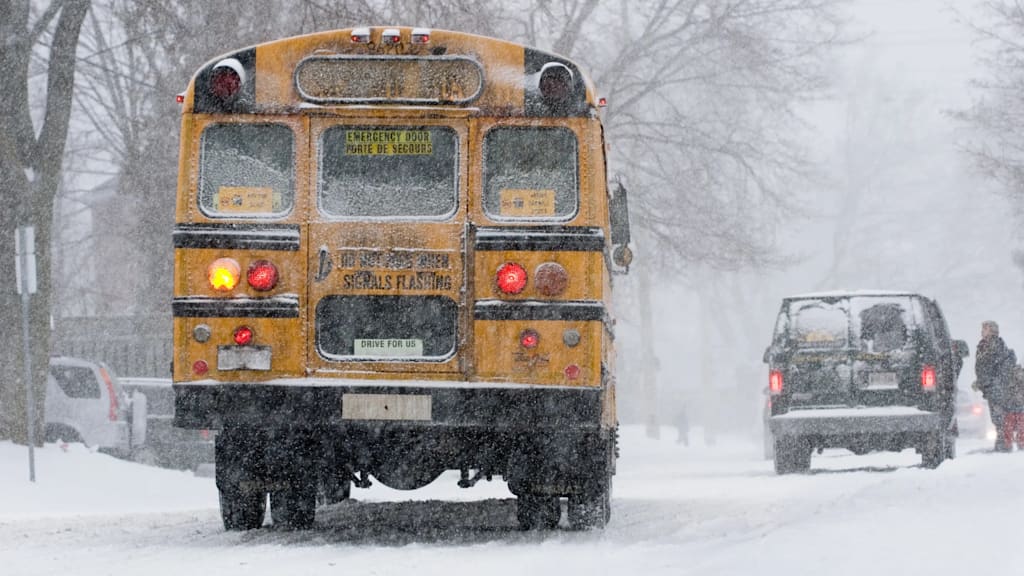
There is a specific kind of anxiety that sets in around 8:00 PM on a snowy Tuesday. You have a massive history test the next day, an essay due, and the local news is flashing winter storm warnings. Do you brew another cup of coffee and stay up until 1:00 AM studying? Or do you gamble, assume school will be canceled, and go to sleep?
For decades, students have been stuck in this waiting game. Waking up at 5:30 AM just to stare at a scrolling news ticker at the bottom of the TV screen, or constantly refreshing the school district's social media pages, is exhausting.
The core problem is that standard weather apps don't actually tell you if school will close. A weather app might say "three inches of snow," but it doesn't account for whether your town has the plows to clear it, or if those three inches are going to freeze into a sheet of solid ice by morning.
According to the Federal Highway Administration, over 156,164 auto crashes occur annually due to icy roads, which is exactly why school districts base their decisions on transportation safety rather than just snow accumulation.
If you want to stop guessing and actually predict when your district will call it, you have to look at the data differently. Here are the three best ways students are predicting closures before the superintendent even makes the official call.
1. Stop Looking at Snow, Start Looking at Ice and Timing
The biggest mistake students make is obsessing over the total snowfall. School districts rarely close just because of snow, as buses are heavy and can handle powder. They close because of timing and ice.
If the forecast predicts five inches of snow starting at 8:00 PM, plow crews have all night to clear the roads. School will likely be open. However, if the forecast predicts just one inch of snow mixed with freezing rain starting at 4:00 AM, that is a logistical nightmare for a district. Buses cannot safely stop on icy neighborhood hills. By shifting your focus from "how much snow" to "when is the freeze happening," you start looking at the forecast exactly like a school administrator does.
2. Monitor Local DOT and Emergency Feeds
Superintendents don't just look at the sky; they are on the phone with the local police and the Department of Transportation (DOT) at 4:00 AM.
Instead of watching the national weather broadcast, check your local DOT website or their social media feeds. Many DOTs have live traffic cameras and post regular updates on road treatments. If the local authorities are advising drivers to stay off the roads due to untreated black ice or low visibility, your school district is almost certainly going to delay or cancel.
3. Use an Algorithmic Prediction Tool
Rather than trying to manually calculate freezing temperatures, wind chills, and bus route safety, students are increasingly turning to algorithms to do the heavy lifting. This has become the ultimate cheat code for winter anxiety.
Dedicated tools designed to predict school closures are heavily used because they analyze the exact data points that trigger district shutdowns. When you use a reliable snow day calculator like Snow Day, you get more than just a basic weather forecast. These platforms pull live NOAA (National Oceanic and Atmospheric Administration) data and run it against your specific ZIP code.
These tools factor in the hidden variables that regular apps miss. For example, they heavily weigh wind chill indexes (which force massive amounts of school closures in northern states) and rapid overnight temperature drops. By entering your location, you get a localized probability score for the next few days. If you are staring at an 85% chance of a snow day driven by early morning ice accumulation, you can confidently plan your evening.
The Takeaway
You don't have to be at the mercy of the 5:30 AM automated phone call anymore. By understanding the real reasons schools close, like timing, ice, and wind chill, and using local data or predictive tools to analyze the conditions for you, you can take back your night. Study if the percentages are low, but if the data points heavily to a closure, close the textbook and get some sleep.
About the Creator
Enjoyed the story? Support the Creator.
Subscribe for free to receive all their stories in your feed.
Comments
There are no comments for this story
Be the first to respond and start the conversation.