
How Speech Therapy Can Support Children with Speech Delays
Speech therapy gives children with delays the tools to communicate clearly and confidently.

Understanding Speech Delays in Children
Every child develops at their own pace, but when speech and language skills fall behind typical milestones, parents often begin to worry. Speech delays are more common than many realize and can affect how a child communicates, learns, and interacts socially. While some children eventually catch up on their own, many benefit from structured guidance through speech therapy.
Why Early Intervention Matters
Early intervention is key when it comes to speech delays. The first few years of life are critical for language development, and providing support during this window can make a lasting impact. Addressing challenges early not only improves speech clarity but also helps children build the confidence they need to express themselves effectively at home, in school, and with peers.
The Role of Speech Therapy
Speech therapy is a specialized service provided by speech-language pathologists who are trained to evaluate, diagnose, and treat communication disorders. For children with speech delays, therapy offers targeted exercises and strategies that strengthen their ability to understand and use language.
Therapists use a variety of approaches, often blending structured learning with play. This keeps children engaged while helping them practice key skills such as forming sounds, combining words, and improving listening comprehension.
How Therapy Sessions Work
A typical therapy session for a child with a speech delay may include:
- Play-based activities: Games, puzzles, and toys that encourage communication and language use.
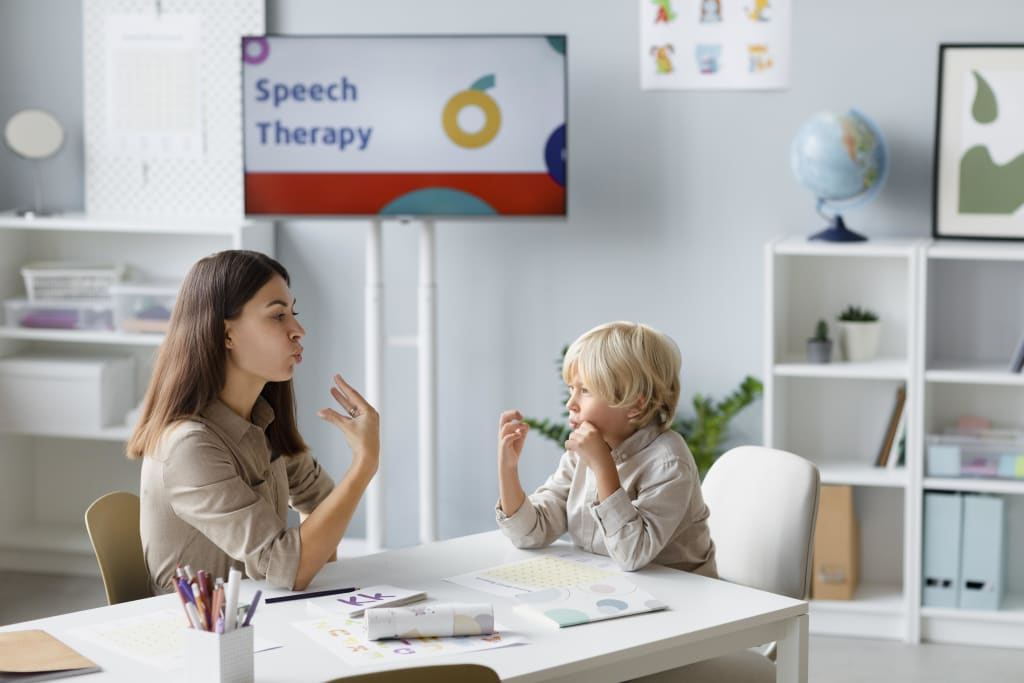
- Repetition and modeling: The therapist demonstrates words or sounds and encourages the child to imitate.
- Interactive reading: Storytelling and picture books are used to build vocabulary and sentence structure.
- Parental involvement: Parents are often taught techniques to reinforce progress at home.
By creating a fun and supportive environment, children feel less pressure and more motivation to practice their skills.
Benefits Beyond Speech
While the primary goal is to improve communication, speech therapy also supports a child’s overall development. Some benefits include:
- Improved academic readiness: Clear communication skills make learning to read and write easier.
- Enhanced social interaction: Children can connect better with peers and form friendships more easily.
- Boosted self-esteem: Progress in therapy helps children feel proud of their abilities.
- Reduced frustration: When children can express themselves, they experience less behavioral frustration.
Common Areas of Focus
Speech therapists tailor sessions to each child’s needs. Areas often addressed include:
- Articulation delays: Helping children pronounce sounds correctly.
- Language comprehension: Teaching children how to understand and follow directions.
- Expressive language: Expanding vocabulary and sentence formation.
- Fluency and pacing: Supporting smoother, more natural speech.
The Family’s Role in Progress
Parents and caregivers play a vital role in supporting speech therapy goals. Simple strategies at home can make a big difference, such as:
- Reading together daily.
- Encouraging conversation during meals or playtime.
- Celebrating small milestones to keep children motivated.
- Avoiding pressure or criticism, which can discourage effort.
When families are actively involved, therapy progress tends to be faster and more effective.
Signs Your Child Might Benefit from Therapy
Parents often ask when to seek help. Some signs that may indicate a speech delay include:
- Limited vocabulary compared to peers.
- Difficulty combining words into short phrases by age two or three.
- Trouble being understood by family or teachers.
- Frustration when trying to communicate.
- Not responding to simple questions or directions.
If any of these concerns are present, an evaluation by a speech-language pathologist can provide clarity and reassurance.
Looking Ahead
Speech delays can be challenging, but with the right support, children often make remarkable progress. Speech therapy gives them the tools to communicate more clearly and confidently, setting the stage for success in school and in life.
For parents, seeking help early is one of the most impactful steps you can take. By working alongside skilled therapists and reinforcing progress at home, you provide your child with the foundation they need to thrive.
About the Creator
Robert Kevlin, MS, CCC-SLP
I’m Robert Kevlin, a medical speech-language pathologist in Sarasota. On Vocal Media, I share practical insights on speech therapy—exploring real challenges and effective ways to overcome them. Learn more at floridaspeechtherapy.net
Enjoyed the story? Support the Creator.
Subscribe for free to receive all their stories in your feed.
Comments
There are no comments for this story
Be the first to respond and start the conversation.