
How Nursery Schools Foster Creativity in Young Children
Foster Creativity in Nursery Students

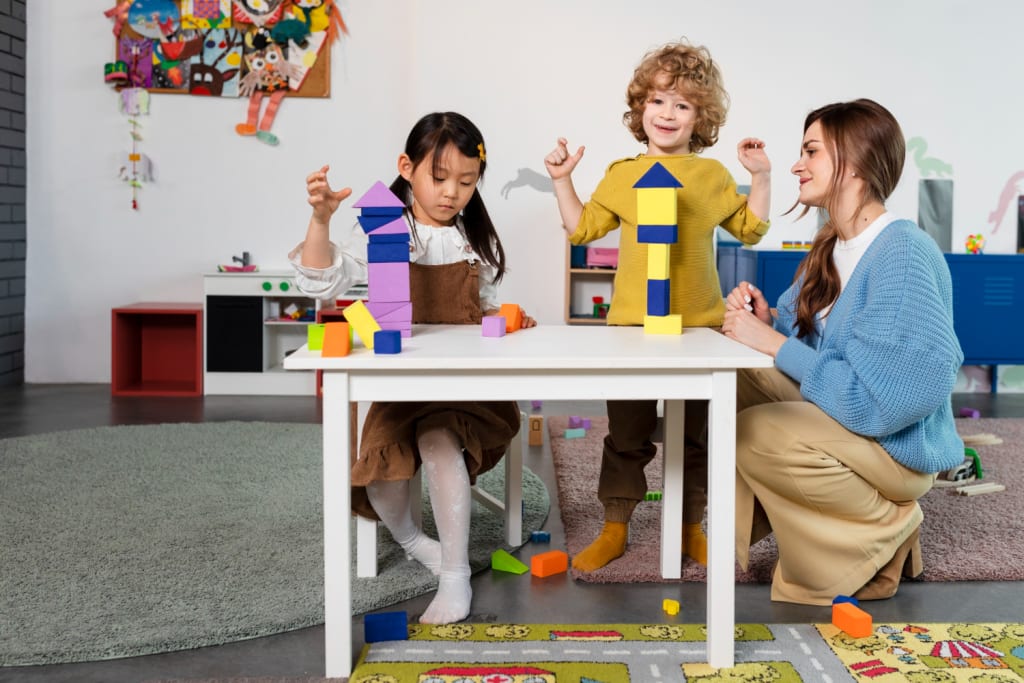
As parents, you want the best start for your child’s education. Nursery schools, also known as preschool, play an essential role in nurturing your child’s development, especially in fostering creativity.
At this young age, children are naturally curious and full of imagination and nursery schools provide an environment where this creativity can flourish. But how exactly do nursery schools foster creativity in young children? Let’s discuss it in this blog.
Explore How Nursery Schools Foster Creativity
1. A Safe and Stimulating Environment
One of the key factors in fostering creativity in young children is providing a safe and stimulating environment. Nursery schools are designed to be welcoming, playful and full of engaging activities that encourage exploration. Classrooms are usually decorated with colorful displays, toys and art materials, creating an atmosphere where children feel excited to learn.
2. Encouraging Imagination Through Play
Play is one of the most effective ways to boost creativity in children. These days many Indian schools emphasise imaginative play, where children can pretend, create and explore different scenarios.
For example, children might engage in role-play activities, such as pretending to be doctors, chefs, or astronauts. This type of play encourages them to think outside the box, use their imagination and express themselves verbally and physically.
3. Hands-On Learning and Exploration
Nursery schools often incorporate hands-on learning activities that encourage children to be creative while also developing other essential skills. For example, activities like drawing, painting and crafting allow children to use their hands and imagination to create unique pieces of art.
These activities not only help with fine motor skills but also let children experiment with colors, textures and shapes, enhancing their creativity. As they build and shape things with their hands, they learn about spatial relationships, balance and symmetry, all while being free to create whatever their imagination leads them to.
4. Encouraging Problem-Solving and Critical Thinking
Creativity isn’t just about making art or playing games—it’s also about solving problems in new ways. Nursery schools foster creativity by encouraging children to think critically and solve problems.
For example, when children are asked to complete puzzles or figure out how to assemble a toy, they engage in creative problem-solving. These activities teach them how to approach challenges, consider different options and find solutions on their own or in groups.
5. Supporting Emotional Expression and Confidence
Creativity is closely tied to emotional expression. Nursery schools create a supportive atmosphere where children can express their feelings through art, storytelling and even music. Encouraging children to talk about their emotions or use art to express how they feel can have a huge impact on their creativity.
For example, a child who may be feeling sad can be encouraged to draw what they’re feeling, helping them to express their emotions creatively. When children feel safe to express themselves emotionally, it boosts their confidence, making them more willing to try new things and take creative risks.
6. Incorporating Music and Movement
Music and movement are powerful tools for fostering creativity. Nursery schools often integrate singing, dancing and rhythm exercises into their daily routines. Activities like clapping to a beat, dancing to music, or singing songs encourage children to express themselves in creative and physical ways. These activities not only enhance motor skills but also stimulate the brain, helping children develop both cognitive and creative abilities.
Music encourages children to explore different sounds, rhythms and even instruments, while movement activities like jumping or spinning help them release energy and think creatively about how their body moves in space. These fun activities foster creativity in ways that are both engaging and beneficial for a child’s development.
7. Role of Teachers in Nurturing Creativity
Nursery school teachers play a vital role in nurturing creativity. Teachers encourage children to ask questions, try new things and explore their interests. Instead of simply providing answers, teachers often guide children to think independently and discover things on their own.
For example, a teacher may give a child the freedom to choose which materials they want to use in an art project or encourage them to come up with their own storyline during playtime. By giving children the freedom to make decisions and explore ideas, teachers help them develop critical creative skills like independence, curiosity and imagination.
Conclusion
In the early years of life, creativity is more than just making art or playing games—it’s about learning to think, problem-solve and express oneself. Nursery schools provide a perfect setting for your child to develop these creative abilities in a fun, supportive and nurturing environment. By encouraging imagination, hands-on exploration, problem-solving and emotional expression, nursery schools lay the foundation for your child’s creative growth.
About the Creator
Kajal Verma
I’m passionate about connecting families with the right international schools and curricula that will guide them on their educational journey and foster their growth.
Enjoyed the story? Support the Creator.
Subscribe for free to receive all their stories in your feed.
Comments
There are no comments for this story
Be the first to respond and start the conversation.